Storm damage…

We were hit with a massive storm in the early hours of the morning – strange as there was no real prediction of the severity of this one. But we woke early to the howl of it. The window was slightly open in the bathroom and this was enough to blow the plants from the shelf. It also blew our front door open, as I had not put the bolt across.

We had quite a bit of damage outside-

William’s shed was physically moved by the force of it, and the roofing felt is in Kansas.

My workshop had roofing ripped away too.

One of our trees now lies in the neighbours garden.

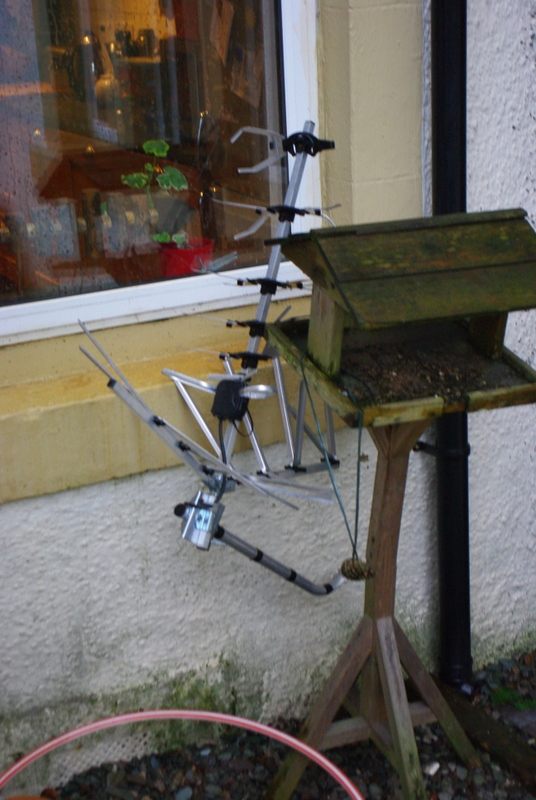
We have lost a TV aerial and the satellite dish.

And, most strangely a surf board/body board appeared in our garden.

No sign of the surfer yet.

New Year, 2012…

It is here.

As ever the speed of it all comes as a surprise.

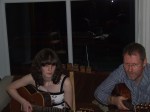
Last night, we had a house full of friends and sang and played music for hours. This morning my fingers are almost too sore to type! At some point we had three guitars, bouzouki, piano, violin and bodhran. I have not enjoyed music as much for ages.

I was relatively early to bed- Michaela came up around 4.00.

As further evidence for the advancement of years, last night our kids were all busy in new and different ways (even though they were all part of joint celebrations too.) Emily had a ‘Launch Pad‘ for Christmas, and so we set up the study so she could do some mixing/dancing.

William and his friends practised for their own performance of a song.

Later we all sat and played cards.

It was simply lovely to spend time with these wonderful young people, with all their talents and potential.

So to old friends and new friends and still to become friends everywhere- may the year be one of blessing…

I took no photos at all last night- here are a few of Williams;

Thatcher and the tools of war…

One of the things that appalled us most about the Thatcher years back in the 80’s, was her support for some of the most despotic regimes in the world.

Everything was polarised then- communist/socialist/liberal (bad.) Fascist/dictatorship/ (OK- as long as they were not communist.)

The Pinochet government ‘disappeared’ thousands of Chillean citizens- but Thatcher was a staunch ally.

Today, at the 30 year unveiling of official secrets, we found out lots more about arms dealing with Iraq and Iran. We sold Iran a load of Chieftain tanks. About 100 of these were captured by the Iraqis during their dreadful war against Iran. Back when Saddam was a good dictator.

What the cabinet papers reveal today is the extent of the sophistry that the then British Cabinet indulged in to get around the arms embargo- selling all sorts of arms and equipment to Iraq.

But most staggeringly of all, they allowed Vickers, who made the Chieftain tanks, to repair, modify and re-gun them to be used against Iran. We were literally arming both sides.

When the Blair government eventually took over from the Tories, one of the things I was most excited by was Robin Cook’s idea of an Ethical Foreign Policy– including a new refusal to sell arms to despotic regimes.

However, this policy was soon in tatters during a row over the sale of Hawk Jets to Indonesia, who used them to bomb and machine gun the citizens of East Timor. This was the beginning of the great disallusionment for many of us in the possibility of a new kind of politics under Blair- which went all the way onwards towards the second Iraq war.

The issue for all of we Brits is the role that arms manufacture still plays in our economy.

We are the second biggest exporter of weapons, after the USA- 20% of the worlds armourments are made here.

The manufacture of arms is intrinsically bound up in this thing that some loosely call the ‘ military industrial complex’, and others simply call capitalism.

If swords are ever to become ploughshares, then we should listen to the stories from Thatchers cabinet- and to the subsequent ones from Blair’s cabinet.


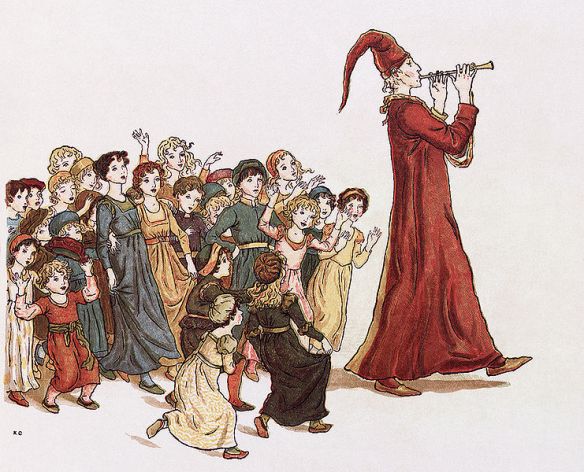
The Pied Piper revisited (part 1)…

I enjoyed listening to this on boxing day.

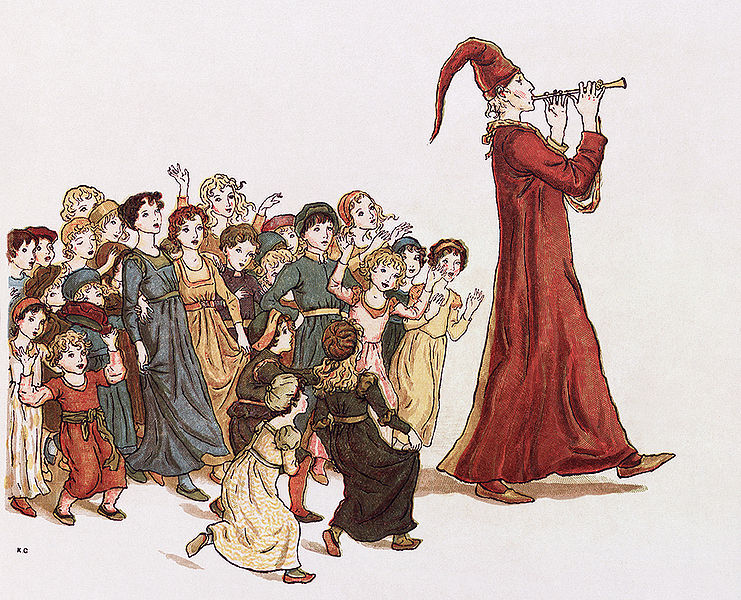
It was a retelling of the weird old story of the Pied Piper of Hamelin. As legends go, it is one of the strangest- you can feel in it the depths of some kind of tragedy that was the origin of the myth.

The story originates sometime in the 1300’s in Lower Saxony, Germany. This from the Wikipedia entry-

The earliest mention of the story seems to have been on a stained glass window placed in the Church of Hamelin c. 1300. The window was described in several accounts between the 14th century and the 17th century. It was destroyed in 1660. Based on the surviving descriptions, a modern reconstruction of the window has been created by Hans Dobbertin (historian). It features the colorful figure of the Pied Piper and several figures of children dressed in white.

This window is generally considered to have been created in memory of a tragic historical event for the town. Also, Hamelin town records start with this event. The earliest written record is from the town chronicles in an entry from 1384 which states:

It is 100 years since our children left.

What dreadful events were being described no-one knows. A mass drowning in a river? Plague? Mass emigration to avoid famine? Lured away be a pagan sect into the dark forest?

Whatever the origin, at some point, the legend began to be told in the form we receive today- a magical figure on which we can project all sorts of fears- the Pied Piper who leads children on some terrible dance of death. All except one, who lives a life of regret that he could not have disappeared with his friends to the whatever land they travelled to.

Anyway- as I listened to this, it appeared to me to carry a current resonance, and I started to write.

Here is the first part of my re-telling of the legend of the Pied Piper. A bit of fun for the new year…
The was a time when the city prospered.

Ships flooded the dockyards with spice and sandalwood from the far reach of the arm of Empire.

Old men were cushioned by safe investments and young men were well oiled cogs in an industrial machine whose engines never stopped. After lives spent accumulating, some sought to leave a legacy in stone- museums, galleries and monuments to their own magnificence.

And on the fat of it all we feasted. Even as others far away slaved in chains and died young in the service of our comfort.

We had so much that what we had started to mean nothing. We filled our dustbins and our landfill sites with food we could not eat and clothes of last years colour. Meanwhile we wanted more more more. More gadgets. More cars. Bigger houses. Faster food.

Soon not even the rubbish dumps could contain all that we threw away.

Then there came a time when it all started to go wrong.

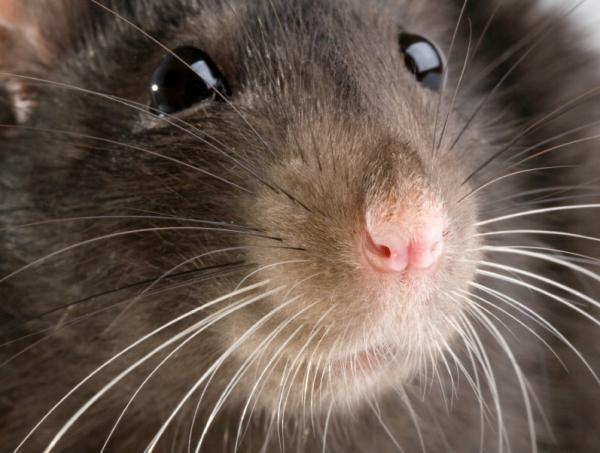
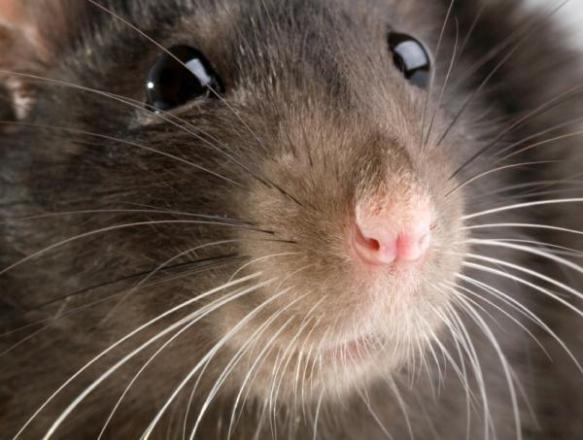
Rats.

Everywhere, rats.

They were in the warehouses, in the store rooms and scurrying under the tables of all the restaurants.

They were under the floorboards and in the kitchen cupboards. They stripped bare the sofas then started on the insulated cables.

In the attempt to get rid of all these rats, no effort was spared. Men in clean overalls poisoned, trapped, shot and burned them in their thousands. But it seemed to make no difference- if anything their numbers increased.

In desperation, the mayor of the city offered a prize. “Let it be known across the world” he said “that anyone who can rid us of this vermin that has invaded our city will be handsomely rewarded. They shall receive a prize of £10 million pounds.”

So from all over the country they came. Then from all over the world.

Scientists with genetic theories and chemical potions and tiny cameras on the end of flexible rods.

Commercial pest control companies with an army of men and women prepared to go further than ever before- into the slimiest sewer and the darkest cellar. They dug and shot and stabbed and burned in every corner of the city.

Religious nuts who cried to us all to ‘Repent’ so that God would have mercy on the sinners of the City and take back the plague from the unrighteous. So that he would let his people go.

Mad inventors employed light beams and sound waves and all sorts of machines that whirred and clicked and rattled.

All failed to make any appreciable difference on the number of rats. At night, the noise they made kept us all awake- the scurrying and the scratching. The passage of a million claws in and round and over.

As their numbers grew they were bolder in their hunger. They no longer stayed hidden in the dark places- they were in the corners of rooms, watching, waiting for an opportunity to pounce.

There were stories of faces bitten whist people lay abed, and children running screaming for protection.

Everything was affected- schools closed, hospitals were under siege. Factories were clogged with fur and the flesh of the rats and places of business were eaten full of holes. The dockyard cranes rusted on their rails from under use- no captain wanted to take on this kind of cargo.

The stories spread like wildfire- they were twittered and blogged and gossiped in the bars and pubs. Anger grew- something must be done. The fat cats in the town hall did not have to live like this- they had protection. Rather than spending money on fancy cars and big salaries- they ought to be looking after the citizens.

Some fed these stories into megaphones of their own particular cause and began to stir up violence. Windows in the town hall were smashed and slogans written on walls.

The rioting began.

The response from the authorities was predictable- first police in riot gear, later the army. Finally, when the numbers on the streets seemed almost as numerous as the rats, the tanks were called in to stem this new vermin from smashing and looting and burning.

It was all falling apart.

Eaten from within.

To be continued…

Modern fairy tales…

…stories are always important. Even in an age of communication overload.

In fact, perhaps they are even more important now- the ones that mean something that is. The ones that are not manufactured- squeezed through the entertainment machine, shrink wrapped. We can recognise all the big-brother-X-Factor-Britain’s-got-talent stuff for what it is- mindless twaddle to inoculate our Saturday nights. But then along comes Susan Boyle, and we all scramble to share the story.

Our stories say so much about who we are, who we wish we might become, and what we value along the way. I suppose this was always true- the stories collected by Hans Christian Anderson were the same. They come to define us- they unite us in a common understanding of the world.

There is a way of understanding stories as underlying narratives that shape our culture and our humanity. So we are who we are because of the story that we were born into, and we find ourselves acting as characters within this story. The degree to which any of us change this narrative according to our own choices is a matter for debate.

But enough of all this, time to tell a story. It is ‘true’- in the sense that it is based on something true, but not in the sense that it is absolutely accurate. That is not the purpose of stories. Neither are they meant to steal from the people who are contained within them. The characters in this story are free-

There was a school in a small town near where I live. It was an ordinary school, full of an ordinary mix of young people learning how to be old people. It was full of chatter and laughter and the bubbling of stewing humanity.

For some, the place was a stage on which they acted, reciting lines with growing confidence.

For others, it was a dark forest full of dangers. Each corridor a mass of thorns. The school yard belonged to wild animals hunting in packs.

And in this ordinary school, the teachers, with the best of intentions, decided to hold a talent show. Notices were posted, names gathered, egos bristled and the stage was prepared for great things.

So it was that on the appointed day, the show began. The recreation hall was full, and although most kids learn cynicism and scorn much more readily than algebra, it was a welcome break from the classroom and so there was an excited buzz in the air.

Violins screeched. Chanters howled. Dancers of a variety of shapes and sizes danced. Some had far too much confidence for their levels of ability, some were entirely the other way round. All had this in common- they were backed by their supportive group- they represented their ‘tribe’. They each represented a constituency.

Apart from one.

She was not well known, and not understood at all. She managed to always be at the edge of things, unnoticed.     Her school work was always completed, and averagely correct. Her school uniform was standard, if never stylish. Her hair was pump-water straight, and she wore heavy glasses as if to complete a disguise.

So it was, when she stood at the edge of the stage, there was a gasp, then some giggles. Unkindness is such common currency.

A perspiring deputy head teacher, also looking strangely bemused, stepped up to the microphone. “Ahem…” he said “Please put your hands together for Alice Smith, who is going to sing ‘Take me home country roads‘.”

The sniggering grew louder. Like the release of a gas valve, the whispers spread. What was she going to sing? Did she not know any decent songs? Who does she think she is anyway? Look at those shoes/that hair/the state of her.

But the teacher was not done “Alice has asked me to say that this song was the favourite song of her late father (ahem) who sadly (ahem) passed away a few weeks ago.”

The whispers ceased and silence opened like a cave as someone cued a crackly backing track.

I would like to tell you that Alice sang like a cross between an angel and a rock star, but this was not so. Her voice wavered in an out of the sound mix as her shaking hand moved the microphone around. She was for the most part in tune, but sang with a thin reedy voice.

Somewhere into the first chorus, her throat closed itself off into a sob. She tried to keep going, but the words came out in bursts and gasps, until she could sing no more. The backing track played on, and the hall was frozen mid breath.

Then in the middle of the audience, a girl stood up and started to sing.

Another girl joined her- then a boy. Then another and another. Eventually the whole room was full of children singing ‘Take me home, country roads, to the place where I belong, West Virginia, mountain momma, take me home, country roads…’ The saccharine sweetness of the words took on Shakespearean grandeur.

Something happened in that room. Many were openly weeping.

And God smiled a wide smile.

Rapture rescue…

Interesting stuff.

Naomi Klein contrasts different responses to global crisis, and specifically uses this term- ‘Rapture rescue’-  a kind of global economic secular event through which some get saved, and others get left behind.

We see this perhaps in the response to terrorism- there is in the West a longing for some kind of second coming to sweep aside the evil and leave us safe in our holy escape pods. Some used to believe that war would achieve this.

Or perhaps capitalism itself could be seen in this way- there are those who believe– who live well and play to the rules of the holy market, and the unfaithful. Some of these can be rescued- but only by becoming like us.

Then there is climate change, which Klein talks about a lot here. Those who still deny the science seem bound up in a defensive wall of self interest. The crisis is external doubt, and the possibility of a threat to a way of life.

The ‘Rapture’ image hit me hard, as it makes a lot of sense- religion is both the engine of our underlying assumptions about the world, and also the means through which we justify and apply a kind of sacred redemption to our actions and lifestyles.

This being true, how might our faith still be an engine, but rather an engine for grace– for us, our neighbours and our environment? How might this  lead us to work for change NOW, not to wall ourselves away from the unfaithful, the undeserving, the already-lost?

Well I liked the simplicity of what Klein said, here-

“If we want the transformation, we can’t wait for it to happen in some massive jolt, we have to plan for it and model it…”

“Only a crisis, actual or perceived produces real change, and when that change occurs this depends on the ideas that are lying around. That is our function, to keep ideas alive until the politically impossible becomes politically inevitable.”

We Christians are carriers of perhaps the best ideas- contained within the life of Jesus. Our function is to keep these stories alive, and to try to live them out in our context.

Well our context is changing…

Sheltering from the storm…

The power is back on!

I remember as a child in the 1970’s we had a series of power cuts during times of industrial action. Those hours spent by candlelight, eating sausages and beans cooked on a camping stove are lovely memories- and I still remember the disappointment I felt when the lights came back on. The time of dancing shadows was over, and the florescent uniformity was back again.

I felt a little flicker of this disappointment today. But these days, the lack of power is no benign thing- particularly in Argyll.

The storms today cut off Cowal entirely- the Rest and Be Thankful pass was blocked, and the ferries all stopped running. Trees are down everywhere and caravans and high sided vehicles tipped over.

In fact, I called in to the Police Station earlier and was told that an articulated lorry had been blown on its side, only later to be blown back onto it’s wheels! I confess to feeling skeptical, but the story was told to me in all seriousness.

More seriously there have been a spate of accidents- a policeman is said to be amongst those injured.

And when the power is out, the frailer members of our society are very vulnerable.

We have not escaped damage to property either- William’s shed took a battering, a fence is wobbling and water is coming in to our house through the skylight.

But for a while, we sat in the lounge before a raging fire and played games by the light of candles. Everyone was happy, somehow buoyed by the drama and comraderie of it all.

And then the lights came on again.

And we went our separate ways- to our individual screens and electronic cocoons.

A small band of survivors no longer.

Serious shopping…

Today Emily and I had to go into Glasgow to pick up her new glasses. She has been given these to help her with reading- remarkably, the particular colour of blue they are tinted with seem to increase her reading speed by around 50%. Previously she had somehow coped with words swimming around in her vision- particularly at the ends of lines, making it almost impossible to find her way through dense blocks of text without huge effort. How she managed so well up till now is a mystery to all of us.

Anyway, this also meant that my pointedly deferred shopping expedition sort of came back to haunt me. Emily needed a new dress for her birthday meal with friends at the weekend so we went out into the crowds of Buchannan street- in the middle of all the Christmas madness.

I survived.

But I am not less appalled by it all.

If anything could sum it all up for me it is this-

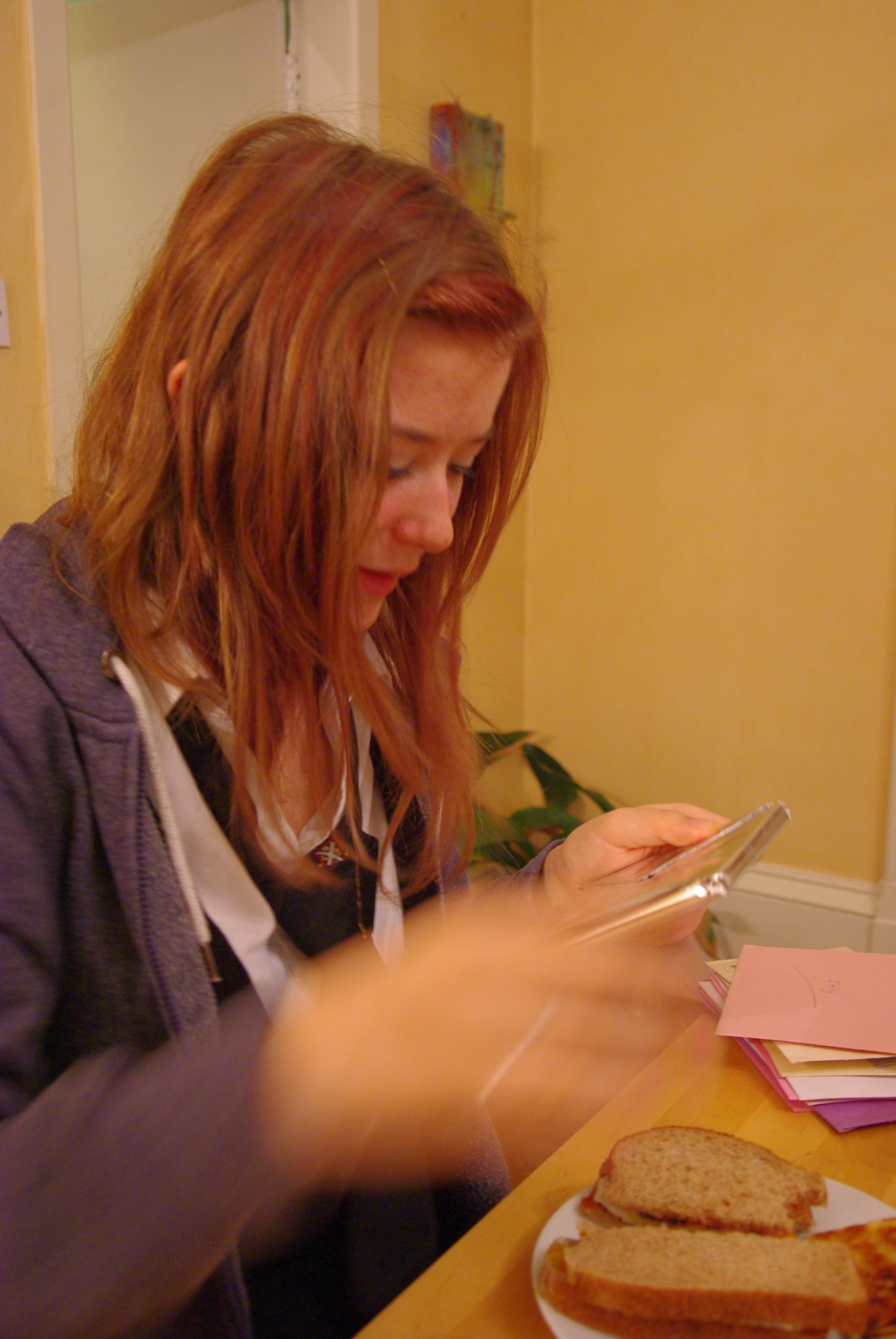
I read this poster in the toilets in St Enochs Square shopping centre. (OK- Emily noticed the same thing and this poster was in the ladies loo. She took this photograph. Obviously.)

Whilst I was reading the poster, two young lads came in. They hovered a little- it was crowded, and they were encumbered by sleeping bags and rucksacks. It was obvious by that they were rough sleepers, in for a clean up and a bit of warmth.

The contrast with this poster seemed great at first- then less so. The edges of this credit driven culture we have created can be seen in both the poster and these rough sleeping young men. It suddenly seemed to me all about disconnection.

Disconnection from one another- from community and place. Disconnection from the means of production, and from the land that sustains us. Disconnection from the spirit of man, and from the Spirit of the Living God.

What madness is it that makes us still think that we can keep making money from plastic cards and using it to buy ever more stuff? What crazyness drives us to feed our addiction for more credit even by desperate measures like this-  trying to screw more money out of banks who have already brought us all to the edge of the abyss by lending too much of the stuff?

As if the best we can now hope for was this last loophole through which we might get a little more free money.

Last week in Dunoon, one of the ‘hole in the wall’ cash machines went wrong, and started paying out double the money that people requested. Pretty soon, the word got out and a queue formed down the street. The bank, in panic, asked the police to come, just to turn people away.

Not a good advert for the people of our town, even if we might regard the banks as fair game given their impact on the economy. But perhaps none of us are that different- who could ever turn down some free money?

Striking…

Today millions of my fellow public sector workers went on strike to protest about plans to make them work longer, and pay more towards their pensions. Sing along (to the tune of ‘White Christmas’)-

I’m dreaming of a fair pension

Just like the ones I used to know

Where the coffers glistened

and Mps might have listened

Before the bankers stole our dough…

I have been a member of a Union most of my working life- but at present, I am not. I joined the British Association of Social Workers a couple of years ago in disgust at my local Union’s refusal to support some of the lowest paid members of my staff. I wrote in protest to the branch secretary and did not even receive a reply, so I felt I had no option.

Which left me in something of a quandary today- a manager of services to vulnerable people, outside a Union. In the end, I decided to work.

I decided that I would not cross a picket line- but there were none, so this was an easy thing to get around. My conscience is still twitching uncomfortably. That word- solidarity

In the end however, I think I decided that I just did not feel strongly enough about this issue to want to man the barricades. Whilst I would strongly defend the rights of workers to protest inequity and harsh treatment by their employers, I personally don’t feel the sting of anger about my own pension situation.

Many other things about our present government do make me angry. For instance, the Conservative/Liberal Democrat government recently announced a typical mindless sweetener used by all governments forcing through austerity cuts- they are going to spend money on job creation schemes, £1 billion in fact.

Sounds great- although experience might tell us that these schemes simply do not work- at best they mask the rising unemployment figures.

Worse than this, the government are going to pay for this by taking money from Working Families Tax Credit- which is a benefit paid through the tax system to low income families.

You could say that they are going to rob the poor in order to spend money to pretend that there is work for young people.

This at a time when the richest parts of society are doing nicely thank you.

The gods of capitalism must be appeased. Lets make a few more human sacrifices.

Now this is something that makes me angry. This is something I would strike about.