Last ferry leaving…
1

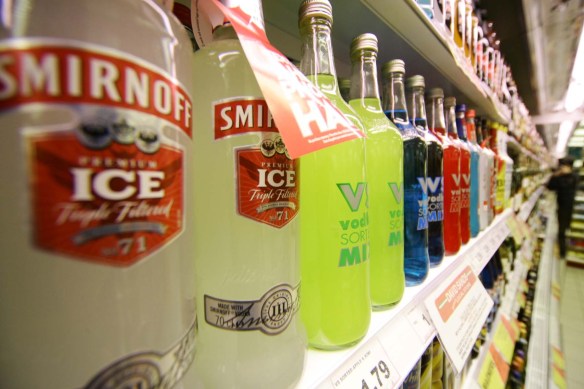
As someone who works in social care and mental health, I have a particular interest in the effects of alcohol on the lives of individuals and wider communities. A recent draft policy document I was reading suggested that people whose lives were directly threatened by addiction may well be referred to community mental health teams for emergency intervention. This was of some immediate concern as I manage some of these teams, and resources/skills/training to meaningfully engage with trying to help people at a point of life such as this have not been discussed as yet- although it is already a major part of what we try to do.
I am also a director of a addictions charity, providing counselling and support, employment advice and links to other health care and rehabilitation. It is a good organisation, but there is always the perception that we can only do so much, for some people.
The recent news about alcohol related deaths in Scotland is staggering. A recent NHS study took a long hard look at death rates from statistics collected in 2003, and examined the root cause of death of people from cancer, liver failure, as well as serious accidents and mishaps. Their conclusion was that one in 20 people in Scotland die as a direct result of alcohol- roughly twice the previous assumed rate. Check out the story from the Herald here, or from the BBC here.
Here are some of the facts-
8 people die every day.
More men than women, and significant amounts of younger adults.
Alcohol accounts for one in four men and one in five women who die between the ages of 35 and 44.
It also accounts for one in twenty hospital admissions- 41,400 in 2003. Goodness knows what the cost of this care was in terms of lives shattered, employment lost and taxes spent.
Scots spend £5 billion each year on booze.
Deaths have doubled in the last 15 years.
Co-incidentally, the amount we drink has also doubled.
Prices of alcohol have plummeted. (70% more affordable than in 1980.)
Scotland has the eighth highest consumption rate in the world.
Compared with the latest figures compiled by the World Health Organisation (WHO), the Scottish Government said this would place Scotland as having the eighth highest pure alcohol consumption level.
This put the country behind Luxembourg (15.6 litres per capita), Ireland (13.7 litres), Hungary (13.6 litres), Moldova (13.2 litres), Czech Republic (13.0 litres), Croatia (12.3 litres) and Germany (12.0 litres).
But it put Scotland ahead of Russia – where alcohol-related deaths have cut the average life expectancy for men to 59 – and also the US and China.
What is to be done?
This is certainly no simple issue- but rather a complex socio-economic-sociological one.
For my money (even as someone who enjoys the odd pint, or dram) prices have to go up. High prices =people drink less. It works.
And we need to do everything we can to challenge the drunken-hero-good time girl/boy- morning after war story culture. The getting off your face in order to have fun- seen across class, gender and age barriers in Scotland. Works nights out, birthdays, Saints days, sports events- all are a reason to drink, and to celebrate excess.
And for people caught in addiction- these are not second class citizens who are burden on the health services- characterised as ‘scum’ and ‘neds’. They are you and me- a product of the society that we have created together.
The role of Christians in this issue is interesting. The tradition of evangelical groups who championed the temperance movement as a response to the Victorian concerns about their own alcohol related societal problems is interesting. There are still Christian groups who operate in this tradition- sometimes adding a charismatic fervour to this tradition- for example the Maxie Richards foundation who are active in our area.
I am not convinced that temperance is the answer. But all power to those who try to make a difference. There are many chains that need to be broken…
Came across Some Grey Bloke today and have been laughing and wincing along with him for a little while.
(WARNING- some sweary words, and perhaps just may offend the sensitive…)
So here is Some Grey Bloke on Christianity-
And just for contrast- and given our recent preoccupations in Dunoon, here is Some Grey Bloke on Swine Flu-

Interesting discussion on the radio this morning about turbo consumerism. Listen again here.
Neal Lawson, Political correspondent for the Guardian newspaper and chair of the left wing democratic pressure group Compass, spoke eloquently about his feelings that our society is increasingly addicted to shopping- the main leisure pursuit of the nation. Lawson suggested that our sense of identity, well being and status have become tied up in the getting of STUFF. We talk about ‘retail therapy’- where shopping serves a deep purpose in our lives in terms of attempting to define who and what we are.
It could be suggested that western industrial society has always been consumer orientated, but at some time in the 80’s and 90’s we changed from a consumer society to a TURBO consumer society according to Lawson- a product of a culture that increasingly became credit and debt driven, and an economy that required us to upgrade our gadgets every 6-12 months in order to remain viable.
Lawson suggeted that people at the bottom of the income scale, who are unlikely to achieve highly in terms of education or employment invest a huge amount in designer labels- and this becomes a source of large amounts of crime.
None of us are unaffected by turbo consumerism. The advertising industry in all it’s multi layered sophistication, is intent on creating dissatisfaction with what we have, and what we look like, what our life is about, so that we might be more ready consumers of produce, gadgets and lifestyle enhancements.

On my drive back from Bute today, some familiar questions were rattling around in my brain…
Is there a way back from this?
Is there a better way to live?
Do I need a new phone/car(scrappage allowance none withstanding!)/TV/MP3 player etc etc?
If I/we stop buying these products, then is recession not inevitable?
But who is paying the cost for this mad lifestyle now? Is it making us happy? What about the huge inequalities within our society, and the insatiable need for raw materials and cheap labour from the majority of the world?
Where do I start, and can I really make a difference?
I suppose the interesting thing is that these questions are being asked by many in the wake of the recent economic upheavals.
And some Christians are raising their voices to suggest alternative ways to live. Check out Generous.
Time to stop shopping, and start living…

Keith Short (Scottish Network Churches) sent a link to this clip- which made me happy.
It is a style of church that I have no real desire to be part of, but am very glad to see thriving.
Bless em all…

Michaela and I have been interested in fair and ethical trade practices for some time. As a student, my final year thesis dug into this area. For some time we were Traidcraft representatives also.
In earlier times, fairtrade production was low scale and marginal. Who can remember the early instant coffees that tasted slightly like a mixture of sludge and gravy?
Fairtrade produce has become much more mainstream in the last few years. The supermarkets use Fairtrade as a niche selling strategy, and large companies like Cadbury’s, later followed by Galaxy have bowed to pressure and started to use fairtrade materials in their produce. Whilst the edges of what constitute ‘fair trade’ seems to be as fuzzy as ever, these larger scale moves towards breaking down the power of the multi-nationals and giving producers in the South a fair wage are great.
And then came recession.
Logic would suggest that during periods of recession people look to make savings on household bills. They are less willing to pay premiums for quality, and more likely to buy budget products. We might expect too that people will give less to charity, and buy less fair trade produce.
It is encouraging then to read this report from the Ethical Corporation Institute, which suggests that interest in ethical and fairtrade products is soaring.
I wonder why?
Is it possible that the aftermath of the consumer driven credit crisis has led to people examining again the lack of sustainability of our lifestyle? And the inequalities we depend on to maintain it?

It was my boy Williams birthday yesterday. He was 9.
What joy the lad has brought to our family. Watching him grow from a baby to a boy, with all the potential and ability in the world- this is such a wonderful thing.
So happy birthday Will my lad.

A party of Aliens/Jedi/Sith in our back garden

Shooting stomp rockets at Aliens!
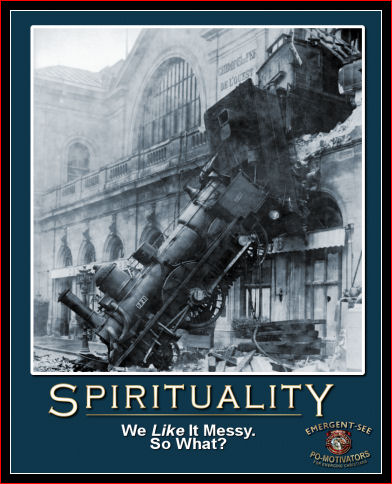
There has been some more chat on various sites about EC. The usual questions are being examined again- is the term useful? Did the ’emerging conversation’ promise much and deliver little? Does it still have any use or relevance?

Creative (if rather unsympathetic) posters from here!
Followers of this blog will know that this has been a recurrent theme-
Back in September, I posted another review from the blogosphere- here.
Then in January, I spoke about the fact that our group had decided to stick with the word ’emerging’ for now.
Then in February, I asked what is emerging?
Then Jonny Baker pointed us to this post a week or so ago, which he responded to in a great post entitled
Then there is a really good post from the Emergent village website- here, that responds to some of these discussions. As ever, it is useful to remember that Emergent Village (often foreshortened as ‘Emergent’) is one of the conduits for conversation about emerging church- but does not claim to represent, or even lead, the conversation. It is worth re-stating this, as some of the key figures in Emergent- Doug Pagitt, Brian McLaren, for example- have attracted much criticism, and controversy. I have an awful lot of respect for both, but neither would claim to lead anything called ‘the emerging church’.

I spent some time thinking about where I am up to with the ’emerging church conversation’ (I always feel I have to use parenthesis around the phrase!)
I realised that I feel really quite comfortable with the label now. For me, it has brought me into contact with greatly positive and inspirational people, ideas and resources. I do not see myself as a member of ‘The emerging church’, because I still think that ’emerging church’ is a verb, not a noun.
Neither does the small church group I am part of call itself an ’emerging church’, although we might continue to hope that we are being drawn forward into new things by the Spirit of God.
Over on the Emerging Scotland ning site, Vicki Allen asked the question- ‘what does emerging mean to you?’ and encouraged people to list three things that were meaningful to them. I thought about it for a while- and then settled on these three-
1. The freedom to re-imagine and re-discover COMMUNITY.
2. The freedom to re-imagine and re-discover THEOLOGY- particular ‘small’ theology (by this I mean theology that is respectful of our inheritance, but interested in it’s application to our own locality and community.)Add New Post ‹ this fragile tent — WordPress
3. The freedom to re-imagine and re-discover the MISSION of the Kingdom of God.
I remain grateful for Emergent, and the emergence of rich ways of understanding the nature of our engagement with Jesus in our post modern context.
The rest, well that is up to Him.

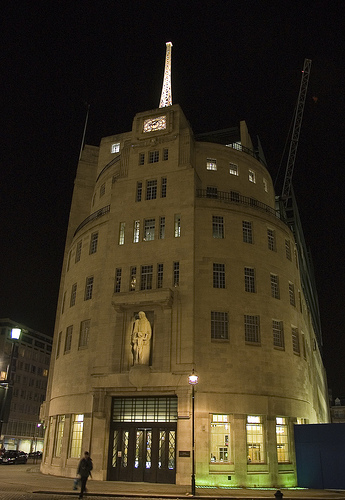
I managed to catch most of the first of the new series of Reith Lectures on Radio 4 this morning as I drove round to Helensburgh.
For those who have not come across the Reith Lectures before, they are a British institutuion- or perhaps an English institution- despite their connection with the Scottish John Charles Reith, the force behind the creation of an independant BBC.
This is what the Lectures are tagged with-
The current series features political philosophy Professor Michael Sandel– and digs into some of the primary issues facing our political and economic system.
This first one concerned itself with the nature of the free market, and it’s relationship with moral choices.
It chews on the nonsense of carbon trading, and the potential free market responses to the ‘problem’ of refugees.
It was a great piece of radio- of a non-sound bite kind, a rare commodity.
You can listen again here, or it is repeated on Saturday.
The series will continue…
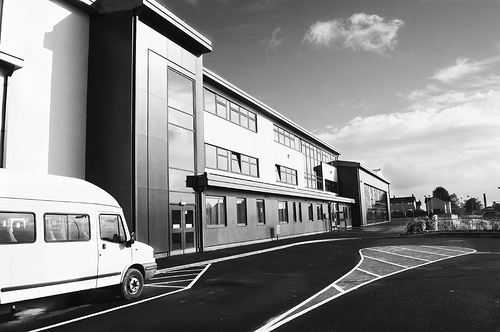
Dunoon Grammar School
One more post about living in ‘the swine flu capital of Scotland’ (a title bestowed by the Times newspaper- here.)
Although there are now cases on the Island of Bute, and in Oban, Dunoon still remains the centre of the largest out break of the H1N1 virus in Scotland. As of Friday, there were almost 70 confirmed cases. Fortunately, most cases seem to have had mild effects on those infected- vomiting, aches and pains, dry cough- but two people have required hospital treatment. One person suggested that a recent hangover was worse!
The official response to this has been changing too. Initially the hope was that we could contain the spread of the virus by keeping those who had direct contact with infected people separate, and using prophylactic medication. It is safe to say that this does not appear to have worked very well! The concern of those of us that work for essential services is that if enough staff are infected, then we will not be able to maintain essential care to vulnerable people. However, at present, this has not been a problem. Services are managing fine.
The service under most pressure is the local hospital- and this seems to be at least in part because of the very many ‘worried well’ who are turning up for tests and seeking medication.
The current advice is that if infected, keep away from work and people. If in contact with those infected, but you are not symptomatic, then carry on as normal.
Community services (Social Work and Education) have been given clear instruction to ‘carry on as normal’, and not to get into a pattern of canceling things, and therefore increasing the sense of crisis in the locality.
I was surprised then to hear that Dunoon Grammar School is now closed for a week. My daughter, who is in year three, was already off all last week in an attempt to control the spread amongst people who had contact with a confirmed case of infection. I wonder whether the decision to close the school was more in response to the fact that so many people were simply not sending their kids to school. I heard that on one day last week, there were only 35 kids in the school (the normal intake is more than a thousand.)
The effect on the community has been interesting. Some are fearful and withdrawn- suspicious of sniffles and sneezes. But mostly the effect seems to be rather positive on peoples relating and interacting. After all, communication in small towns can often be very incestuous and gossippy- and swine flu gives us such great material. The chance to compare notes on who-knows-who, and to inquire after the wellbeing of the new local celebrities- those infected. I have found people to be almost universally good humoured about the whole thing.
Perhaps the ultimate expression of this is that I heard yesterday that some of those who had been infected were gathering together at a ‘Swine flu barbecue’- a social event for those who had been quarantined from others.
A hog roast you could say.
Where the swine flu ham is fully roasted.
Good for them!


