Dystopia and remote revenge killing…

2000 ad

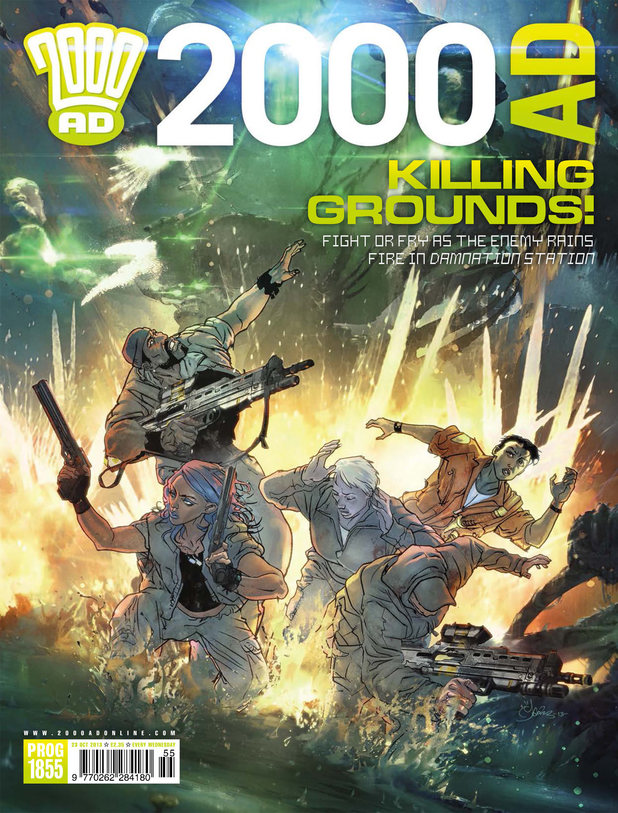
When I was a student, my mate Mark was an avid reader of the comic magazine 2000AD. He probably still has all the originals in the loft. For those of you who have not heard of it, this is a British publication that used stunning graphic art to bring to life futuristic characters such as lawman Judge Dredd Rogue Trooper, the robot mayhem of ABC Warriors and the mutant killers of Strontium Dog.

I often borrowed Marks copies and read them- but they made me very uncomfortable. Some I would have to skip past, as the vision of the future was so dark, so dystopian. Policemen (Dredd) who killed to dispense justice, Characters that were hard and bad, societies that were falling apart and full of violence and hatred and perpetual warfare. Robot weapons systems that killed, robot planes that rained terror.

I remembered the feeling these magazines gave me the other day, as I was reading something about the American (and British) use of remote drones. As I read it, the emotions rising in me were the same as reading those old comics.

Except this was not fantasy from the imagination of some talented geeks, this was real life, real death.

On September 11th 2001 terrorist crashed two planes into the World Trade Centre in an appalling act of violence. 2823 people died. We know each of their names.

Since then we have had wars in two countries thousands of miles from America. One of these countries (Iraq) had no connection whatsoever to the deaths above, but somehow the thirst for blood made invasion acceptable under a flag known as ‘the war on terror’. According to the website Iraq body count, between 115,000 and 120,000 civilians have died in Iraq since the invasion. They are nameless.

The other country (Afghanistan) was a traumatised mess of extremism, poverty and wilderness, long used to being the place where superpowers play out their war games. Bad people lived there, and it was time to take them out. It was time for pay back. Around 14,000 civilians have died there according to the Guardian. These too are nameless.

Of course, most of these deaths were not caused by American or British bombs and bullets. However, some most definitely were.

A-Reaper-drone-as-used-by-001

This is a ‘Reaper’ drone. Its name and appearance are straight from the pages of 2000AD. Reapers fly wherever they want to over Afghanistani and (even more controversially) Pakistani, Somalian and Yemeni airspace, seeking out targets. They are like airborne Judge Dredds, administering remote justice. Killing bad men. Avenging all those innocents that died in the towers. Surgically and clinically cutting away the canker of terror. It is a triumph of technology over tribalism, of wise investment over evil. Best of all it is clean and risk free to the good guys, who sit thousands of miles away in front of screens, using joysticks with big red buttons on top.

The article that brought all this back to me concerned a discussion about the numbers of civilian deaths caused by these machines. This has proved to be a rather difficult thing to estimate. Who is a combatant and who a civilian? Whose intelligence do we believe? Is that a gun on the grainy photograph or an umbrella? Add to that the fact that many of these attacks happen in remote and rural villages high in the mountains of Afghanistan and Pakistan, far from the eyes of the media.

And that discomfort rises in me again. How much death is enough? How much more bad blood can we cause?

Air Force, Army leaders discuss new UAS concept of operations

So, who are these people who are being killed?

An organisation trying to shine some light onto the use of drones is The Bureau of Investigative Journalism. They estimate that the total numbers of people killed are around 2,523-3,621, of which around 416-948 were civilians– women, children, passers by, mistakes, regrettable casualties of war.

They are gathering a database called ‘naming the dead’, in which they try to tell the story of each confirmed death by these drone strikes. This is their rationale;

At launch, the Bureau is publishing in English and Urdu the names of over 550 people – both militants and civilians. This list will grow in the future.

Of the named individuals:

  • 295 are civilians, including 95 children

  • 255 are alleged militants – of whom 74 are classed as senior commanders

  • Just two are women

Naming the Dead builds on the Bureau’s two-year project tracking drone strikes in Pakistan and the numbers of people reportedly killed. This extensive research has found that at least 2,500 people have reportedly been killed, including at least 400 civilians. But almost nothing is known about the identities of these casualties.

The Obama administration has claimed that drones are a highly precise weapon that target al Qaeda and affiliated groups, while causing almost no civilian harm. But it does not publish its own account of who it believes has been killed. By gaining a clearer understanding of who is dying in drone strikes the Bureau aims to inform the debate around the effectiveness of the US’s use of drones – and around this rapidly evolving weapons system.

Are we happy to leave the future of our planet in the hands of Judge Dredd? If not, let us remember that killing people by remote video game leads only to a devaluation of human life. Lord have mercy on us.

By way of my small protest, here is one of the stories taken from the Naming the Dead website;

Ob297-Bibi-Mammana-Panorama-screengrab

Little is known of Bibi Mamana’s life except that she was in her 60s, a grandmother, the wife of the retired headmaster of the Government High School in Miranshah, and a midwife who ‘delivered hundreds of babies‘ in her community. However the events immediately around her death have been well documented.

According to detailed reporting in The Times and the BBC’s Panorama programme, among others. For days before the strike there had been the constant hum of drones overhead, it was reported. Mamana and several of her grandchildren were outside the family home. She was picking okragathering wood for Eid al Adha tending to livestock when a drone struck.

It is not clear how many missiles were fired. But Mamana’s eight-year-old granddaughter Nabeela (aka Mabeela Rehman) was 20m away from where they hit. She told The Times: ‘I saw the first two missiles coming through the air… They were following each other with fire at the back. When they hit the ground, there was a loud noise. After that I don’t remember anything.’ Nabeela was injured by flying shrapnel.

At the sound of the explosion, Mamana’s grandson Kaleem (aka Kaleemur or Kaleemullah), 18, ran from the house to help his grandmother. But five to seven minutes later the drones struck again, he told the BBC. He was knocked unconscious. His leg was badly broken and damaged by shrapnel, and needed surgery.

The missiles physically hit Mamana, Amnesty researcher Mustafa Qadri said. ‘She’s literally hit flush and is blown to smithereens.’

Atiq, 38, Nabeela’s father and Mamana’s son, was in or was leaving a mosque at the time of the attack. On hearing the blast and seeing the plume of smoke he rushed to the scene. When he arrived he could not see any sign of his mother, he told The Times. He said: ‘My relatives arrived and urged me not to go too close. I started calling out for her but there was no reply. Then I saw her shoes. We found her mutilated body a short time afterwards. It had been thrown quite a long distance away by the blast and it was in pieces. We collected many different parts from the field and put a turban over her body.’

Atiq’s brother Rafiq was also away from the house when the missiles hit. He arrived as Mamana’s grave was being dug. Her body was already in a coffin. He told the BBC: ‘I threw myself over her coffin but the box was closed. The family told me not to open it as she had been hit by a missile and her body was in pieces.’

Family members hit in the same blast made the eight-hour bus journey to Peshawar for medical treatment. While there, Atiq showed The Times his mother’s identity card. The family then travelled on to Islamabad for specialist help. There Rafiq showed the BBC Mamana’s passport, pictures of her grave, the spot where they say the missile hit and fragments of the missile.

Rafiq told Al Jazeera English he received a letter after the strike from a Pakistani official which said the attack was a US drone strike and Bibi was innocent. But nothing more came of it, Rafiq said.

Sharon Shoesmith and the shadow cast by the death of children…

sharon-shoesmith-415x275

I have written quite a lot on this blog (see here and here for example) about the tragic death of Peter Connolly, known as ‘Baby P’. Although I have never worked as a full time child protection worker, I know enough about the inner workings of social work departments as they try to protect vulnerable children and adults to find a reflective distance on all that has flowed from these dreadful events. The events went something like this;

April 2007, concerns raised about parenting. Investigations started, child placed on at risk register

June- SWer raised concerns about injuries. Suspicion that these were non-accidental, but no evidence. Specialist medical assessments not conclusive. ‘Fell on stairs.’

Hv’s Swer visits- not enough to meet threshold for care proceedings- three multi-agency child protection conferences. Robust discussion (police later said ‘we told them to take action’) but course of action agreed by all.

CPS- not enough evidence for charge for neglect- this decision made the week the child died. Baby P seen Monday be SW, Wed(medics), Thurs, SWer again, Friday, dead.

At some point over last 48 hours, there was a brutal attack on the child. Swers had no knowledge of the two men living in the home- partner and lodger. Boyfriend hid when professionals visited- in a wardrobe and also in a trench in the back garden! Went to great lengths to hoodwink professionals.

The mother gave the impression that she was willing to work with staff- leading to optimism.

Then the media stuff exploded. The story became about Shoesmith- she was the visible face of criminal neglect by (primarily at first) social workers.

Later investigations launched into health services and police, finding significant failings. Media not nearly as interested.

Ofsted and government departments knew what had happened days after- they were informed. Serious case reviews happened, made recommendations. Months later (as the press and political response gathers like a storm) ofsted chose to make another inspection, which can be read here. They gave no prior warning of the contents of the report or opportunity to discuss the accuracy of the findings to Shoesmith prior to publishing- very unusual. The report was in stark constrast to earler findings by the same agency.

Since these events, numbers of children being removed from families and taken into care have doubled.

At the same time, child protection departments are finding huge problems recruiting social workers to do the work- Birmingham social work director recently described children in his area as ‘not safe’ because of their problems recruiting.

Yesterday there was another twist in the case. You may remember that the Director of Haringey social services was summarily sacked by the then Children’s Secretary Ed Balls.  It was then no surprise to me that the previously highly regarded Shoesmith won her case before an industrial tribunal.

It appears to have been a surprise to Balls though, who said this yesterday (see BBC report here)-

“An independent report said there were disastrous failings in Haringey children’s services. They said the management was at fault. Sharon Shoesmith was the director of children’s services and so of course it leaves a bad taste in the mouth that the person who was leading that department, and responsible, ends up walking away with, it seems, a large amount of money.”

Well that is what happens Ed when your actions are described like this be the court of appeal;

The Court of Appeal concluded Ms Shoesmith had been “unfairly scapegoated” and her removal from office in December 2008 by the then Children’s Secretary Ed Balls had been “intrinsically unfair and unlawful”.

I heard recently that the average length of a doctors career is around 28 years. The average length of a social workers career is (wait for it) 8 years.

We start off with such hopes- we can make a difference, we can do a job that is genuinely based on helping others, on making lives better, on reaching into the mess of humanity and saving people from destruction. Pretty soon we realise that we do very little of these things- we become bureaucrats, societal police. We are pushed towards engaging with people not as humans, but through the machinery of state. And most of our time is spent in front of computer screens punching in data, much which is done to ‘cover our backs’.

One interesting fact about soldiers fighting in wars appears to be that when wider society does not support the war effort (think Vietnam or Iraq) then cases of post traumatic stress disorder go way up. I have known a whole lot of social workers who have come apart at the seams.

My first job was as a mental health social worker in busy metropolitan Bolton. Dreadful things happened weekly- murders, suicides, drug addiction, violence. We discovered people living in terrible squalor and tried to form relationships with people who had forgotten that such things were possible. We worked really hard, and I would say with hindsight did some pretty amazing work given the resources and circumstances of our practice.

There were 4 of us were in my small team. One was well on the way towards being sacked as he was becoming increasingly erratic, before he was attacked by a man with a hammer. He never worked again. Another had a mental breakdown and became manic. She lost her social work registration, and still has problems seeing the world straight. She works now as a part time support worker. Another man had his problems with depression, before becoming a social work trainer, then retiring.

I am the only one of the four of us still working as a registered social worker 20 odd years later, and I am not pretending to have got away free of damage.

And we did not work directly with children.

I talk about these things not because I am out to curry sympathy, but more because what social workers do in our society no one else does. We need to decide then whether what we do is a valuable part of how our society works, and if it is, whether we are happy to see a group of trained professionals who have developed skills and a firm value base continuing this, or…

There is evidence that things may be turning. David Cameron actually got a round of applause for social workers at the Conservative Party Conference this year. There is talk of investing in new training (but reducing it to one year. Social workers currently train for 4 years.)

As I have said before however, do not pretend that babies will still not die at the hands of their abusers. No system will ever prevent all deaths. And hindsight will always tell us that things could/should have been done. Remember instead all those other children who are alive because of what social workers have done- and consider what you would have done in their place.

Tony Benn on aging towards the left…

Tony Benn

Image from The Guardian

This blog has contained a lot of politics recently- and I almost began this post with an apology. However, I am too angry to apologise really. Whoever said that you should never mix religion and politics was a fool. Followers of Jesus can never absent themselves from politics, but I would argue that our politics inevitably lead us towards the poor, the broken, the sick, the old. It has to be motivated by the motivations of Jesus.

I am seized by a the feeling that we are wasting time. Perhaps this is that point of my own life when the end feels nearer than the beginning, when what we have become seems an urgent issue rather than vague possibilities.

In many ways most of my friends and I started on the left then gradually slid to the right, if only in our passive acquiescence. I hated that in myself, and at least in my thinking, currently I am heading in entirely the opposite direction.

It was such a treat then to read this interview with Tony Benn today, particularly in the wake of yesterdays post about the disengaged politics of Russel Brand. In some senses, Benn’s experience might support Brand’s assertion that democratic politics has failed. Benn became progressively more left wing as he became older, before leaving the House of Commons as he put it “To devote more time to politics.” However, Benn remains a man who believes passionately in the democratic process. Here are a few quotes;

If you look back over history, most progress has come about when popular movements have emerged led by determined men and women. They take tremendous punishment from the establishment, and then if they stick it out they win the argument.”

“How does progress occur? To begin with, if you come up with a radical idea it’s ignored. Then if you go on, you’re told it’s unrealistic. Then if you go on after that, you’re mad. Then if you go on saying it, you’re dangerous. Then there’s a pause and you can’t find anyone at the top who doesn’t claim to have been in favour of it in the first place.” It strikes me that his belief in this process must have sustained him during the long periods in which he was mocked and marginalised.

The financial crash will, he believes, eventually force a change in strategic thinking. “What happened in 2007-8 is now used by the government as an example of the failure of the Labour party. But the changes that were brought about led to a need to think about something more radical, and more radical ideas – on, for instance, public ownership and education – would win popular support if they were presented to the public.” Having been deemed mad and then dangerous, Benn reckons the moment when his ideas are claimed by others is coming.

I really hope he lives to see it…

In the meantime, this is an itch I will continue to scratch. Where it will lead me, I do not know, but I have a conviction that politics can also be pilgrimage, even accepting that getting lost along the way from time to time is inevitable.

Brand and Paxman expose the cracks in capitalism (and ourselves.)

Emily told me to watch this.

If you have an interest in politics/economics/inequality etc, please watch it. I find myself slightly shocked at recommending a clip with a narcissistic smart mouth being interviewed by someone who uses cynicism like a rapier.

But watch it anyway.

Firstly- hooray.

Someone is shaking the tree. The video has gone viral- young people are revolting (if only by clicking the ‘share’ button.)Questions are being asked again about injustice, the operation of power, the distracting divisive effect of the media.The Occupy movement is heard of again in the mainstream media- I worried that it had been blown away like an electronic leaf in a cyber storm of ephemerality.

And perhaps most of all, a voice is speaking for the next generation – my kids – about the possibility of change. No, the NECESSITY of change. I fear that these voices have been silent, overwhelmed by consumerism and the chasing after product; be that a physical thing or a commoditised experience.

But…

Where is the connection to action? What is the vehicle for change? What are the dangerous ideas that will inspire?

The only idea Brand seems to have is this one- do not vote. It is a waste of time.

He may be right- but what do we do instead then?

I hope and pray that my kids might start to find some real alternatives. That they might come to believe that a different world is possible.

Watching Brand and Paxman is like engaging in a conversation between myself and my daughter (in fact it resulted in just that.) Paxman and I failed; after our radicalism, things got worse. Thatcher skewed us ever further into a credit fueled consumerism. The world became more unequal, power more concentrated in the hands of the rich.

We might cast cynical glances at the ideas of the next generation, but it will be their world soon, if it is not already.

Sorley MacLean; Calvary…

poets_pub

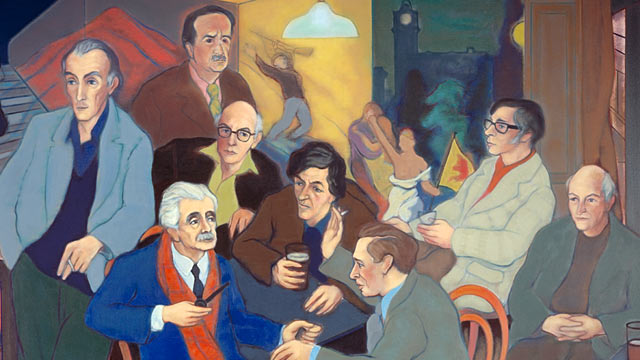
Poet’s Pub by Sandy Moffat

The ‘Poets’ Pub’ painting shows those writers known as the ‘Big Seven’ – arguably the most influential Scottish poets of the post-war era – Norman MacCaig, Hugh MacDiarmid, Sorley Maclean, Iain Crichton Smith, George Mackay Brown, Edwin Morgan and Robert Garioch.

Sorley MacLean wrote this in his grapple with the religion of his childhood. I heard a version of it tonight sung by Karen Matheson at the Beacon Arts Centre in Greenock. And though I lack the knowledge of the fair tongue, the effect was spine chilling.

And the words too…

Calvary

My eye is not on Calvary
nor on Bethlehem the Blessed,
but on a foul-smelling backland in Glasgow,
where life rots as it grows;
and on a room in Edinburgh,
a room of poverty and pain,
where the diseased infant
writhes and wallows till death.

Calbharaigh

Chan eil mo shùil air Calbharaigh
no air Betlehem an àigh
ach air cùil ghrod an Glaschu
far bheil an lobhadh fàis,
agus air seòmar an Dùn Èideann,
seòmar bochdainn ’s cràidh,
far a bheil an naoidhean creuchdach
ri aonagraich gu bhàs.

Travelers and the lure of an easy stereotype…

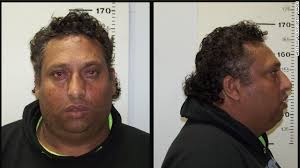
gypsy man

The news here has been full of lurid stories about Gypsies abducting little blond girls. Firstly a child found in Greece, later another in Dublin.

In neither case did we know the full facts but this has not stopped the worlds media from giving these two stories huge attention. In the Greek case they are now stalking a potential biological mother in Bulgaria, who seems to have given away her child as she was not able to support her. It already begins to look as though this story is about poverty, not about Gypsies. Within poor communities, children have always been passed around as a survival strategy so it should not be even slightly surprising.

Next we discovered that the blond kids removed by police from a Roma family in Dublin were returned to their parents after DNA tests. They were removed because they had blond hair.

So why all the hysterical attention, we have to ask?

The idea of an abducted child (even though we do not yet know whether either of these kids have actually been abducted) is an incredibly emotive issue- one that plugs in to our deepest fears as parents. This, I think, is the point. Our deepest fears. 

The swarthy outcasts who are always on the prowl- stealing the lead from our churches, the washing from our lines and our children from their beds. Hiding it all behind a quick wit and a muttered curse.

A few weeks ago there was one of those typical facebook stories handed round, suggesting that Gypsies had been seen in a particular locality watching and waiting for people to go to work so they could break into houses. Everyone was told to on their guard. There was then a line of concerned comments and bits of vitriol. True or not (and lets face it, probably not) we instinctively react to these stories as to a threat that ‘the bogeyman is coming to get you’ when we were children.

no gypsies sign

Here is my conviction; watch for the easy stereotype– particularly when aimed at a marginalised group.

It will almost certainly do damage.

Let us remember that hundreds of thousands of Roma people died in the Nazi death camps.

Let us remember too that traveling folk over the past 30-40 years in the UK have found that their lifestyles have almost been entirely forced right out onto the margins- both in terms of physical location, but also by the way society views them. This became a worry for me- I have met very few Gypsy folk- just a few contacts in my years as a social worker.

We hear stories of violence, bare knuckle fighting, weird weddings with girls dressed up like Disney dolls. We hear no stories of kindness, family, love, people who literally go the extra mile. How can we appreciate the value of the other unless we seek first to understand?

Unless we actually MEET people and share real lives?

This book might be a good place to start;

no place to call home

This is what the author has to say about her book;

My book starts with the story of the site clearance of Dale Farm, but it also goes much further afield, as well as back in history. It goes into the heat of the battle at Dale Farm – but I also examine the bitter conflict at Meriden, in the Midlands, where a small number of Romani Gypsy families also moved onto a field without planning permission, and then became embroiled in a very public dispute with some local residents.

I also travelled to Glasgow Govanhill to talk both to members of the settled community, and relatively newly arrived Roma, about life in the area and how the communities are learning to integrate, as well as travelling to both the Stow and the Appleby horse fairs to visit Gypsies and Travellers in trading and holiday mode. I went to Darlington in the North- East to visit the much respected sherar rom, elder Billy Welch, who organises Appleby Fair and has big dreams about getting out the Gypsy and Traveller vote, and to the North-West to talk to the devastated family of Johnny Delaney, a teenager from an Irish Traveller background who was kicked to death for being ‘a Gypsy’ ten years ago. I travelled down to Bristol to talk to veteran New Traveller Tony Thomson about life on the road in the 1980s, and being caught up the vicious policies of the Conservative government at that time. I also journeyed into East Anglia, where New Travellers, Irish Travellers and English Gypsies have made homes, and north of London, to Luton, to meet some of the destitute Romanian Roma who have created a vibrant community in the heart of England with the help of an inspirational Church of England priest named Martin Burrell. I was also invited to a convention in North Yorkshire by the Gypsy evangelical church, Light and Life, which is growing at an exponential rate and whose influence on nomadic cultures in the UK cannot be underestimated.

I could have travelled more – to Rathkeale, where English–Irish Travellers go for weddings, funerals and to have the graves of their ‘dear dead’ blessed once a year, or to Central and Eastern Europe, where most of the world’s Roma population (and the smaller population of Sinti and other nomadic groups) live. But I chose to concentrate on the experience of Gypsies, Roma and Travellers living in the UK – to go deep, rather than wide. But it was striking that many of those I interviewed would phone me from abroad, or from hundreds of miles away from their actual home, completely comfortable having travelled milto find work – as long as they were with family – or were earning money to keep their family.

The other way that we can encounter the other is through their art- their stories, songs, poems, paintings. I loved this little clip, from a Roma Cultural Festival in Portugal. Here we see real people full of life and pride in who they are, where they have traveled from…

Are we still sending white missionaries to cause problems in black Africa?

I heard about this film recently. It has made waves in the US and Canada- although only a few clips are available in the UK via you tube.

It is a documentary dealing about the impact of evangelists from the American International House of Prayer (IHOP), an organisation that some of us may know from forays into the weird world of Christian satellite TV.

Are we really still sending young white men and women to do this kind of thing? Did we not learn the lessons about from the Victorians about how religion and colonialism (perhaps better understood as globalisation) become a potent toxic mix?

And when violence and intolerance result, do we still blame the victims- as if it is the fault of some kind of black ‘heart of darkness’?

Another analogy that sprang to mind in relation to this shameful process was how the cold war used Africa to play out power games- we exported the tensions and hatreds to places like The Congo and Eritrea. It is almost as if the church is doing the same in relation to homosexuality. IHOP are losing the argument in increasingly secular US, so they are fighting the good theological fight against homosexuality in Uganda.

Lord forgive us.

Community has to be small, or it becomes bureaucracy…

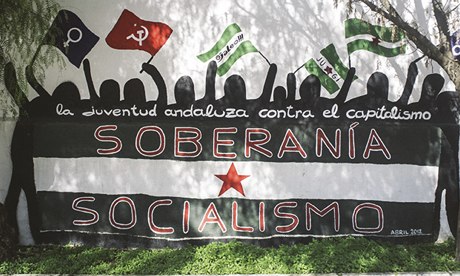
A socialist mural in Marinaleda.

I have never been a communist, not really.

However, I remember vividly the moment when the idea of communism took hold of me. I remember the discussion as a 15 year old boy around how it might be possible to live a different way- where our lives were not controlled by the profit principle, and where we shared what we have in order to live in harmony with one another, not in competition. It was electric.

Alongside all this was a whiff of something else- radicalism, danger. Our heros were no longer empire builders, but rather the challengers of injustice, the small people who stood in front of tanks or challenged corrupt authority only to be shot in their pulpits. There was a possibility of change, of things being better, simpler, more human.

It was also impossible to ignore the fact that communism seemed to fit remarkably well with the ideas of another radical, called Jesus.

Some people say that ideas like this are dangerous. Perhaps they are. For most of us however, they became the background hum of guilt inside our middle class lifestyles. Slowly our radicalism was buried by salaries, mortgages and the shopping run. It survived only in a few donations to charity, the odd sponsored third world child and the choice of newspaper we read.

I never believed in the inevitable rise of man towards utopia. I always doubted that capitalism would be defeated. Partly this was because we had little reason for optimism after Stalin’s purges and Mao’s cultural revolution. Like many I started to believe that Communism could not survive its encounter with broken humanity- that greed and corruption would always mean that the psychopaths would rise and that without the sharp edge of competition for personal gain we become blunted and lazy, leading to a slow decline. Capitalism was not perfect, but perhaps it could be managed I thought, to mitigate against some of the more damaging effects. Social welfare systems, health systems, progressive taxation to redistribute some wealth, protection under law for workers in employment, education for poor kids to give them a fair start. Democracy as the best compromise solution.

Perhaps these ideas are dangerous too however. They mean that certain hierarchies of unequal power and wealth remain fixed and unchanging. However, what real alternatives are there? Communism is bankrupt after all.

Meanwhile the world is in turmoil. Markets rise and fall, governments react paradoxically by blaming poor people for the excesses of the rich and powerful. All those things that might be seen as mitigations on the pursuit of profit are being slashed- education, health, welfare, social housing, unionisation.

In Europe, this is no where more apparent than in Spain. This from here;

Spain experienced a massive housing boom from 1996 to 2008. The price of property per square metre tripled in those 12 years: its scale is now tragically reflected in its crisis. Nationally, up to 400,000 families have been evicted since 2008. Again, it is especially acute in the south: 40 families a day in Andalusia have been turfed out of their homes by the banks. To make matters worse, under Spanish housing law, when you’re evicted by your mortgage lender, that isn’t the end of it: you have to keep paying the mortgage. In final acts of helplessness, suicides by homeowners on the brink of foreclosure have become horrifyingly common – on more than one occasion, while the bailiffs have been coming up the stairs, evictees have hurled themselves out of upstairs windows.

When people refer to la crisis in Spain they mean the eurozone crisis, an economic crisis; but the term means more than that. It is a systemic crisis, a political ecology crack’d from side to side: a crisis of seemingly endemic corruption across the country’s elites, including politicians, bankers, royals and bureaucrats, and a crisis of faith in the democratic settlement established after the death of Franco in 1975. A poll conducted by the (state-run) centre for sociological research in December 2012 found that 67.5% of Spaniards said they were unhappy with the way their democracy worked. It’s this disdain for the Spanish state in general, rather than merely the effects of the economic crisis, that brought 8 million indignados on to the streets in the spring and summer of 2011, and informed their rallying cry “Democracia Real Ya” (real democracy now).

For most of us, all this is happening on a scale that makes it impossible for us to fully grasp. We might focus on one small injustice, even raising voices of protest, but the entirety of the system is unchallengable, because it is too big. So what we have even in Spain is the call for better capitalism, better democracy, but no clear idea of what this might look like.

All of which is a long pre-amble to the reason for this post.

What exists at a human scale that might still gather real alternatives to all this naked profit-and-loss-boom-and-bust madness that we are dwarfed and diminished by?

For a long time, the idea that ‘communism does not work’ has irritated me. The smug example that is usually used to prove this dictum are Soviet Union collective farms- spectres of mass crop failure, starvation, forced labour and perhaps the worst sin of all, lack of productivity.

Today however, I read this about a small Spanish village called Marinaleda ;

When the 1,200-hectare El Humoso farm was finally won in 1991 – awarded to the village by the regional government following a decade of relentless occupations, strikes and appeals – cultivation began. The new Marinaleda co-operative selected crops that would need the greatest amount of human labour, to create as much work as possible. In addition to the ubiquitous olives and the oil-processing factory, they planted peppers of various kinds, artichokes, fava beans, green beans, broccoli: crops that could be processed, canned, and jarred, to justify the creation of a processing factory that provided a secondary industry back in the village, and thus more employment. “Our aim was not to create profit, but jobs,” Sánchez Gordillo explained to me. This philosophy runs directly counter to the late-capitalist emphasis on “efficiency” – a word that has been elevated to almost holy status in the neoliberal lexicon, but in reality has become a shameful euphemism for the sacrifice of human dignity at the altar of share prices.

Sánchez Gordillo once suggested to me that the aristocratic family of the House of Alba could invest its vast riches (from shares in banks and power companies to multimillion-euro agricultural subsidies for its vast tracts of land) to create jobs, but had never shown any interest in doing so. “We believe the land should belong to the community that works it, and not in the dead hands of the nobility.” That’s why the big landowners planted wheat, he explained – wheat could be harvested with a machine, overseen by a few labourers; in Marinaleda, crops like artichokes and tomatoes were chosen precisely because they needed lots of labour. Why, the logic runs, should “efficiency” be the most important value in society, to the detriment of human life?

The town co-operative does not distribute profits: any surplus is reinvested to create more jobs. Everyone in the co-op earns the same salary, €47 (£40) a day for six and a half hours of work: it may not sound like a lot, but it’s more than double the Spanish minimum wage. Participation in decisions about what crops to farm, and when, is encouraged, and often forms the focus of the village’s general assemblies – in this respect, being a cooperativista means being an important part of the functioning of the pueblo as a whole. Where once the day labourers of Andalusia were politically and socially marginalised by their lack of an economic stake in their pueblo, they are now – at least in Marinaleda – called upon to lead the way. Non-co-operativists are by no means excluded from involvement in the town’s political, social and cultural life – it’s more that if you are a part of the co-operative, you can’t avoid being swept up in local activities outside the confines of the working day.

Private enterprise is permitted in the village – perhaps more importantly, it is still an accepted part of life. As with the seven privately owned bars and cafés in the village (the Sindicato bar is owned by the union), if you wanted to open a pizzeria or a little family business of any kind, no one would stand in your way. But if a hypothetical head of regional development and franchising for, say, Carrefour, or Starbucks, with a vicious sense of humour and a masochistic streak, decided this small village was the perfect spot to expand operations, well – they wouldn’t get very far. “We just wouldn’t allow it,” Sánchez Gordillo told me bluntly.

This is one tiny village, even if others are starting to copy what they have done. I am sure it is no utopia. People will squabble and fall out and scratch at one another. The Mayor probably has too much power and charisma and it may well all go to his head.

What it leaves me with mostly is this- community works only in the small scale.

Love is only possible in the press of real relationships. It can not exist in abstract theory. It is not real unless tested in actual shared lives.

We all need to believe in something bigger, something better. For this village it has become a unifying factor. They see themselves as an egalitarian oasis in a mad unsustainable capitalist desert. I admit I am inclined to agree. I liked what the Mayor had to say- “I have never belonged to the communist party of the hammer and sickle, but I am a communist or communitarian,” Sánchez Gordillo said in an interview in 2011, adding that his political beliefs were drawn from those of Jesus Christ, Gandhi, Marx, Lenin and Che.

All this to me is a call back towards real community- let us forget the big scale, the macro economic choices of a distant and devalued government. Let us live an alternative- called community.

How this looks in your locality will have to be different to mine- but the central ideas will be the same, be they the ‘Christian heresy’ that is communism (according to CS Lewis) or actually those words of Jesus that we conveniently ignore.

Where did I put those olive seeds?

Fleet…

driftwood ships 1


Fridays these days usually mean working in my shed. We need to build up some more stock after a particularly successful Cowal Open Studios event.

I am probably going to go back to working for the council full time over the winter months, so these Friday creating days may be numbered.

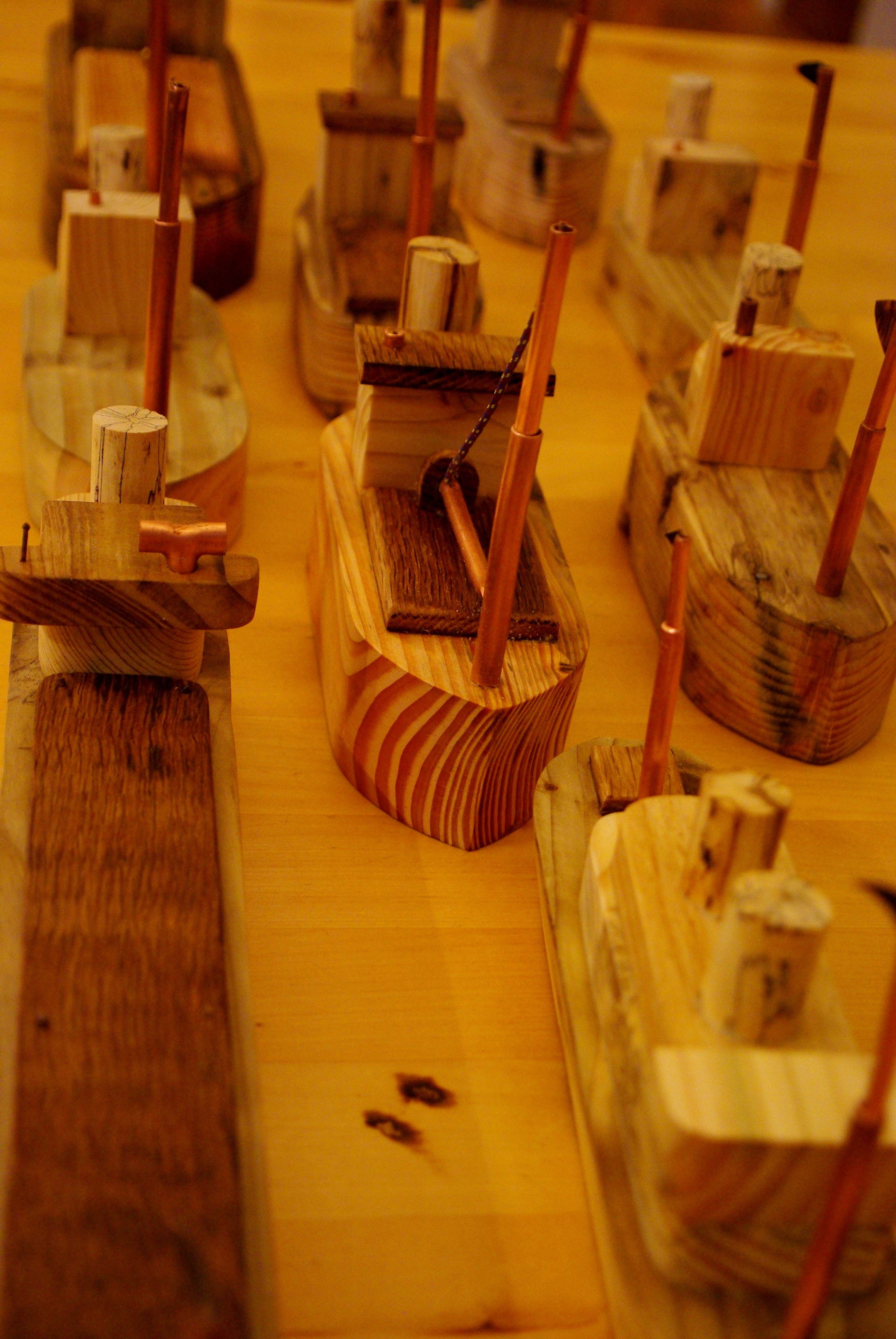
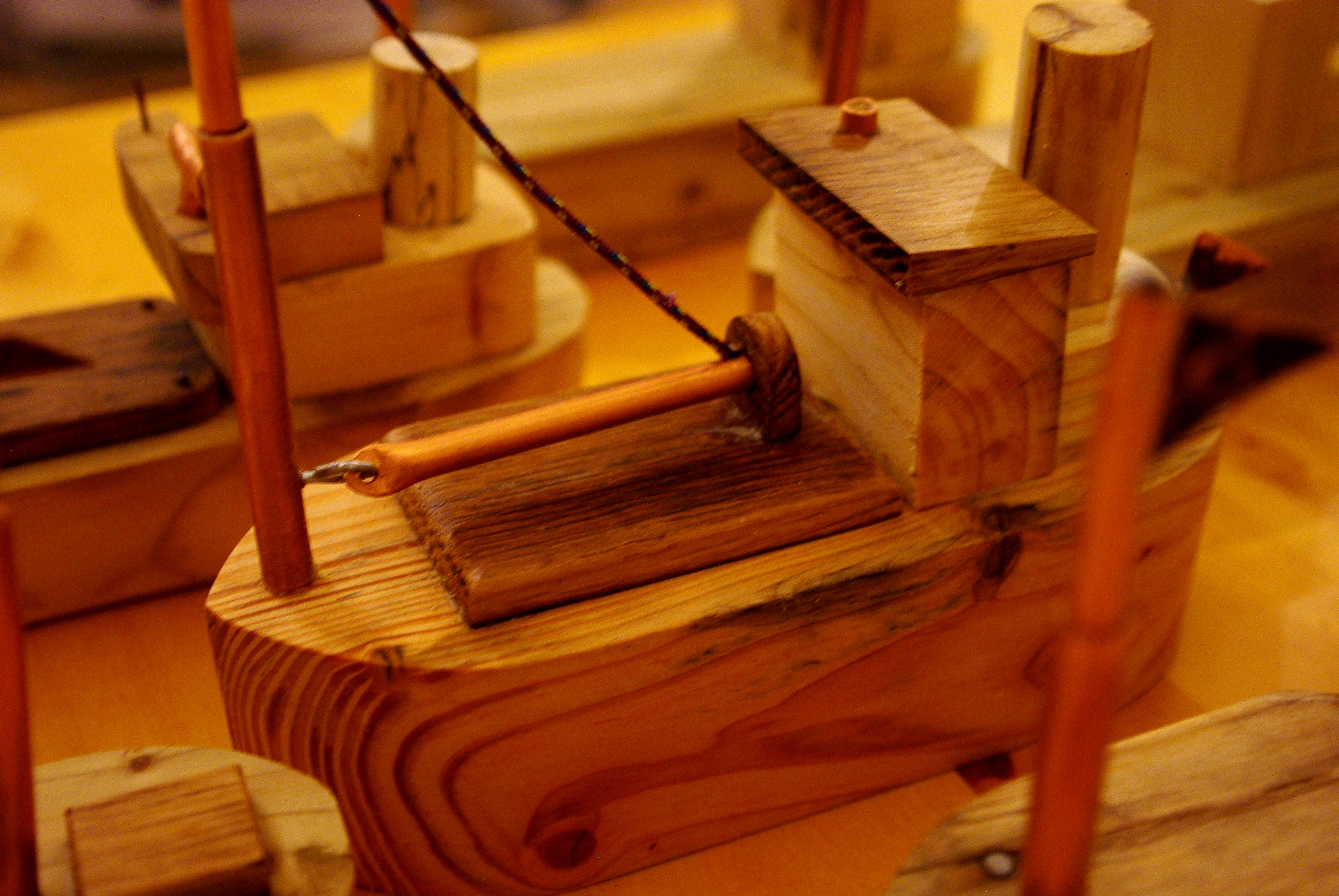
My latest obsession has been making ships out of driftwood- mostly Clyde Puffers. There is now quite a fleet of them on our dining room table…

driftwood ships 2