Over the last couple of days I have begun to work in earnest to renovate part of our house, ready for its transformation into a space for B and B/retreats/workshop accommodation. The first task is to make an en suite bathroom in one of the bedrooms.
The thing about DIY in old houses like ours is that you always make things much worse before you (hopefully) make things better.
You also tend to find all sorts of things that you were not expecting when you take off the surface layer of decoration.
You have to pace yourself, breaking the task down into manageable chunks, but at the same time be aware of the overall plan.
And what you have done, for good or ill, will not be abstract, but concrete.
I could describe the potential spiritual and psychological significance of all this but I am too knackered.
Susan pointed this out to me following my last post. Thought it to good not to repost;
When the day is done
And the ball has spun
In the umpire’s pocket away
And all remains in the groundsman’s pains
For the rest of time
And a day
There’ll be one mad dog and his master
Pushing for four with the spin
On a dusty pitch
With two pounds six of willow wood
In the sun
When an old cricketer leaves the crease
You never know whether he’s gone
If sometimes you’re catching a fleeting glimpse
Of a twelfth man at silly mid-on
And it could be Geoff, and it could be John
With a new ball sting in his tail
And it could be me, and it could be thee
And it could be the sting in the ale
The sting in the ale
When an old cricketer leaves the crease
Well, you never know whether he’s gone
If sometimes you’re catching a fleeting glimpse
Of a twelfth man on silly mid-on
And it could be Geoff, and it could be John
With a new ball sting in his tail
And it could be me, and it could be thee
And it could be the sting in the ale
The sting in the ale
When the moment comes
And the gathering stands
And the clock turns back to reflect
On the years of grace
As those footsteps trace
For the last time out of the act
Well, this way of life’s recollection
The hallowed strip in the haze
The fabled men and the noonday sun
Are much more than yarns of their day
When an old cricketer leaves the crease
Well, you never know whether he’s gone
If sometimes you’re catching a fleeting glimpse
Of a twelfth man on silly mid-on
And it could be Geoff, and it could be John
With a new ball sting in his tail
And it could be me, and it could be thee
And it could be the sting in the ale
The sting in the ale
When an old cricketer leaves the crease
Well, you never know whether he’s gone
If sometimes you’re catching a fleeting glimpse
Of a twelfth man on silly mid-on
And it could be Geoff, and it could be John
With a new ball sting in his tail
And it could be me, and it could be thee
Forgive me dear readers when this blog veers towards the noble game of cricket. I know that my love of the game is somewhat marginal in its broader interest, but something of its idiosyncratic pleasure chimes with my soul.
I think this is partly the combination of physicality and deep thinking; the pace of the game which is so often mocked by the unaware means that a lot of the skill of playing the game is in the head. All the small confrontations involved in the event of every ball bowled, and the open ended hope for victory almost to the last.
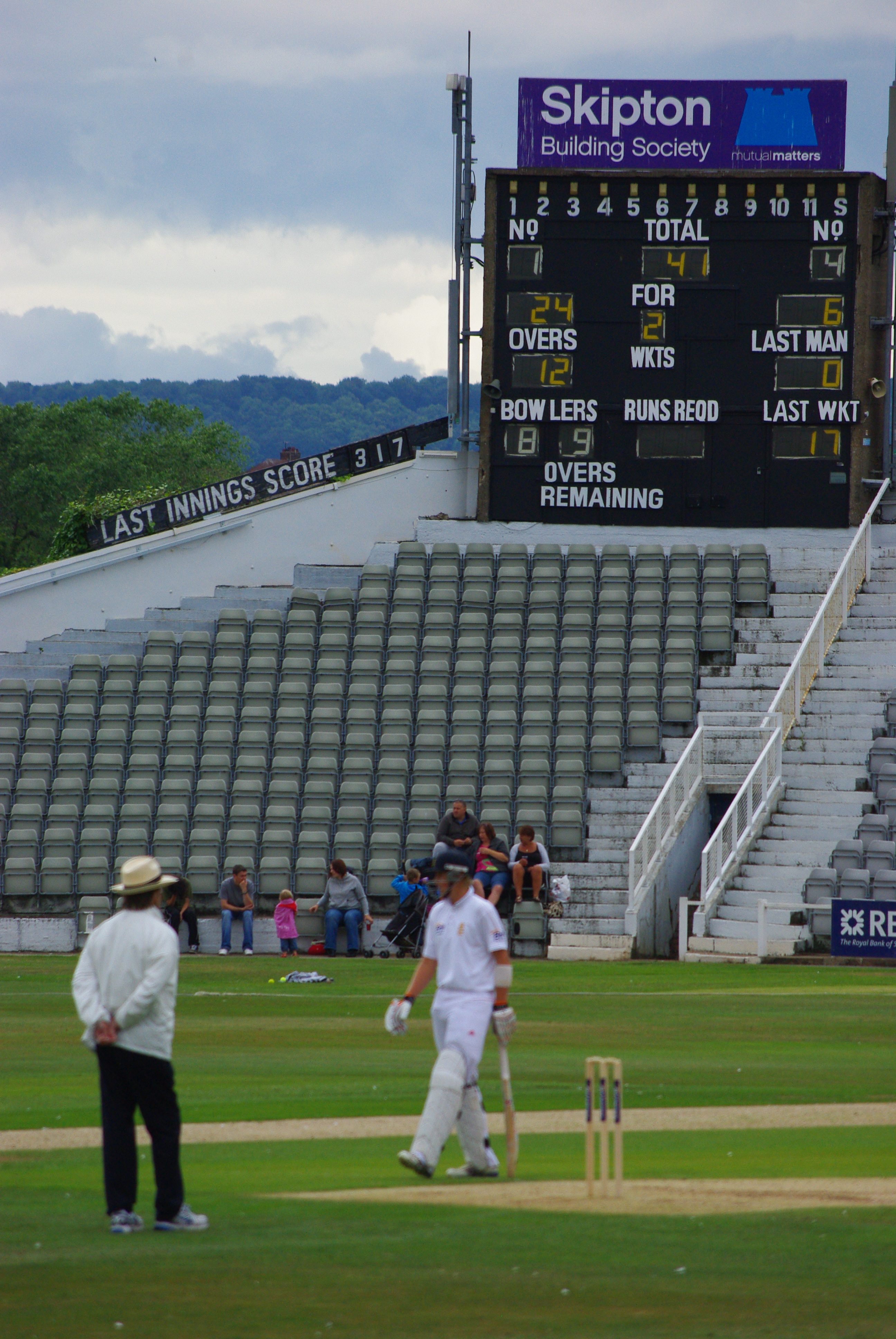
Today we played a reduced over match against a Royal Botanical Gardens side- just a friendly, cut down to 20 overs because of an approaching weather front. They rattled up 110 (a wicket apiece for both Will and I) and then I opened the batting, perishing swiping across the line at a full one for 11. Grrrrr. 20 over cricket it not my bag really- I much prefer longer forms of the game in which you can build an innings. Will was last out attempting a slog off one of their quick bowlers in the last over, skying a catch to mid on.
And cricket seems to have inspired lots of poetic writing over the years too- a happy combination of two of my passions. Here are a couple;
Firstly one of the more miserable, thanks to A E Houseman (from ‘Shropshire Lad‘ written in 1896.)
Twice a week the winter thorough
Here stood I to keep the goal:
Football then was fighting sorrow
For the young man’s soul.
Now in Maytime to the wicket
Out I march with bat and pad:
See the son of grief at cricket
Trying to be glad.
Try I will; no harm in trying:
Wonder ’tis how little mirth
Keeps the bones of man from lying
On the bed of earth.
Next an old Poem from Punch Magazine, written at the expense of a poor cricketer called William Scotton, renowed as a boring batsman. He probably would not have liked 20 over cricket either.Against the Australian team of 1886 Scotton played two remarkable innings in company with WG Grace, the two batsmen scoring 170 together for the first wicket for England at the Oval. Scotton’s score at the Oval was only 34 in 225.
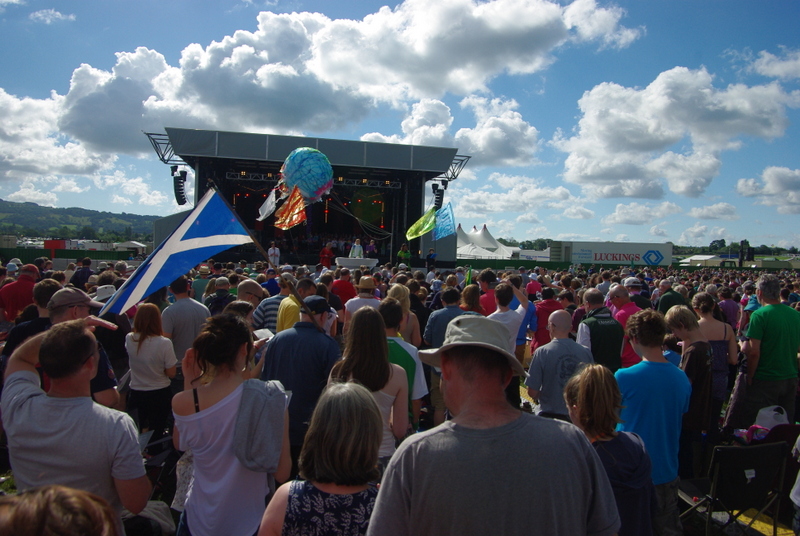
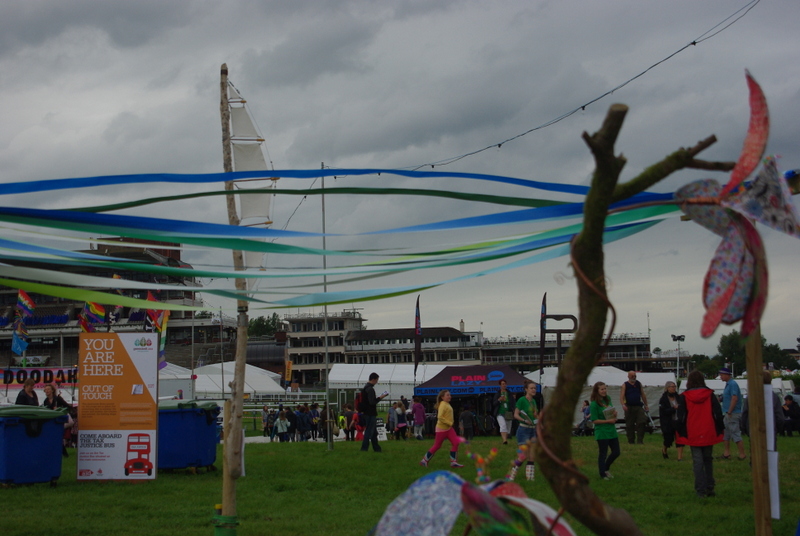
I am half man, half compost- as will be most attendees of this year’s Greenbelt festival.
This is partly the highly digestive social-spiritual mulch that Greenbelt always is, but also down to more corporeal matters;
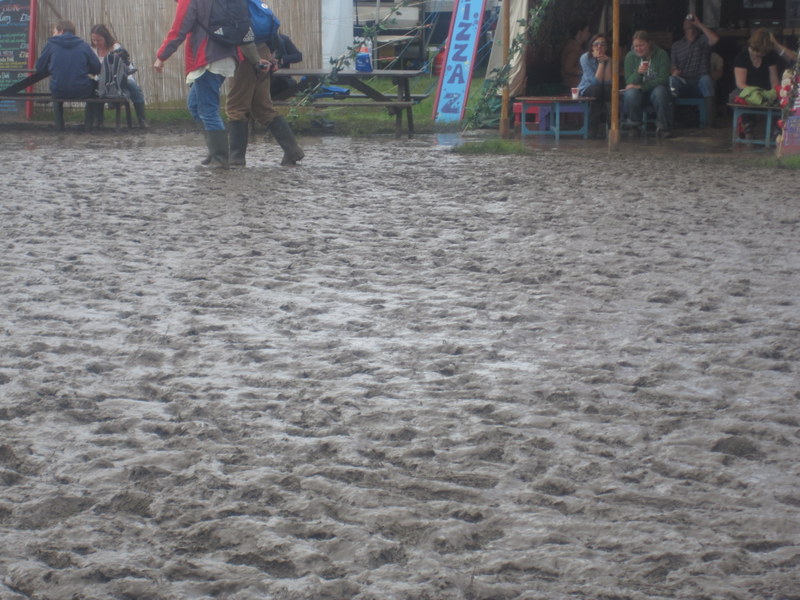
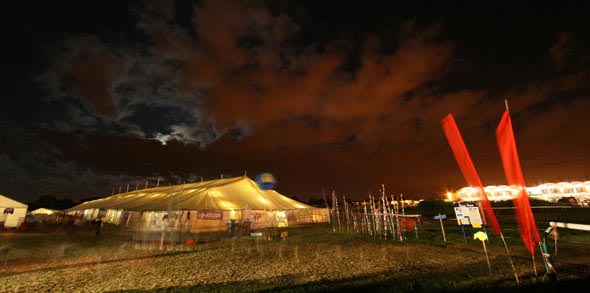
I live in a place famous for rain sweeping in from the sea and using us as blotting paper, but the rain that fell on the festival on Saturday was something else. Half the site was flooded and thirty thousand feet mixed anything not tarmac to gloop. The less stoical left, but the rest of us had more room to skirt the deepest mire and enjoy still some fantastic music, conversation, art and poetry.
Highlights for me;
Social- meeting up with friends from Lancashire, from Wales, from London, from Leeds etc. Sharing many a cup of tea and catching up with lives lived at a distance.
Spiritual- I managed to miss all the well known speakers like Tony Campolo, Tom Wright. I enjoyed Dave Tomlinson talking about a being a Bad Christian. Jonny Baker was really good on ‘A different world is possible’ too. I also loved being in the old Cathedral for the pre festival feast hosted by Feig (thanks guys!)
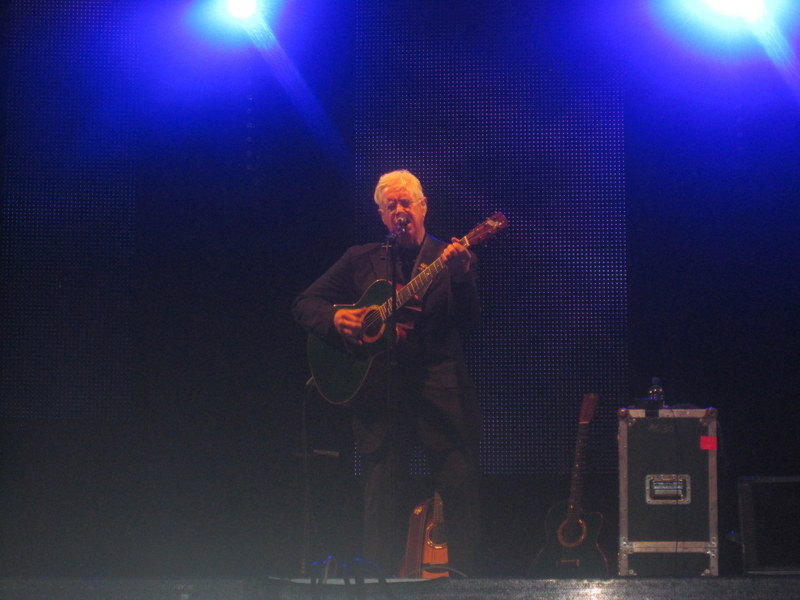
Musical- Bruce Cockburn– my guru for decades – was like a comfortable woolly jumper on a dark night. I knew every song, and most words too. Phantom Limb (Country, R and B, Eagles-like harmonies) blew me away. Then there was the folk fest on the last day- dancing in the mud to the Imagined Village (simply brilliant) and the wacky theatricality of Bellowhead. Martin Joseph reduced me to tears with one song.
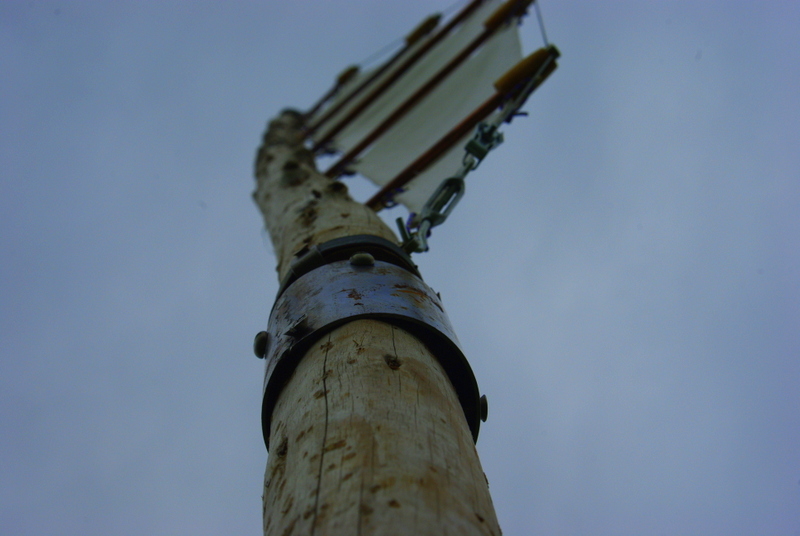
Aoradh’s contribution to the festival was characterised by technology issues! Our sculpture/soundscape installation became, well, just sculptures as the ultrasonic speakers failed to deliver what they promised. They still looked great though. As the weekend unfolded the ground beneath them turned to deep oozing brown sucking mud, but they remained defiant and proud.
Our talk/discussion entitled ‘Don’t do it like us, making real community in small towns and ordinary places’ was very well attended, and we were bombarded with questions. The power failed for half of it so we had to shout!
Another great festival, that somehow, despite the long distances and the conditions, has nurtured and encouraged me.
We are heading down south for a few days to be part of Greenbelt Festival in Cheltenham.
This year Aoradh are doing two things- some sculpture/soundscapes called ‘Paradisecasts’, and a talk entitled “Don’t do it like us; making community in real and ordinary places” which will be on Saturday 2.00PM in the ‘Living Room’.
Really looking forward to it all now, even though we have packed nothing yet…
Today I ‘signed on’ as a unemployed person. This entitles me to a small Jobseekers allowance, because of my contributions paid as contributions from my wages over the last twenty odd years.
I feel a song coming on;
I grew up in a Britain in which employment was a huge blight on society. This song became a kind of anthem for a generation, speaking about how people become less important than statistical processes.
I was reminded of this as today I received three letters from the benefits agency. They make absolutely no sense at all. Seriously- I would defy anyone to understand what they are trying to tell me. I understand something of the system, after all it was my job to support others through the morass previously, but even I was rather flummoxed. See what you think;
I am pleased to tell you that we can pay you jobseekers allowance from the 29th of July 2012. (Good, although I already knew that.)
You are not getting any more job seekers allowance because your partner is working for 24 hours a week or more (she is not, and we have told them several times, and in several ways that she is not.) If your partner is working for 24 hours a week or more you are not entitled to jobseekers allowance based on how much the law says you need to live on. (Huh?)
We cannot pay you jobseekers allowance from 30th January 2013.
I could go on, but I am sure you get the point.
Official speak, designed to give information in a way that is all about the information giver, not the information receiver. Information given to manage comeback.
Perhaps they can give me a job redesigning their letters?
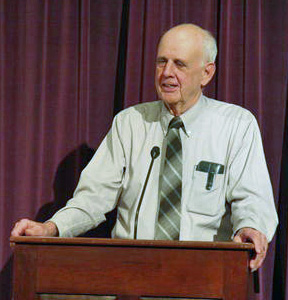
Wendell Berry is a prolific author, activist, poet and also a farmer in Kentucky, USA. He is also a life long Baptist Christian.
He came up with a list of what he saw as the best way to change our destructive Capitalist global economy into something more human scale, more sustainable and in tune with our environment, where ever this might be on the planet.
See what you think- might such a set of rules actually work in the real world?
A community economy is not an economy in which well-placed persons can make a ‘killing’. It is an economy whose aim is generosity and a well-distributed and safeguarded abundance.
Wendell Berry is a strong defender of family, rural communities, and traditional family farms. These underlying principles could be described as ‘the preservation of ecological diversity and integrity, and the renewal, on sound cultural and ecological principles, of local economies and local communities:
1. Always ask of any proposed change or innovation: What will this do to our community? How will this affect our common wealth.
2. Always include local nature – the land, the water, the air, the native creatures – within the membership of the community.
3. Always ask how local needs might be supplied from local sources, including the mutual help of neighbors.
4. Always supply local needs first (and only then think of exporting products – first to nearby cities, then to others).
5. Understand the ultimate unsoundness of the industrial doctrine of ‘labor saving’ if that implies poor work, unemployment, or any kind of pollution or contamination.
6. Develop properly scaled value-adding industries for local products to ensure that the community does not become merely a colony of national or global economy.
7. Develop small-scale industries and businesses to support the local farm and/or forest economy.
8. Strive to supply as much of the community’s own energy as possible.
9. Strive to increase earnings (in whatever form) within the community for as long as possible before they are paid out.
10. Make sure that money paid into the local economy circulates within the community and decrease expenditures outside the community.
11. Make the community able to invest in itself by maintaining its properties, keeping itself clean (without dirtying some other place), caring for its old people, and teaching its children.
12. See that the old and young take care of one another. The young must learn from the old, not necessarily, and not always in school. There must be no institutionalized childcare and no homes for the aged. The community knows and remembers itself by the association of old and young.
13. Account for costs now conventionally hidden or externalized. Whenever possible, these must be debited against monetary income.
14. Look into the possible uses of local currency, community-funded loan programs, systems of barter, and the like.
15. Always be aware of the economic value of neighborly acts. In our time, the costs of living are greatly increased by the loss of neighborhood, which leaves people to face their calamities alone.
16. A rural community should always be acquainted and interconnected with community-minded people in nearby towns and cities.
17. A sustainable rural economy will depend on urban consumers loyal to local products. Therefore, we are talking about an economy that will always be more cooperative than competitive.
I do not mean to be in any way rude to American readers, but there are lots of things that happen over on your side of the Atlantic that often seem to make little sense over here. I think this is partly because in many ways the Conservative, Christian, largely Republican middle America is so very different from the UK- even if this is just one part of your vast and wonderfully diverse country.
However, the influence that American Christian media has on certain strands of religion over here is significant- music, satellite TV, funding for ‘mission’, Evangelists, books- these are overwhelming dominated by US products.
It goes something like this- CEO of fast food company (who donate millions of dollars to charities who try to ‘cure’ homosexuality) openly states his opposition to gay marriage. This causes a backlash, including from the Mayor of Chicago, and- Kermit the Frog;
However, step forward the right wing ‘Shock Jock’ Mike Huckerbee;
…former Republican presidential candidate and current Fox News host, Mike Huckabee stepped in to defend Chick-fil-A. In order to bolster support for the company, he encouraged people to visit their local franchise on Wednesday. It was dubbedChick-fil-A Appreciation Day.
As Huckabee put it, it had the “simple” goal of affirming “a business that operates on Christian principles, and whose executives are willing to take a stand for the Godly values we espouse”.
Too often, he said, “those on the left make corporate statements to show support for same-sex marriage, abortion, or profanity, but if Christians affirm traditional values, we’re considered homophobic, fundamentalists, hate-mongers, and intolerant”.
There is so much I could say about this story. I think we have to start with an understanding of how easy it is to be influenced and controlled by our culture. Culture in this case that is mixed with religion and becomes so rigidly conservative and controlled by assumptions and normative values that make anything outside seem threatening and requiring a defensive (or even an aggressive) response.
There is also the fact that for much of Middle America, President Obama (the physical embodiment of this threat) and is ahead in the polls, leading to great uncertainty. Mitch Romney’s blunder-ridden jaunt around Europe might make him a comedic figure this side of the Atlantic, but to many he is the hope for salvation.
Then there is that word ‘fundamentalism’- which in this context involves a literal interpretation of the Bible- even if thinking Evangelicals would admit that there are still nuances to this when we try to adopt words into our culture. I have been around this way of thinking for much of my life, and though I currently find myself at considerable divergence, it is clear to me that many people who hold to these beliefs are actually trying desperately to live a good life, according to the light of God revealed through the words of the Bible.
On this issue however, I find myself with more in common with Kermit than with Huckabee.
Partly this is because my theology sits quite comfortably with same-sex unions- I am quite happy to celebrate love and life long commitment wherever we might find it. Far from this being a threat to any kind of family values I hold dear, my hope would be for new families to thrive and grow as mine has done.
I also do not think that Christians need to engage in any kind campaign to protect their ‘rights’ to proselytise or to condemn others for what we would see as immorality. Let us raise our voices against injustice, corporate greed, globalisation, leave the rest to God, and resist the throwing of the first stone.