There is a bit of a Q and A thing I did on the Proost site here.

So a few blokes get together and decide to make a film. They have a network of friends, some of them with lots of money, and share a common hatred- Islam.
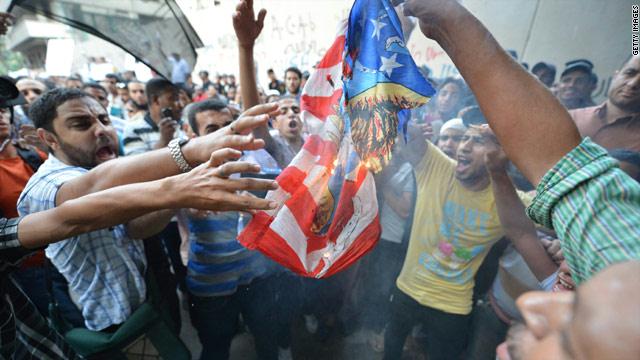
The film they make is so scandalous, so insulting, that it creates ripples around the globe. America, already seen by half the world as making a Christian Crusade against all things Islamic, has dared to display images of Mohamed, something specifically forbidden by the Qur’an, and this portrayal paints him as a weak, deluded womaniser who also abuses children and is gay.
They do not even tell the actors what they are planning- dubbing in the real content later.
It is a terrible film- you can see some of the lowlights of it on Youtube here. I am reluctant to give it any more airtime, but then again it is always important to know your enemy.
But then again, who is the enemy? On one side there are the bigoted, narrow minded Christians- the film maker appears to be a Coptic Christian called Nakoula Basseley Nakoula, and an organisation called Media for Christ. They are connected to lots of other prominent Islamophobes, such as Qur’an burning Florida Pastor Terry Jones.
On the other side, there are other violent men. People who would burst into Embassies and kill American diplomats. Others who would seek to kill people for making stupid crap films, and do so in the name of God.
So, this would seem to be a slight dilemma for those who seek to follow the ways of the Prince of Peace.
Although we have some easy clues in the Gospel stories- of how Jesus refused to join in with the men of violence, no matter where he found them but particularly when they claimed to have God on their side. He would saythat his followers should always be people of the open hand, not the clenched fist.
Because there is not doubt that the people behind this film were trying to provoke a reaction, even if the death of some of their own might have come as a shock.
Following the terrible attack on the World Trade Centre, the politics and theology of fear has dominated much of American collective consciousness. There is a really good article by Glenn Greenwald on what he describes as “The Sham Terroism Expert Industry” in which he has this to say;
The key role played by this “terrorism expert” industry in sustaining highly damaging hysteria was highlighted in an excellent and still-relevant 2007 Washington Post Op-Ed by Zbigniew Brzezinski. In it, he described how the War on Terror has created an all-consuming Climate of Fear in the U.S. along with a systematic, multi-headed policy of discrimination against Muslim Americans based on these severely exaggerated threats, and described one of the key culprits this way:
Such fear-mongering, reinforced by security entrepreneurs, the mass media and the entertainment industry, generates its own momentum.The terror entrepreneurs, usually described as experts on terrorism, are necessarily engaged in competition to justify their existence. Hence their task is to convince the public that it faces new threats. That puts a premium on the presentation of credible scenarios of ever-more-horrifying acts of violence, sometimes even with blueprints for their implementation.
There is no term more potent in our political discourse and legal landscape than “Terrorism.” It shuts down every rational thought process and political debate the minute it is uttered. It justifies torture (we have to get information from the Terrorists); due-process-free-assassinations even of our own citizens (Obama has to kill the Terrorists); and rampant secrecy (the Government can’t disclose what it’s doing or have courts rule on its legality because the Terrorists will learn of it), and it sends people to prison for decades (material supporters of Terrorism).
It is a telling paradox indeed that this central, all-justifying word is simultaneously the most meaningless and therefore the most manipulated. It is, as I have noted before, a word that simultaneously means nothing yet justifies everything. Indeed, that’s the point: it is such a useful concept precisely because it’s so malleable, because it means whatever those with power to shape discourse want it to mean. And no faction has helped this process along as much as the group of self-proclaimed “terrorism experts” that has attached itself to think tanks, academia, and media outlets. They enable pure political propaganda to masquerade as objective fact, shining brightly with the veneer of scholarly rigor. The industry itself is a fraud, as are those who profit from and within it.
Is it surprising that in all of the focus groups, think tanks and lobby groups, there is a sudden deeper interest in parts of the world where Christian are being oppressed, particularly by Islamic groups- for example the Coptic Christian in Egypt?
If this is happening within the political mainstream, how surprised should we be that the religious right might seek to go even further, and attack the very premise of Islamic faith in a direct way- as somehow overtly terrorist in its very make up?
What would Jesus say to these people? He might call them a den of vipers perhaps? But then perhaps he would relent and talk about longing to gather them together like a hen might gather its chicks.
What would he say to us? Perhaps he might expect us to get on with living the lives of makers of peace- small peace and Big Peace. This might mean deliberately opening our hands to the other and refusing to raise the fist (or the gun/missile/spy satellite/propaganda film etc.)
Hmmm…

Over the last couple of days I have begun to work in earnest to renovate part of our house, ready for its transformation into a space for B and B/retreats/workshop accommodation. The first task is to make an en suite bathroom in one of the bedrooms.
The thing about DIY in old houses like ours is that you always make things much worse before you (hopefully) make things better.
You also tend to find all sorts of things that you were not expecting when you take off the surface layer of decoration.
You have to pace yourself, breaking the task down into manageable chunks, but at the same time be aware of the overall plan.
And what you have done, for good or ill, will not be abstract, but concrete.
I could describe the potential spiritual and psychological significance of all this but I am too knackered.
Loved this;
Susan pointed this out to me following my last post. Thought it to good not to repost;
When the day is done
And the ball has spun
In the umpire’s pocket away
And all remains in the groundsman’s pains
For the rest of time
And a day
There’ll be one mad dog and his master
Pushing for four with the spin
On a dusty pitch
With two pounds six of willow wood
In the sunWhen an old cricketer leaves the crease
You never know whether he’s gone
If sometimes you’re catching a fleeting glimpse
Of a twelfth man at silly mid-on
And it could be Geoff, and it could be John
With a new ball sting in his tail
And it could be me, and it could be thee
And it could be the sting in the ale
The sting in the aleWhen an old cricketer leaves the crease
Well, you never know whether he’s gone
If sometimes you’re catching a fleeting glimpse
Of a twelfth man on silly mid-on
And it could be Geoff, and it could be John
With a new ball sting in his tail
And it could be me, and it could be thee
And it could be the sting in the ale
The sting in the aleWhen the moment comes
And the gathering stands
And the clock turns back to reflect
On the years of grace
As those footsteps trace
For the last time out of the act
Well, this way of life’s recollection
The hallowed strip in the haze
The fabled men and the noonday sun
Are much more than yarns of their dayWhen an old cricketer leaves the crease
Well, you never know whether he’s gone
If sometimes you’re catching a fleeting glimpse
Of a twelfth man on silly mid-on
And it could be Geoff, and it could be John
With a new ball sting in his tail
And it could be me, and it could be thee
And it could be the sting in the ale
The sting in the aleWhen an old cricketer leaves the crease
Well, you never know whether he’s gone
If sometimes you’re catching a fleeting glimpse
Of a twelfth man on silly mid-on
And it could be Geoff, and it could be John
With a new ball sting in his tail
And it could be me, and it could be thee
Forgive me dear readers when this blog veers towards the noble game of cricket. I know that my love of the game is somewhat marginal in its broader interest, but something of its idiosyncratic pleasure chimes with my soul.
I think this is partly the combination of physicality and deep thinking; the pace of the game which is so often mocked by the unaware means that a lot of the skill of playing the game is in the head. All the small confrontations involved in the event of every ball bowled, and the open ended hope for victory almost to the last.
Today we played a reduced over match against a Royal Botanical Gardens side- just a friendly, cut down to 20 overs because of an approaching weather front. They rattled up 110 (a wicket apiece for both Will and I) and then I opened the batting, perishing swiping across the line at a full one for 11. Grrrrr. 20 over cricket it not my bag really- I much prefer longer forms of the game in which you can build an innings. Will was last out attempting a slog off one of their quick bowlers in the last over, skying a catch to mid on.
The very words of cricket are poetry- all the terms evolved over hundreds of years- Googly, Silly Point, Yorker, Chin music and Square leg.
And cricket seems to have inspired lots of poetic writing over the years too- a happy combination of two of my passions. Here are a couple;
Firstly one of the more miserable, thanks to A E Houseman (from ‘Shropshire Lad‘ written in 1896.)
- Twice a week the winter thorough
- Here stood I to keep the goal:
- Football then was fighting sorrow
- For the young man’s soul.
- Now in Maytime to the wicket
- Out I march with bat and pad:
- See the son of grief at cricket
- Trying to be glad.
- Try I will; no harm in trying:
- Wonder ’tis how little mirth
- Keeps the bones of man from lying
- On the bed of earth.
Next an old Poem from Punch Magazine, written at the expense of a poor cricketer called William Scotton, renowed as a boring batsman. He probably would not have liked 20 over cricket either.Against the Australian team of 1886 Scotton played two remarkable innings in company with WG Grace, the two batsmen scoring 170 together for the first wicket for England at the Oval. Scotton’s score at the Oval was only 34 in 225.
- Block, block, block
- At the foot of thy wicket, O Scotton!
- And I would that my tongue would utter
- My boredom. You won’t put the pot on!
- Oh, nice for the bowler, my boy,
- That each ball like a barndoor you play!
- Oh, nice for yourself, I suppose,
- That you stick at the wicket all day!
- And the clock’s slow hands go on,
- And you still keep up your sticks;
- But oh! for the lift of a smiting hand,
- And the sound of a swipe for six!
- Block, block, block,
- At the foot of thy wicket, ah do!
- But one hour of Grace or Walter Read
- Were worth a week of you!
I am half man, half compost- as will be most attendees of this year’s Greenbelt festival.
This is partly the highly digestive social-spiritual mulch that Greenbelt always is, but also down to more corporeal matters;
I live in a place famous for rain sweeping in from the sea and using us as blotting paper, but the rain that fell on the festival on Saturday was something else. Half the site was flooded and thirty thousand feet mixed anything not tarmac to gloop. The less stoical left, but the rest of us had more room to skirt the deepest mire and enjoy still some fantastic music, conversation, art and poetry.
Highlights for me;
Social- meeting up with friends from Lancashire, from Wales, from London, from Leeds etc. Sharing many a cup of tea and catching up with lives lived at a distance.
Spiritual- I managed to miss all the well known speakers like Tony Campolo, Tom Wright. I enjoyed Dave Tomlinson talking about a being a Bad Christian. Jonny Baker was really good on ‘A different world is possible’ too. I also loved being in the old Cathedral for the pre festival feast hosted by Feig (thanks guys!)
Musical- Bruce Cockburn– my guru for decades – was like a comfortable woolly jumper on a dark night. I knew every song, and most words too. Phantom Limb (Country, R and B, Eagles-like harmonies) blew me away. Then there was the folk fest on the last day- dancing in the mud to the Imagined Village (simply brilliant) and the wacky theatricality of Bellowhead. Martin Joseph reduced me to tears with one song.
Art- LOVED Si Smith’s new work on the book of Job.
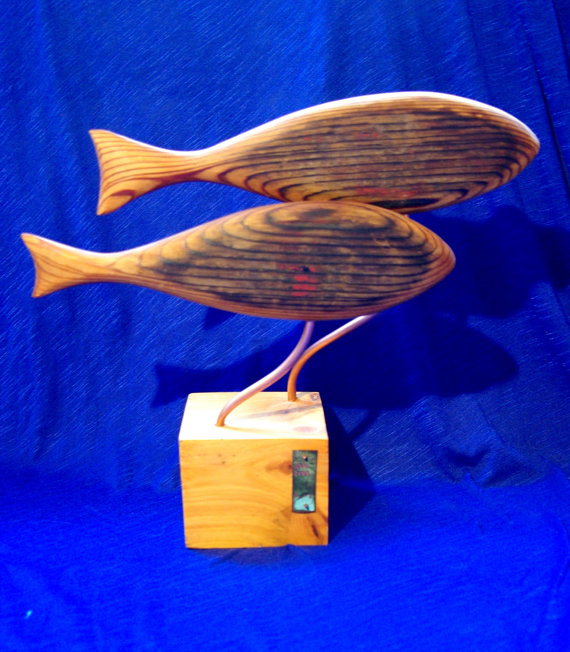
Aoradh’s contribution to the festival was characterised by technology issues! Our sculpture/soundscape installation became, well, just sculptures as the ultrasonic speakers failed to deliver what they promised. They still looked great though. As the weekend unfolded the ground beneath them turned to deep oozing brown sucking mud, but they remained defiant and proud.
Our talk/discussion entitled ‘Don’t do it like us, making real community in small towns and ordinary places’ was very well attended, and we were bombarded with questions. The power failed for half of it so we had to shout!
Another great festival, that somehow, despite the long distances and the conditions, has nurtured and encouraged me.
Now, need to get down to DIY!
We are heading down south for a few days to be part of Greenbelt Festival in Cheltenham.
This year Aoradh are doing two things- some sculpture/soundscapes called ‘Paradisecasts’, and a talk entitled “Don’t do it like us; making community in real and ordinary places” which will be on Saturday 2.00PM in the ‘Living Room’.
Really looking forward to it all now, even though we have packed nothing yet…
A while ago I wrote a post about Jon Ronson’s book the Psychopathy Test.
My mate Andy pointed me at this TED clip of Ronson which is well worth watching if you want a left field look at the mental health industry;