Archbishop suggests adding meditation to curriculum- shock…

Well, not quite.

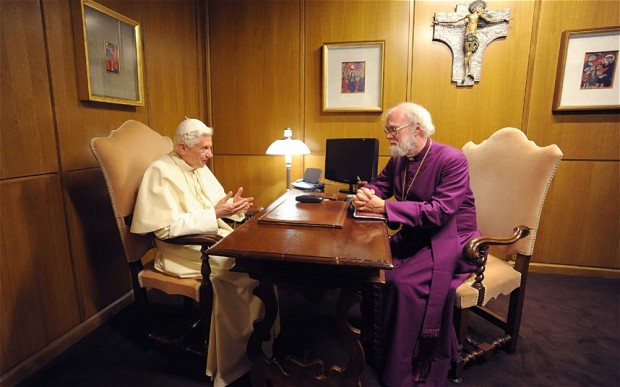
Rowan Williams spoke to some Catholic Bishops at the invitation of an unusually reconciliatory Pope Benedict. The meeting focussed on how the Church might be more relevant to an increasingly secular world.

The good Archbish offered up the idea of teaching kids to meditate;

“To put it boldly, contemplation is the only ultimate answer to the unreal and insane world that our financial systems and our advertising culture and our chaotic and unexamined emotions encourage us to inhabit,” he said.

“To learn contemplative practice is to learn what we need so as to live truthfully and honestly and lovingly. It is a deeply revolutionary matter.”

“Having seen at first hand, in Anglican schools in Britain, how warmly young children can respond to the invitation offered by meditation in this tradition, I believe its potential for introducing young people to the depths of our faith to be very great indeed.” Dr Williams added that for adults who had “drifted away” from regular attendance at Church, the style of worship practised in places such as Taizé could offer a “way back”.

From the Telegraph.

What do you think? Can developing a contemplative life really have such a transformational effect on the next generation? Can you really inculcate the practice of spiritual contemplation at an early age in this way?
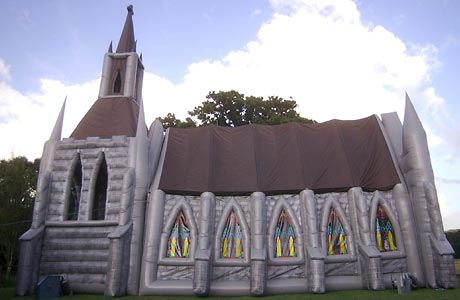
The shape of the future church in Scotland?

We have just had an invite to this event;

AN OPPORTUNITY TO MEET WRITERS MICHAEL FROST & ALAN HIRSCH TO
CONSIDER THE SHAPING OF THE CHURCH IN SCOTLAND

10:00AM – 4:00PM

5TH DECEMBER INTERNATIONAL CHRISTIAN COLLEGE,
GLASGOW

7TH DECEMBER STEEPLE CHURCH, DUNDEE

11TH DECEMBER COMMUNITY CHURCH EDINBURGH

£25 INCLUDING LUNCH AND REFRESHMENTS

WEDNESDAY 12TH DECEMBER

COMMUNITY CHURCH EDINBURGH, 7.30 PM

A FREE EVENT, OPEN TO ALL, TO END THE TOUR

Almost ten years ago Australian authors Michael Frost & Alan Hirsch
published their hugely influential book The Shaping of Things to
Come. In it they offered both and analysis of the church of the West
and the culture in which it operates as well as a vision for what that
church might look like.

We are delighted to welcome Michael Frost & Alan Hirsch to Scotland
to offer a day of teaching, reflection and discussion about the future
shape of the church around the country. If you are passionate about
the church, its future and its role in society then this is a day for you …
come and join the conversation.

The all day events are £25, which regretfully might exclude some… I am still chewing on whether it will exclude me, which was something of a surprise- I have read various things by these blokes and the subject is right in the middle of my interests.

I think I am just a wee bit jaded of the constant picking over the bones of the Church. Let us just get on with being church. I also wonder slightly what we might learn about the Scottish Church from an Australian and a South African.

Having said that, the place of institutional faith and the degree to which it might be more ‘alive’ to the great commission is certainly worth chewing on.

Perhaps I will go after all.

A window into the beginning of us…


There was an amazing story in the Guardian the other day about the discovery of some neolithic remains in Orkney. This is hardly surprising on the face of things- Orkney is covered in neolithic sites like pimples on a teenage face.

However, this site seems to have caused amazement in the archaeological world;

“We have discovered a Neolithic temple complex that is without parallel in western Europe. Yet for decades we thought it was just a hill made of glacial moraine,” says discoverer Nick Card of the Orkney Research Centre for Archaeology. “In fact the place is entirely manmade, although it covers more than six acres of land.”

Once protected by two giant walls, each more than 100m long and 4m high, the complex at Ness contained more than a dozen large temples – one measured almost 25m square – that were linked to outhouses and kitchens by carefully constructed stone pavements. The bones of sacrificed cattle, elegantly made pottery and pieces of painted ceramics lie scattered round the site. The exact purpose of the complex is a mystery, though it is clearly ancient. Some parts were constructed more than 5,000 years ago.

I love this story as it asks so many questions about who we are.

The place where we grew from in these islands appears not to be some southern soft plain. This complex is much older than Stonehenge, and a level of sophistication far beyond.

These people emerged from the background of creation (like Adam and Eve) then learnt how to survive (like Abel) before starting to farm (like Cain) then to trade and commune with one another (like Babel.)

And in the middle of it all, they searched for meaning, for spiritual significance, for connection with the heavens- so much so that they dedicated huge resources and time constructing these temples.

Whatever uses they put the temples (if indeed that is what they were) we will never know- and like any spirituality, it can never be understood in the abstract anyway- only in the immersion.

The temples are also a reminder that whilst we may have so much still in common with these ancient Orcadians, things also change- often in ways we may not expect;

Equally puzzling was the fate of the complex. Around 2,300BC, roughly a thousand years after construction began there, the place was abruptly abandoned. Radiocarbon dating of animal bones suggests that a huge feast ceremony was held, with more than 600 cattle slaughtered, after which the site appears to have been decommissioned. Perhaps a transfer of power took place or a new religion replaced the old one. Whatever the reason, the great temple complex – on which Orcadians had lavished almost a millennium’s effort – was abandoned and forgotten for the next 4,000 years.

Benches…


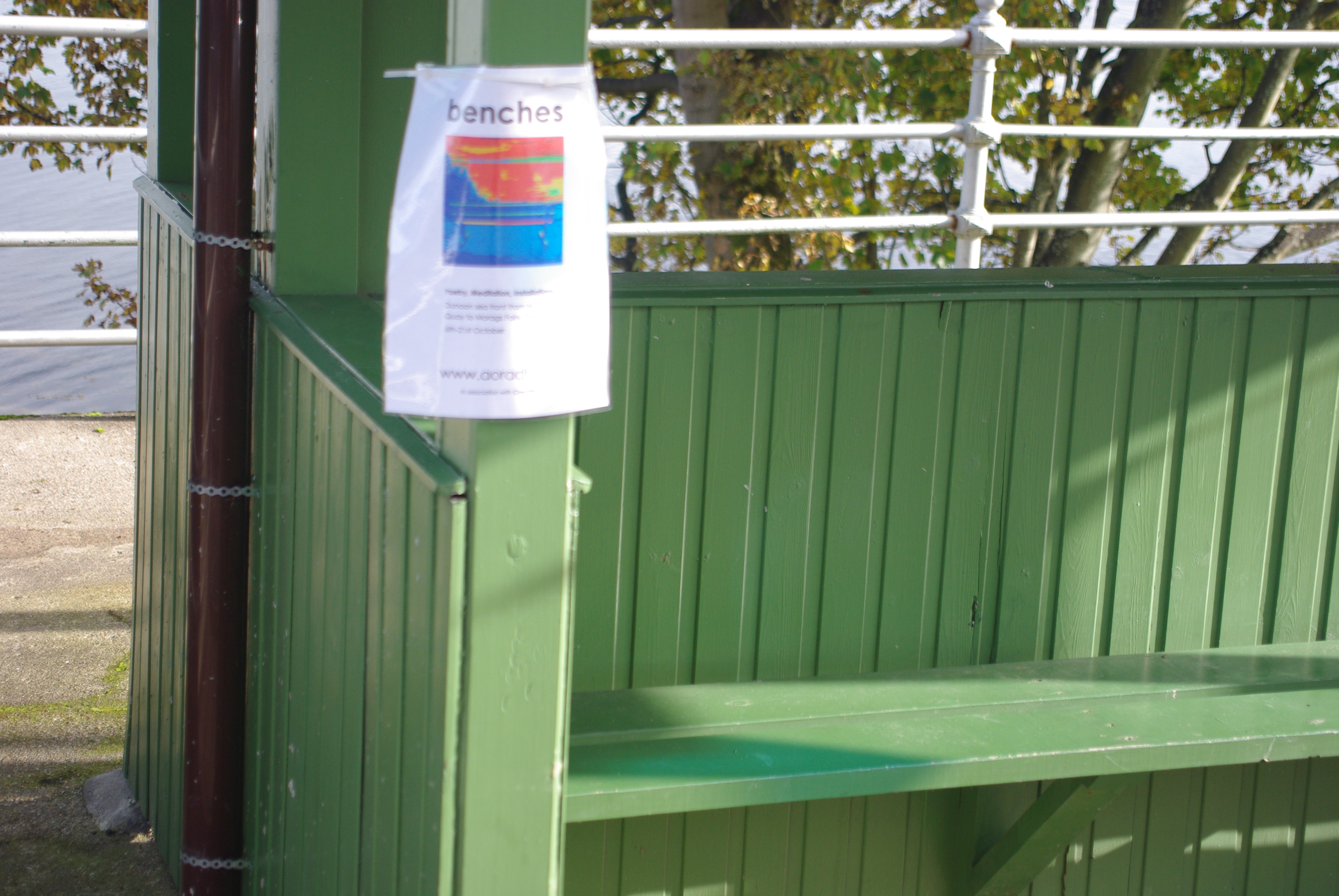
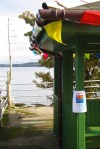
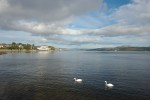
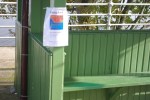
Yesterday some of us spent a rather fraught few hours rushing along Dunoon’s sea front setting up meditation stuff on benches.

I walked the length of it all again today with William- it was a lovely day and lots of people were out along the seafront.

Some of the benches had already been vandalised sadly- in fact I had words with some 12 year old boys who were ripping things down as I watched. However, there is lots that is still untouched and I hope others are able to use it.

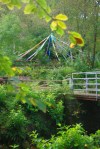
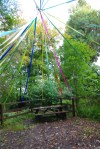
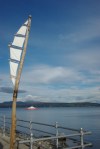
The final part is an installation in Morags Fairy Glen involving a fan of ribbons suspended high on a rope. It is simple and rather magical. It uses this poem as well (from Listing)

Against such there is no law…


Love is not against the law

Although in judicial circles

It is not encouraged


But where the Spirit of the Lord falls

Love is between us like oil on bearings


Joy is not forbidden

But wherever it breaks out

It is fragile

Like a bubble

In a pine forest


But where the Spirit of the Lord rests

Joy beats like a dancing drum in the middle of us

Calling us to dance


Peace is never prohibited

But like a dove above a shooting range

Its flight is fraught with danger


But where the Spirit of the Lord lives

The boundaries we keep are soft

And we are learning how

To forgive


Patience is permitted in most places

But only if you use it quickly


But where the Spirit of the Lord lingers

Patience is like the summer sun

Drawing out the sugars in the ripening fruit

Sweetening the harvest


Kindness is condoned even in the most unlikely places

But it will win you few contracts

And is not conducive to

Promotion


But where the Spirit of the Lord comes close

Kindness kind of follows after


Goodness will not result in a jail sentence

But neither will it pay its way

In the global village superstore


But when the Spirit of the Lord smiles

Goodness becomes the common currency

Gentleness is no crime

And in many places it is a clinical necessity

But it is easily overlooked

In the shadow of another conquest


But where the Spirit of the Lord draws near

Then hands all rough from hard works

Become softened to hold

And to heal


Faithfulness is never a traitor

Yet we live like weathervanes

Spun by the seasons

To face the prevailing winds


But when the Spirit of the Lord moves

Promises no longer require the threat

Of legal recourse


Self control is thundered from the pulpit

But just in case the message falls on deaf ears

We deploy the secret pew police

Rule books at the ready

Swinging their

Truncheons of truth

To crunch the knuckles

Of the apostate


But when the Spirit of the Lord comes amongst us

There is a perfect law called…


Freedom

Some photos here- click to enlarge;

Messy…

Just had a lovely evening with Samir Dawlatly, who blogs here (and writes lovely poems.) Sam is up in Glasgow attending a conference for medics, and talking to people about his passion for Chaplaincy in primary care settings (see here for more info.) He is also on the cusp of starting some kind of community/open house thing down in Birmingham and was interested to find out a bit more about Aoradh.

Sam also mentioned a bloke called A J Swoboda, who I had not come across previously. I loved this;

She cut off her long silken hair…

Emily is cutting her hair- in aid of Leukaemia research.

The photo above was taken at Christmas three years ago, a few months before Emily’s grandfather Robert died.

Here is Emily’s reason for cutting her hair;

So basically my Grandad was one of my best friends and I miss him a lot, but instead of being miserable I would rather do something about it, so I have decided to raise money for leukaemia research to help people like him.

My hair is currently waist length, and i’m going to cut it off, to about my chin length (about 16 inches)! The hair will also hopefully be taken by a charity that makes wigs for teenagers going through chemotherapy.

I’m aiming cut my hair in December, so I have plenty of time for fundraising! So yeah, please sponsor me 🙂

If you would like to contribute, you can do so through Emily’s Just Giving page here.

Wind…


The wind blows where it pleases

Sometimes barely breathing

-hardly moving the tender grass

Sometimes raging

-bowing the trees like penitents

But no-one knows where it blows from

Or the place it now is heading

So it is with you, child of the Living God


So give yourself to the wild winds of the Spirit

Ride them like a Storm Petrel

Inches from a dancing sea

Held in the curl of creation

Full of the joy of it all


From John 3 7-9

RIP Eric Hobsbawm…

Historian, marixist commentator and intellectual Eric Hobsbawm has died aged 95.

His is a name that has has stayed with me from being a student 25 years ago- someone who was prepared to look at history through the eyes of poor people. Who was prepared to analyse what have become by understanding the inequalities of power and wealth.

Emily has left school and is taking her higher/advanced higher qualifications at a Cardonald College- where she has chosen to study (much to her old dads pleasure) Sociology and Psychology. She is being exposed to all those old questions that excited me in the past (and the present.) How did we get here? Who is calling the shots? How could we be better- how could we organise ourselves so as to protect the poor and weak, and reign in the excesses of the strong and powerful?

Hobsbawm was a large part of this for me in the past. A left field calm voice who was able to speak with a quiet authority.

In praise of him, here are a few quotes (courtesy of the Guardian.)

On socialism and capitalism: “Impotence therefore faces both those who believe in what amounts to a pure, stateless, market capitalism, a sort of international bourgeois anarchism, and those who believe in a planned socialism uncontaminated by private profit-seeking. Both are bankrupt. The future, like the present and the past, belongs to mixed economies in which public and private are braided together in one way or another. But how? That is the problem for everybody today, but especially for people on the left.” 2009 Guardian article

On Tony Blair: “Labour prime ministers who glory in trying to be warlords – subordinate warlords particularly – certainly stick in my gullet.” 2002 interview

And from this essay;

…This was the way of thinking about modern industrial economies, or for that matter any economies, in terms of two mutually exclusive opposites: capitalism or socialism.

We have lived through two practical attempts to realise these in their pure form: the centrally state-planned economies of the Soviet type and the totally unrestricted and uncontrolled free-market capitalist economy. The first broke down in the 1980s, and the European communist political systems with it. The second is breaking down before our eyes in the greatest crisis of global capitalism since the 1930s. In some ways it is a greater crisis than in the 1930s, because the globalisation of the economy was not then as far advanced as it is today, and the crisis did not affect the planned economy of the Soviet Union. We don’t yet know how grave and lasting the consequences of the present world crisis will be, but they certainly mark the end of the sort of free-market capitalism that captured the world and its governments in the years since Margaret Thatcher and President Reagan…

…The test of a progressive policy is not private but public, not just rising income and consumption for individuals, but widening the opportunities and what Amartya Sen calls the “capabilities” of all through collective action. But that means, it must mean, public non-profit initiative, even if only in redistributing private accumulation. Public decisions aimed at collective social improvement from which all human lives should gain. That is the basis of progressive policy – not maximising economic growth and personal incomes. Nowhere will this be more important than in tackling the greatest problem facing us this century, the environmental crisis. Whatever ideological logo we choose for it, it will mean a major shift away from the free market and towards public action, a bigger shift than the British government has yet envisaged. And, given the acuteness of the economic crisis, probably a fairly rapid shift. Time is not on our side.

Benches…

Aoradh have been planning some installations to coincide with Cowalfest (walking festival) and the MOD (annual festival of Gaelic culture held in a different place in Scotland each year) both which will run in Dunoon over the next couple of weeks.

We have decided to use benches along a 1-2 mile stretch of coastline. Each bench will have a piece of poetry, scripture or an activity to help with meditation.

As ever, we are leaving everything until the last minute, but if you are in Dunoon over the next couple of weeks we really hope you enjoy the things we are creating.