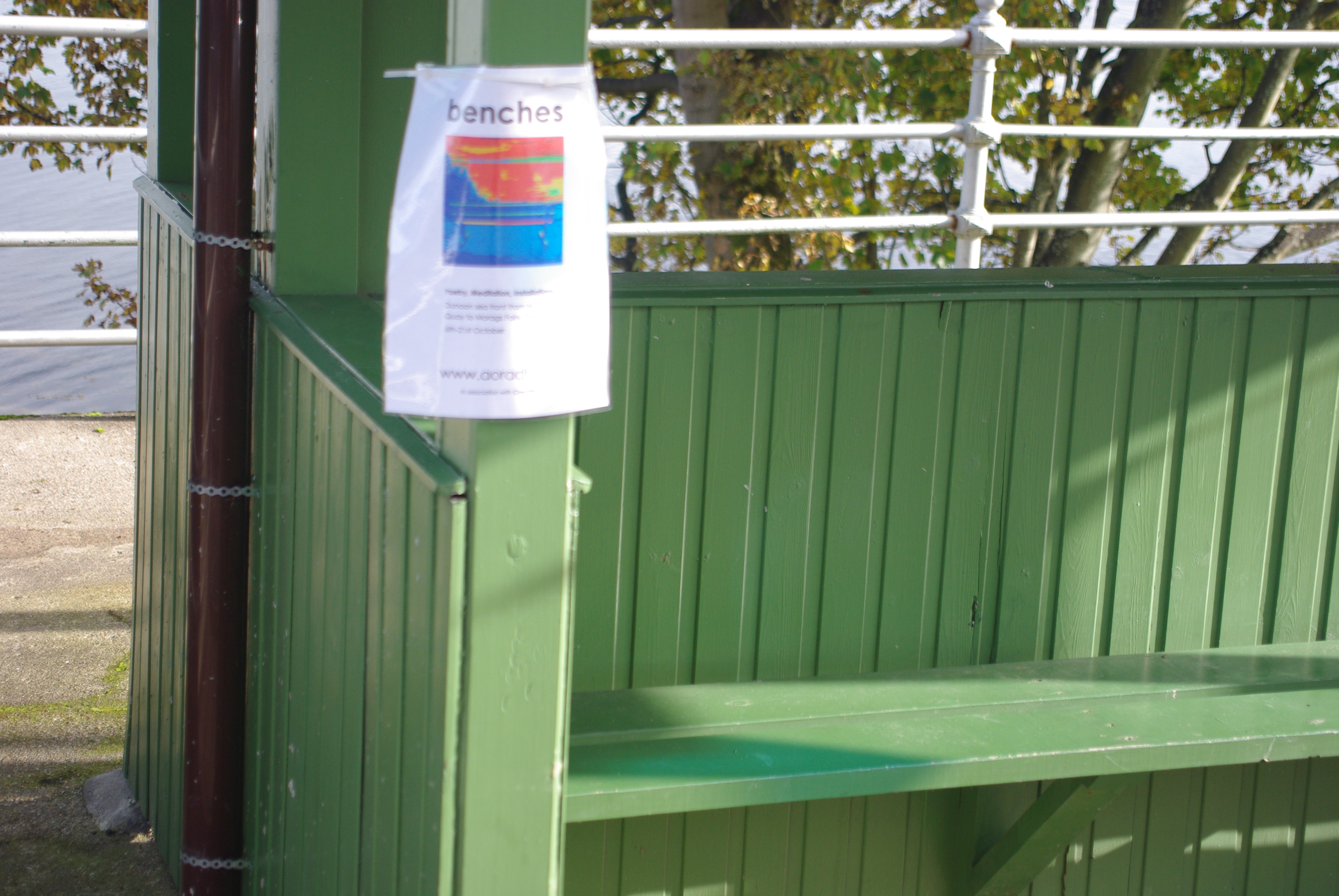
Benches…


Yesterday some of us spent a rather fraught few hours rushing along Dunoon’s sea front setting up meditation stuff on benches.

I walked the length of it all again today with William- it was a lovely day and lots of people were out along the seafront.

Some of the benches had already been vandalised sadly- in fact I had words with some 12 year old boys who were ripping things down as I watched. However, there is lots that is still untouched and I hope others are able to use it.

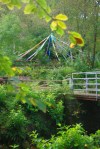
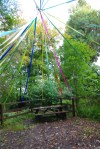
The final part is an installation in Morags Fairy Glen involving a fan of ribbons suspended high on a rope. It is simple and rather magical. It uses this poem as well (from Listing)

Against such there is no law…


Love is not against the law

Although in judicial circles

It is not encouraged


But where the Spirit of the Lord falls

Love is between us like oil on bearings


Joy is not forbidden

But wherever it breaks out

It is fragile

Like a bubble

In a pine forest


But where the Spirit of the Lord rests

Joy beats like a dancing drum in the middle of us

Calling us to dance


Peace is never prohibited

But like a dove above a shooting range

Its flight is fraught with danger


But where the Spirit of the Lord lives

The boundaries we keep are soft

And we are learning how

To forgive


Patience is permitted in most places

But only if you use it quickly


But where the Spirit of the Lord lingers

Patience is like the summer sun

Drawing out the sugars in the ripening fruit

Sweetening the harvest


Kindness is condoned even in the most unlikely places

But it will win you few contracts

And is not conducive to

Promotion


But where the Spirit of the Lord comes close

Kindness kind of follows after


Goodness will not result in a jail sentence

But neither will it pay its way

In the global village superstore


But when the Spirit of the Lord smiles

Goodness becomes the common currency

Gentleness is no crime

And in many places it is a clinical necessity

But it is easily overlooked

In the shadow of another conquest


But where the Spirit of the Lord draws near

Then hands all rough from hard works

Become softened to hold

And to heal


Faithfulness is never a traitor

Yet we live like weathervanes

Spun by the seasons

To face the prevailing winds


But when the Spirit of the Lord moves

Promises no longer require the threat

Of legal recourse


Self control is thundered from the pulpit

But just in case the message falls on deaf ears

We deploy the secret pew police

Rule books at the ready

Swinging their

Truncheons of truth

To crunch the knuckles

Of the apostate


But when the Spirit of the Lord comes amongst us

There is a perfect law called…


Freedom

Some photos here- click to enlarge;

Messy…

Just had a lovely evening with Samir Dawlatly, who blogs here (and writes lovely poems.) Sam is up in Glasgow attending a conference for medics, and talking to people about his passion for Chaplaincy in primary care settings (see here for more info.) He is also on the cusp of starting some kind of community/open house thing down in Birmingham and was interested to find out a bit more about Aoradh.

Sam also mentioned a bloke called A J Swoboda, who I had not come across previously. I loved this;

She cut off her long silken hair…

Emily is cutting her hair- in aid of Leukaemia research.

The photo above was taken at Christmas three years ago, a few months before Emily’s grandfather Robert died.

Here is Emily’s reason for cutting her hair;

So basically my Grandad was one of my best friends and I miss him a lot, but instead of being miserable I would rather do something about it, so I have decided to raise money for leukaemia research to help people like him.

My hair is currently waist length, and i’m going to cut it off, to about my chin length (about 16 inches)! The hair will also hopefully be taken by a charity that makes wigs for teenagers going through chemotherapy.

I’m aiming cut my hair in December, so I have plenty of time for fundraising! So yeah, please sponsor me 🙂

If you would like to contribute, you can do so through Emily’s Just Giving page here.

Wind…


The wind blows where it pleases

Sometimes barely breathing

-hardly moving the tender grass

Sometimes raging

-bowing the trees like penitents

But no-one knows where it blows from

Or the place it now is heading

So it is with you, child of the Living God


So give yourself to the wild winds of the Spirit

Ride them like a Storm Petrel

Inches from a dancing sea

Held in the curl of creation

Full of the joy of it all


From John 3 7-9

RIP Eric Hobsbawm…

Historian, marixist commentator and intellectual Eric Hobsbawm has died aged 95.

His is a name that has has stayed with me from being a student 25 years ago- someone who was prepared to look at history through the eyes of poor people. Who was prepared to analyse what have become by understanding the inequalities of power and wealth.

Emily has left school and is taking her higher/advanced higher qualifications at a Cardonald College- where she has chosen to study (much to her old dads pleasure) Sociology and Psychology. She is being exposed to all those old questions that excited me in the past (and the present.) How did we get here? Who is calling the shots? How could we be better- how could we organise ourselves so as to protect the poor and weak, and reign in the excesses of the strong and powerful?

Hobsbawm was a large part of this for me in the past. A left field calm voice who was able to speak with a quiet authority.

In praise of him, here are a few quotes (courtesy of the Guardian.)

On socialism and capitalism: “Impotence therefore faces both those who believe in what amounts to a pure, stateless, market capitalism, a sort of international bourgeois anarchism, and those who believe in a planned socialism uncontaminated by private profit-seeking. Both are bankrupt. The future, like the present and the past, belongs to mixed economies in which public and private are braided together in one way or another. But how? That is the problem for everybody today, but especially for people on the left.” 2009 Guardian article

On Tony Blair: “Labour prime ministers who glory in trying to be warlords – subordinate warlords particularly – certainly stick in my gullet.” 2002 interview

And from this essay;

…This was the way of thinking about modern industrial economies, or for that matter any economies, in terms of two mutually exclusive opposites: capitalism or socialism.

We have lived through two practical attempts to realise these in their pure form: the centrally state-planned economies of the Soviet type and the totally unrestricted and uncontrolled free-market capitalist economy. The first broke down in the 1980s, and the European communist political systems with it. The second is breaking down before our eyes in the greatest crisis of global capitalism since the 1930s. In some ways it is a greater crisis than in the 1930s, because the globalisation of the economy was not then as far advanced as it is today, and the crisis did not affect the planned economy of the Soviet Union. We don’t yet know how grave and lasting the consequences of the present world crisis will be, but they certainly mark the end of the sort of free-market capitalism that captured the world and its governments in the years since Margaret Thatcher and President Reagan…

…The test of a progressive policy is not private but public, not just rising income and consumption for individuals, but widening the opportunities and what Amartya Sen calls the “capabilities” of all through collective action. But that means, it must mean, public non-profit initiative, even if only in redistributing private accumulation. Public decisions aimed at collective social improvement from which all human lives should gain. That is the basis of progressive policy – not maximising economic growth and personal incomes. Nowhere will this be more important than in tackling the greatest problem facing us this century, the environmental crisis. Whatever ideological logo we choose for it, it will mean a major shift away from the free market and towards public action, a bigger shift than the British government has yet envisaged. And, given the acuteness of the economic crisis, probably a fairly rapid shift. Time is not on our side.

Benches…

Aoradh have been planning some installations to coincide with Cowalfest (walking festival) and the MOD (annual festival of Gaelic culture held in a different place in Scotland each year) both which will run in Dunoon over the next couple of weeks.

We have decided to use benches along a 1-2 mile stretch of coastline. Each bench will have a piece of poetry, scripture or an activity to help with meditation.

As ever, we are leaving everything until the last minute, but if you are in Dunoon over the next couple of weeks we really hope you enjoy the things we are creating.

Tea party…

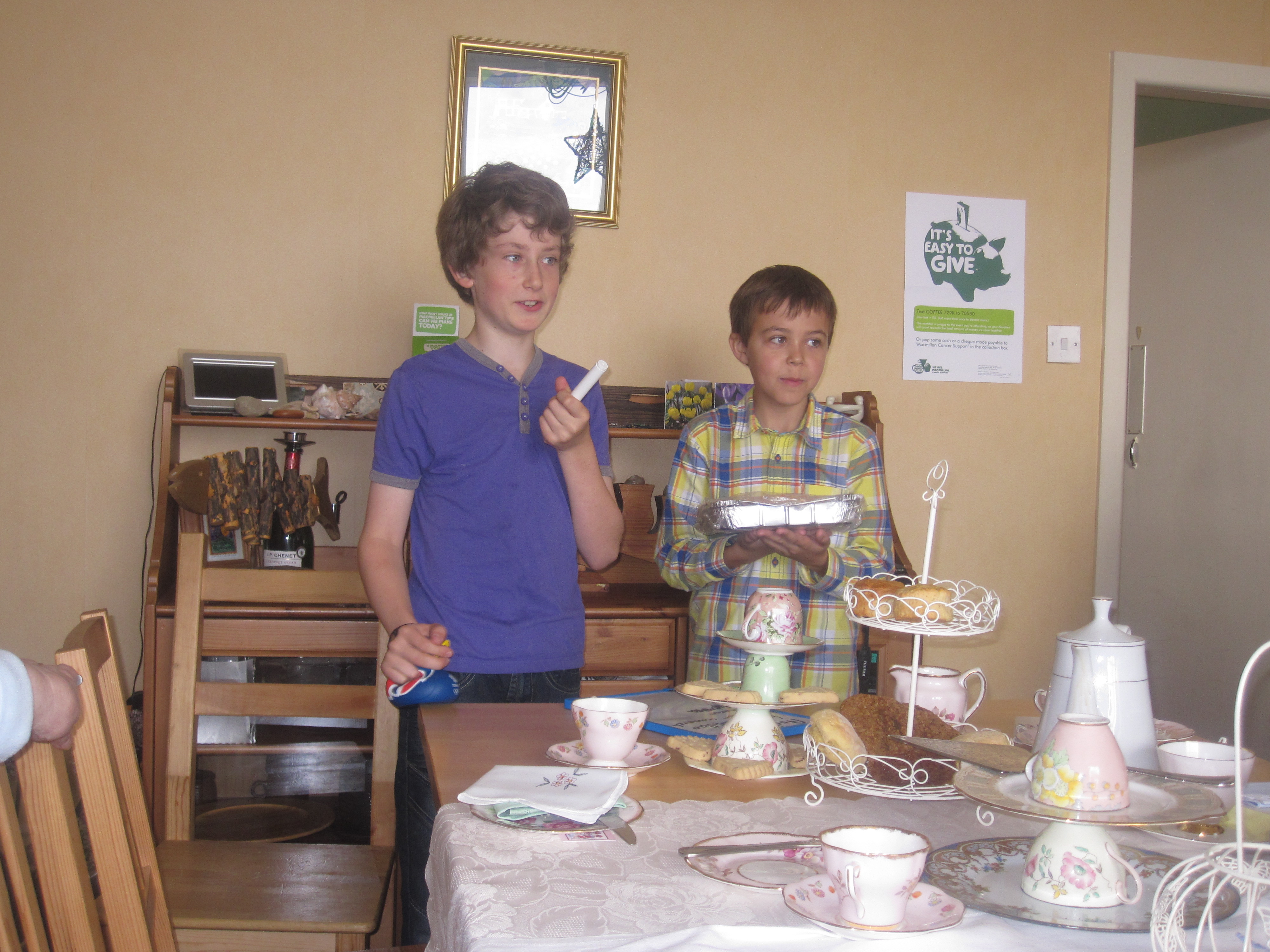
No- not the American right wingers, just a table full of good things;


We hosted a tea party for the Macmillan nursing appeal– raising money to support specialist cancer support nurses.

And had a lovely time doing it. People brought cakes, and William and Euan auctioned them;


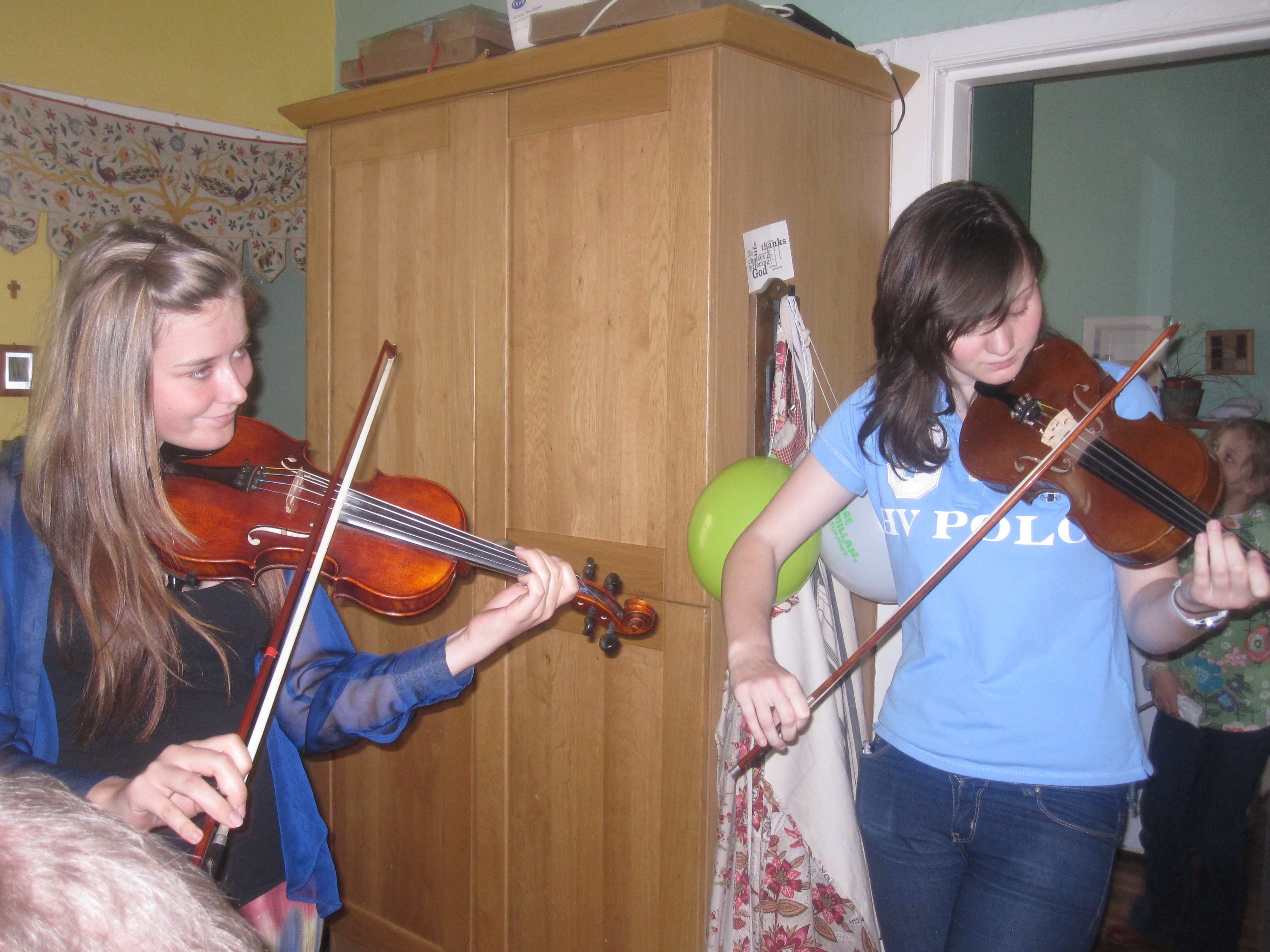
Violins were played too;


We raised about £150

And there is cake left.

Mmmmmm.

Taliban poetry- the voice of Jihad…

Emily described a news clip she watched the other day- a mother grieving the death of her son, a Jihadi martyr. The poor woman seemed to veer between terrible loss and the cultural sponsored celebration of his violent death.

The terrible contradictions stayed with me.

All those mothers who are told that God is pleased with the death of their sons. Two thousand American and British mothers in Afghanistan. Twelve thousand Afghanis.

The proud, rich culture of Afghanistan is of course well used to war being waged on its soil by foreign invaders; Persian, Greek, Indian, Russian, British, American. The scarred land becomes fertile ground for the raising of revolutionary warriors, but this is not the point of this piece.

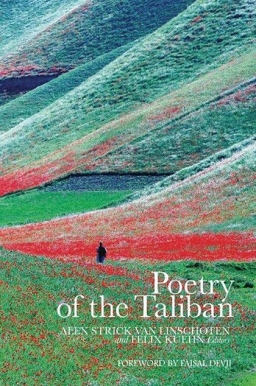
Afghanistan is also rich in the tradition of poetry- Ghazal’s have been written there for millennia recording the human conditions- both the pain of loss/separation and the beauty of love in spite of all the pain associated with it. It should then be no surprise that the Taliban in modern times still tell the story of who they are in poetry.

A new book is out telling some of the story;

There is more about the book here and here.

There is of course, much war propaganda arising from Afghan recent history;

Moscow still owes us blood,

I write the terms of my debt on the chest of the arrogant.

They will ride the white horses in the red field,

Then we will install the white banner on the Kremlin’s chest.

The day of red blood will become red with the Red’s blood,

The knife that is stuck into the Chechen’s chest today.

My enemy, go and read the history of heroism,

There is a page written about Macnaghten’s chest.

The Pharoah of the time send arrows everywhere, These arrows will finally strike Washington’s chest.

Amid all the glorification of death and the calling for the blood of the foreigner, there appears to be some hope;

 …a great deal of this Taliban poetry will be comprehensible to western readers who are unable to understand Taliban ideology. The major themes are recognisable, even universal, and the dominant form is the ghazal, or love lyric, which links the Pashtu language to the classical civilisations of Persia and India. The poems describe a land of mountains and pines, each stone a ruby, each bush a medicine, and of laughing blossoms, dancing tomorrows, of twilight arriving with its lap full of red flowers (a poem called Sunset, reproduced here, reads more like a product of a Zen monastery than of a Deobandi madrasa).

What is interesting is that the Taliban’s official face and past practice has been so fiercely anti-Sufi, anti-historical, and seemingly anti-culture. This book provides an entirely different outlook. Indeed, in their rich memory of 19th-century British invasions, of Afghan folklore and Islamic heroism, the Taliban poets seem more awake to history than we are.

As well as raillery and satire against the foreign enemy and its local servants, there is self-criticism aplenty. “Humanity has been forgotten by us,” writes one poet. “And I don’t know when it will come back.”

(From the Guardian.)

Poetry will do that. It can not be tied for ever to narrow ideology- it has to fly. Let us celebrate the open hand over the clenched fist. The space forced open by love in a wall of hate- wherever we find it.

Back to the news story that Emily told me about. Here is my own response in poetry;

Jihad Ghazal

They tell me his death was holy and so I should rejoice

But what care I for dancing now?

He is dead

Tender flesh of my sucking flesh

Is now blown by foreign flies

He is dead

They tell me that his death had purpose

But once his life was all the purpose I ever needed

He is dead

So what care I for all those virgins whom I will never meet

And will never bear my grandchildren?

He is dead

They tell me his name will be written in the book of martyrs

And poems will be made from his bravery

He is dead

But what care I for war stories

The songs I sing will smoke the air with sorrow

My precious son is dead