Dorothy Day- living the gospel…

Thanks Dean for pointing out these videos about Dorothy Day (November 8, 1897 – November 29, 1980), Catholic activist for Jesus in pre and post-war New York City.

I had never heard of Day until pointed her way by TSK’s post- here. He suggested that we would re-discover her work as the next period unfolds– and even if he ‘makes it so’ by mentioning her in this way, then her life and work is well worth further study. Voluntary poverty, living a life of service, non-violent activism. Gentle deep Spirituality- did we not know of her because we Protestants have had a blind spot to all things Catholic?

Let her speak for herself, below. See past the dated clothing and presentation, and remember that this lady was born 112 years ago…

Aoradh wilderness trip, 2010…

We are planning another wilderness trip over the bank holiday at the beginning of May (1st-3rd of May.)

This has become something of a tradition every year- a few of us take some tents to a wild place, and spend time on a kind of retreat…

See here for last year’s trip, and here for the year before…

We have enjoyed some trips to tiny Hebridean islands- Scarba, The Garvelachs, Iona, Coll, Little Cumbrae, as well as some land locked places in the Lake district, or Wales in the more distant past. What started as a few friends who liked to get away has become a more open trip- and we love to invite others of a like mind to come with us.

So, if you fancy coming, here is what to expect-

  • A chance to get to somewhere absolutely beautiful- isolated and wild.
  • The probability of being wet and cold.
  • Gorgeous sunsets.
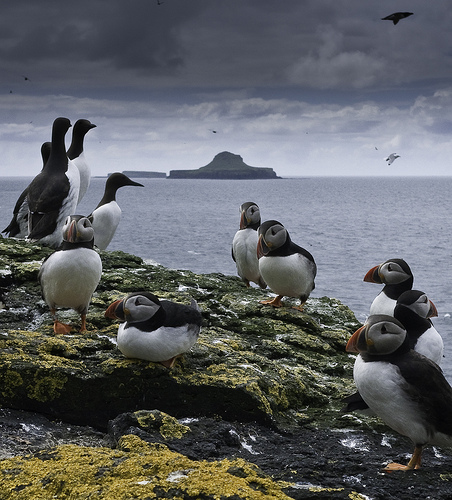
  • Being close to wild creatures.
  • Lots of laughter- some of it of a rather risqué nature!
  • Some prepared ‘wilderness meditation’ exercises- a chance to make a Spiritual journey. A pilgrimage.
  • Friendship and camp fires.

If you come, you will need to be self supporting- in the sense that you come at your own risk, taking responsibility for your own equipment and supplies. We offer friendship and opportunity, but this is no package tour! If you come, you should be used to being outdoors, and be up for a challenge. If you are unsure, then get in touch, and we can give you more details!

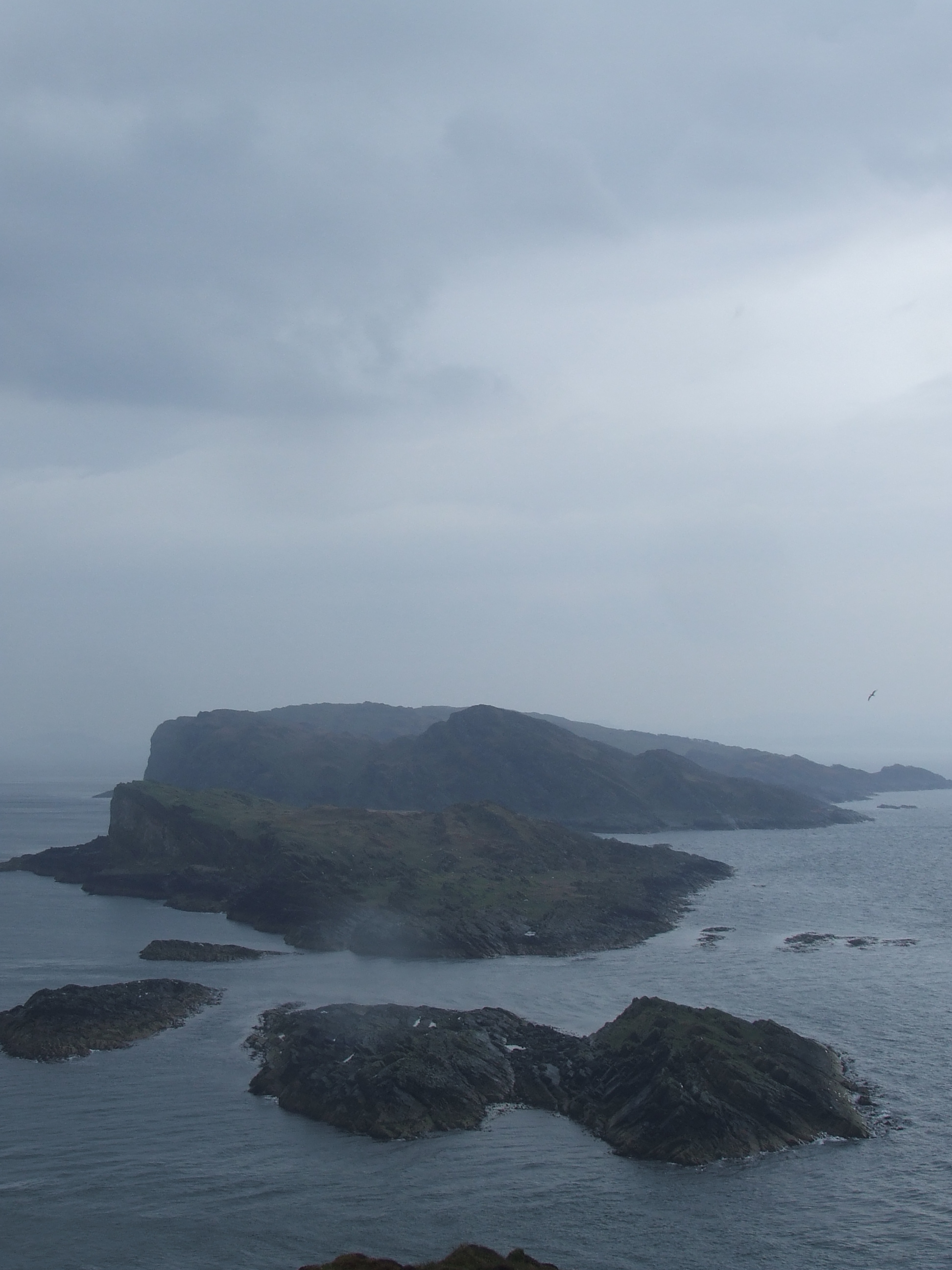
This year’s trip may well be to Lunga, in the Treshnish Isles. Cost of getting there from Oban will be around £50.

To whet the appetite- here are a few snippets about the place-

The Treshnish Isles are formed from 8 principal islands varying in size from less than 4 hectares to 60 hectares. The archipelago lies, at its closest, 3 km west of Mull and extends along a northeast-southwest axis for a distance of 11 km. The islands are uninhabited but that wasn’t always the case, hill forts, medieval chapels and castles prove that humans were once permanently living on these remote and unsheltered islands. The population in 1800 on Lunga was about 20. Year-round occupation ended in 1824 when Donald Campbell and his family left the island.

The Treshnish Isles are one of the most scenically evocative features of the Hebridean landscape. The islands are exposed to the open ocean, uninhabited and have no good landing sites, hence the presence of vibrant wildlife communities. The Treshnish Isles possess unique landscape, rich wildlife communities and contain habitat, which is vital for several vulnerable species. They have an archaeological history dating from early Viking times. The islands already have international recognition of their heritage value. They are designated as a Site of Special Scientific Interest (Wildlife and Countryside Act 1981) because of their unique geomorphology, populations of seals, cliff- and burrow-nesting seabirds, wintering wildfowl and populations of house mice.

So- if you want to join us- drop me a line…

Soft…

Soft rests the day on the cushion we made

From this empty day

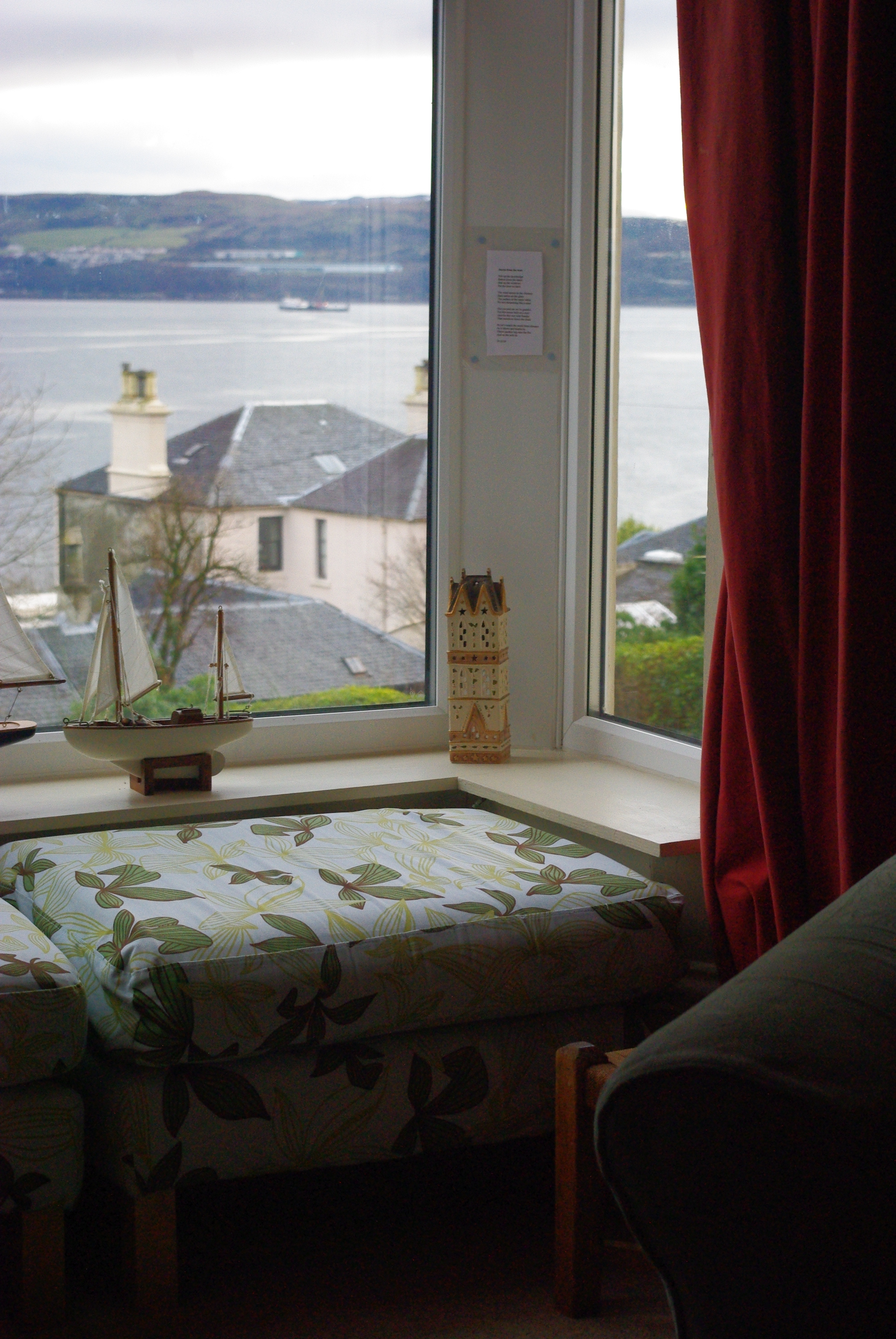
And soft falls some light on the seat in the window

Spilling in to make carpet castles

Woollen walls between the world

And this haven

-this heaven of ours

Make me a man who loves deeply

Who sees the depth of blessing

In small things

Like today

And you

And me

Highland heritage history…

I drove to Lochgilphead this morning, and found myself listening to Melvin Bragg on the radio talking to historians about the dreadful murders of 38 members of Clan MacDonald in Glencoe in 1692. 40 0thers died through exposure to the cold and snow, after their houses burnt, and families were forced to flee into the winter hills.

You can listen again here.

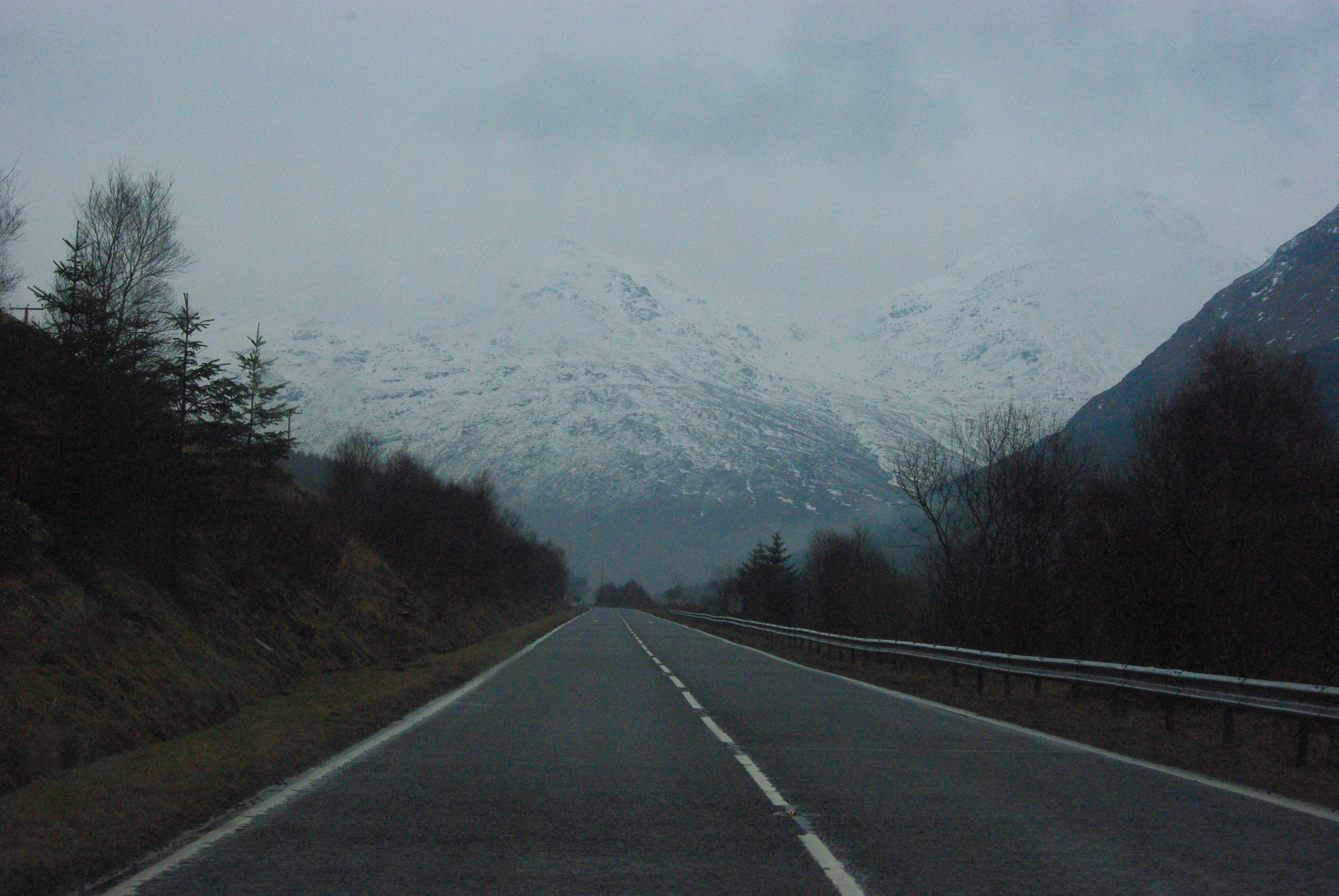
It was a strange experience- driving through a Scottish landscape that would have looked very familiar to the 17th Century protagonists, only such a short distance from their bit of Argyll. With snow on the hills, just like then…

Here is a test then- think about what you know of the story of Glencoe. We all sort of know the story right?

It has become part of our inherited folklore in Scotland. Fed by the glorious splendour of the Glencoe landscape, and stoked up by the 19th Century ‘discovery’ of the noble Highlander, victimised and harried from house and home by the English. It is a story celebrated in a thousand songs, and lamented in poetry and prose. It marks for us a bloody landmark on road towards the victimisation and subjugation of Scotland by her powerful southern neighbour.

Except, the story, as ever is far more complicated.

First, the context. Those were bloody times- characterised by feuding, cattle raiding and convenient murders. Vengeful memories were long, and power struggles gave opportunities to those who rose to the top of the tree, which were grasped enthusiastically. Massacres were far from rare events. Glencoe was not even a particularly big one. In my home town of Dunoon, for example, in 1646 over 100 men women and children of Clan Lamont were killed in the church yard after a bloody skirmish with the Campbells, as revenge for murderous rampages by Sir James Lamont . Events like these are lost to our collective memory. I have never even heard it discussed in Dunoon.

Next- the major players.

King William was the imported Dutch King of England and Scotland who signed the order to send the troops to Glencoe. His major motivation was ongoing European politics, and his war with France. He was a Protestant, and fought and won a war against Jacobite troops in Ireland, routing his rival for the crown at the Battle of the Boyne. His great fear was that France would get a foothold in Scotland in support of the Jacobite cause (as they had begun to do in Ireland) and so he was concerned to make peace with the wild Highlanders- who were after all overwhelmingly protestant (although of an Episcopalean tradition, rather than the lowland Presbyterian form of faith.)

William appointed a man to sort out the Highlands for him…

John Dalrymple was a Scot, and was appointed as William’s trouble shooting secretary of state for Scotland. It seems he was not the obvious choice, as he was an Episcopalean, and so unlikely to be acceptable to most of the power mongers of Scotland. He it was who negotiation and bribed his way to deals with most of the Highland chiefs, in order that they should pledge their allegiance to William. It was also his idea to send the troops to Glencoe, and his orders that led to the deaths of the MacDonalds. He survived the subsequent enquiry into the massacre, because he remained useful to William.

Then there were the men who carried out the murders- those who so scandalised others by killing the people who had offered them Highland hospitality, on the pretext of billeting soldiers in lieu of unpaid taxes. These were Scottish soldiers, led by Scottish officers, most notably-

Robert Campbell of Glenlyon. Drinking man, gambler, turned soldier after a cattle raid by the Campbells of Glencoe bankrupted him. A man with a grudge, and a chance to have revenge. Captain in charge of the force sent into Glencoe in 1692.

Died in poverty in Bruges in 1696 after fighting in William’s European wars.

So what is the point of all this history? I think it is interesting, as it is part of the subsoil hereabouts.

I am also interested in the mythology- what one of the contributors to Melvin Bragg’s programme called the ‘Highland Heritage myth.’ How we make history suit our ends, and in turn become shaped by this history. Scottish anti-English sentiments are deep seated, and there is no doubt there are many real grievances passed down over the centuries.

But honesty and truth is important still, I think.

Particularly when the alternative becomes a breeding ground for prejudice and division…

Faith outside church- Spirited Exchanges…

We hear that increasingly, Christians do not go to church. What I mean by this is that many people who would see themselves as having a real and vital faith are seeking to find ways to live out this experience outside organised religious institutions.

A study by George Barna, looking at 20 million American Christian ‘Revolutionaries’ (Oh how Barna loves a label!) had this to say-

“A common misconception about revolutionaries,” he continued, “is that they are disengaging from God when they leave a local church. We found that while some people leave the local church and fall away from God altogether, there is a much larger segment of Americans who are currently leaving churches precisely because they want more of God in their life but cannot get what they need from a local church. They have decided to get serious about their faith by piecing together a more robust faith experience. Instead of going to church, they have chosen to be the Church, in a way that harkens back to the Church detailed in the Book of Acts.”

I liked this description, not because I see myself as a ‘revolutionary’, but because Michaela and I (along with a number of our friends) find ourselves trying to do just this. For me, the issue is not Church as a noun, but Church as an adjective. And at present, where I am, I find that the noun often gets in the way of the adjective. If you see what I mean.

There has been some discussion about ‘Churchless faith’, and whether this will increasingly be the future of faith in the West. Alan Jamiesons book of the same title is well worth checking out on this issue. There is a good summary of the issues from a New Zealand point of view here. Some of the stories told sound very familiar from a UK perspective, and I suspect that we have far more in common with those down under than with the USA faith community in terms of the Post Christian nature of our society.

This seems a good time to give a plug to Spirited Exchanges UK.

I came across Spirited Exchanges at Greenbelt, and later met up with Jenny McIntosh (the New Zealander who came to the UK with a vision to get things going here) at a Tautoko Network weekend. I really liked Jenny, and on this basis alone, I wish them well!

This from their website about what they are-

Spirited Exchanges UK Network is an umbrella name for a variety of initiatives. It is based on the recognition that many people of all ages and backgrounds are struggling with issues related to faith, church and institutional religions:

  • some want freedom to explore the questions without being told the answers
  • some have been abused in a controlling church culture
  • some have had life experiences that cause them to doubt God
  • some are hurting, some are angry, some are bored
  • some are hungry for more spiritual reality
  • some are simply curious


Spirited Exchanges UK :

  • does not try to convert people
  • does not try to lure them back into a church fellowship
  • does not try to “fix” problems
  • does not assume problems are there when they are not

In summary, Spirited Exchanges UK lets God defend God.

I have been thinking about my own journey outside church- the process of having to separate my relationship with God with my relationship with an institution. Having to learn (and then relearn) what spiritual practices allow me to contine to pray and worship and live out a life of faith- and having to take responsibility for this myself, not relying on the developed, even if sometimes uninspiring, programmes that church lays on for me.

Of failing to do this at times.

And having to turn, and turn again.

This journey has been special for me, but I still recognise that CHURCH, in its bricks and mortar form, with all its baggage and stipends and organ funds- this church too is beloved of God.

Our awareness of the false boundaries we made between the ‘sacred’ and the ‘secular’ may have been replaced by a deeper awareness of the present Kingdom of God, but this Kingdom still needs its ambassadorial residences. It still needs places where it’s agents can collectivise and practice the disciplines of love.

Many of us who adventure outside Church may yet return. And if we do not, we are still learning how to become- Church.

Art, and confidence…

Just listening to David Bailey talking about Picasso on Radio 4’s ‘Great Lives‘.

There was a discussion about how Picasso scandalised his context by his departure from the accepted rules of painting, in the pursuit of something that came to be known as ‘cubism‘, during which Matthew Paris asked Bailey about confidence, and where it came from. Bailey replied that he had never known a good artist who did not have absolute confidence in their work.

I wondered if this is true?

And if so, is it true for all forms of art?

I think of all the musicians and poets and writers whose art has twisted on a hook of insecurity. Who are driven to create by something inside, but are torn by self criticism and self doubt. Does this make the art less than great, or is it part of the engine for the art itself?

And I decided that great art does not require confidence (although as in all things, it may well help) but it does require tremendous courage. Because what we create, we create out of ourselves. And once created, it leaves some tender vulnerable part of ourselves out in the open where the wolves range.

What confidence does, I think, is allow art to be marketable. It gives shape to commerce. It makes legends in their own lifetimes.

Strachur, and fiddling…

We are just back from Strachur, where Emily has joined the Lochgoilhead Fiddle Workshop sessions.

It is a whole new thing for her- the move towards learning traditional music by ear, not by reading notation. It is exciting to see her playing moving forward, and being linked into lots of new possibilities. She is also starting to play mandolin.

It is a big change for the family too- it is a 35 minute drive, and a hole in our week. But worth it I hope.

Music is so important to most of us. It is the backdrop to life, the carrier of culture and emotion- the shaper of memory. It is also a way of bringing us together and allowing us to communicate using a deeper, older kind of language.

May music find its way into your life, and your community this next week…

Whilst Emily played, I went off into the woods above Strachur. I combination of coniferous plantations along with some standard planting done by the Victorian landowners. I put up a lot of deer, and waded through all sorts of bog. There are few footpaths- just the firebreaks, and the tread of the deer along the edges of streams. It was warm today- and the dusk is lengthening the day.

Of course, I took the camera. The old Kirk in Stachur was a starting point…

Ortho-affinity…

Brian McLaren has been posting excerpts from his forthcoming book on his blog. Some of them have been really juicy morsels. You never know whether this will be like a preview of a film, with all the good bits already out there before you see the real thing, but in McLaren’s case, I doubt it. I am looking forward to reading this one, as I think it will be an important book.

Today the issue he touches on is community- and he even coins a new phrase to suggest the call of Jesus on how we collectivise our lives and hopes- how we learn together. I kind of like it. We so need to find new ways to understand how we do community…

This inward transformation, of course, requires community, an expanding network of connectivity that perhaps could be captured by a term like “ortho-affinity” – a good and right way of relating to one another in communities of faith and in relation to those outside our faith communities (including those who consider themselves our enemies). (29)

From A New Kind of Christianity: Ten Questions That Are Transforming the Faith (available February 9, 2010)