Brand and Paxman expose the cracks in capitalism (and ourselves.)

Emily told me to watch this.

If you have an interest in politics/economics/inequality etc, please watch it. I find myself slightly shocked at recommending a clip with a narcissistic smart mouth being interviewed by someone who uses cynicism like a rapier.

But watch it anyway.

Firstly- hooray.

Someone is shaking the tree. The video has gone viral- young people are revolting (if only by clicking the ‘share’ button.)Questions are being asked again about injustice, the operation of power, the distracting divisive effect of the media.The Occupy movement is heard of again in the mainstream media- I worried that it had been blown away like an electronic leaf in a cyber storm of ephemerality.

And perhaps most of all, a voice is speaking for the next generation – my kids – about the possibility of change. No, the NECESSITY of change. I fear that these voices have been silent, overwhelmed by consumerism and the chasing after product; be that a physical thing or a commoditised experience.

But…

Where is the connection to action? What is the vehicle for change? What are the dangerous ideas that will inspire?

The only idea Brand seems to have is this one- do not vote. It is a waste of time.

He may be right- but what do we do instead then?

I hope and pray that my kids might start to find some real alternatives. That they might come to believe that a different world is possible.

Watching Brand and Paxman is like engaging in a conversation between myself and my daughter (in fact it resulted in just that.) Paxman and I failed; after our radicalism, things got worse. Thatcher skewed us ever further into a credit fueled consumerism. The world became more unequal, power more concentrated in the hands of the rich.

We might cast cynical glances at the ideas of the next generation, but it will be their world soon, if it is not already.

Sorley MacLean; Calvary…

poets_pub

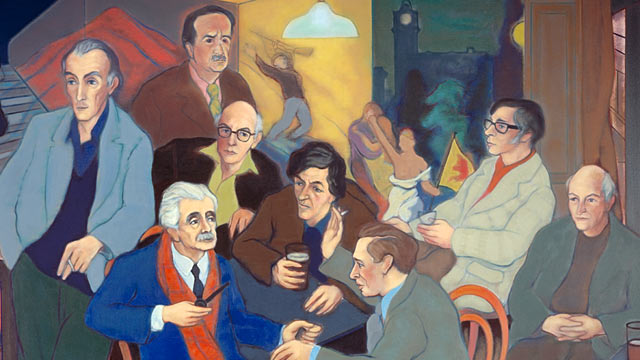
Poet’s Pub by Sandy Moffat

The ‘Poets’ Pub’ painting shows those writers known as the ‘Big Seven’ – arguably the most influential Scottish poets of the post-war era – Norman MacCaig, Hugh MacDiarmid, Sorley Maclean, Iain Crichton Smith, George Mackay Brown, Edwin Morgan and Robert Garioch.

Sorley MacLean wrote this in his grapple with the religion of his childhood. I heard a version of it tonight sung by Karen Matheson at the Beacon Arts Centre in Greenock. And though I lack the knowledge of the fair tongue, the effect was spine chilling.

And the words too…

Calvary

My eye is not on Calvary
nor on Bethlehem the Blessed,
but on a foul-smelling backland in Glasgow,
where life rots as it grows;
and on a room in Edinburgh,
a room of poverty and pain,
where the diseased infant
writhes and wallows till death.

Calbharaigh

Chan eil mo shùil air Calbharaigh
no air Betlehem an àigh
ach air cùil ghrod an Glaschu
far bheil an lobhadh fàis,
agus air seòmar an Dùn Èideann,
seòmar bochdainn ’s cràidh,
far a bheil an naoidhean creuchdach
ri aonagraich gu bhàs.

Travelers and the lure of an easy stereotype…

gypsy man

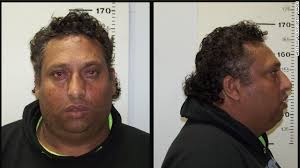
The news here has been full of lurid stories about Gypsies abducting little blond girls. Firstly a child found in Greece, later another in Dublin.

In neither case did we know the full facts but this has not stopped the worlds media from giving these two stories huge attention. In the Greek case they are now stalking a potential biological mother in Bulgaria, who seems to have given away her child as she was not able to support her. It already begins to look as though this story is about poverty, not about Gypsies. Within poor communities, children have always been passed around as a survival strategy so it should not be even slightly surprising.

Next we discovered that the blond kids removed by police from a Roma family in Dublin were returned to their parents after DNA tests. They were removed because they had blond hair.

So why all the hysterical attention, we have to ask?

The idea of an abducted child (even though we do not yet know whether either of these kids have actually been abducted) is an incredibly emotive issue- one that plugs in to our deepest fears as parents. This, I think, is the point. Our deepest fears. 

The swarthy outcasts who are always on the prowl- stealing the lead from our churches, the washing from our lines and our children from their beds. Hiding it all behind a quick wit and a muttered curse.

A few weeks ago there was one of those typical facebook stories handed round, suggesting that Gypsies had been seen in a particular locality watching and waiting for people to go to work so they could break into houses. Everyone was told to on their guard. There was then a line of concerned comments and bits of vitriol. True or not (and lets face it, probably not) we instinctively react to these stories as to a threat that ‘the bogeyman is coming to get you’ when we were children.

no gypsies sign

Here is my conviction; watch for the easy stereotype– particularly when aimed at a marginalised group.

It will almost certainly do damage.

Let us remember that hundreds of thousands of Roma people died in the Nazi death camps.

Let us remember too that traveling folk over the past 30-40 years in the UK have found that their lifestyles have almost been entirely forced right out onto the margins- both in terms of physical location, but also by the way society views them. This became a worry for me- I have met very few Gypsy folk- just a few contacts in my years as a social worker.

We hear stories of violence, bare knuckle fighting, weird weddings with girls dressed up like Disney dolls. We hear no stories of kindness, family, love, people who literally go the extra mile. How can we appreciate the value of the other unless we seek first to understand?

Unless we actually MEET people and share real lives?

This book might be a good place to start;

no place to call home

This is what the author has to say about her book;

My book starts with the story of the site clearance of Dale Farm, but it also goes much further afield, as well as back in history. It goes into the heat of the battle at Dale Farm – but I also examine the bitter conflict at Meriden, in the Midlands, where a small number of Romani Gypsy families also moved onto a field without planning permission, and then became embroiled in a very public dispute with some local residents.

I also travelled to Glasgow Govanhill to talk both to members of the settled community, and relatively newly arrived Roma, about life in the area and how the communities are learning to integrate, as well as travelling to both the Stow and the Appleby horse fairs to visit Gypsies and Travellers in trading and holiday mode. I went to Darlington in the North- East to visit the much respected sherar rom, elder Billy Welch, who organises Appleby Fair and has big dreams about getting out the Gypsy and Traveller vote, and to the North-West to talk to the devastated family of Johnny Delaney, a teenager from an Irish Traveller background who was kicked to death for being ‘a Gypsy’ ten years ago. I travelled down to Bristol to talk to veteran New Traveller Tony Thomson about life on the road in the 1980s, and being caught up the vicious policies of the Conservative government at that time. I also journeyed into East Anglia, where New Travellers, Irish Travellers and English Gypsies have made homes, and north of London, to Luton, to meet some of the destitute Romanian Roma who have created a vibrant community in the heart of England with the help of an inspirational Church of England priest named Martin Burrell. I was also invited to a convention in North Yorkshire by the Gypsy evangelical church, Light and Life, which is growing at an exponential rate and whose influence on nomadic cultures in the UK cannot be underestimated.

I could have travelled more – to Rathkeale, where English–Irish Travellers go for weddings, funerals and to have the graves of their ‘dear dead’ blessed once a year, or to Central and Eastern Europe, where most of the world’s Roma population (and the smaller population of Sinti and other nomadic groups) live. But I chose to concentrate on the experience of Gypsies, Roma and Travellers living in the UK – to go deep, rather than wide. But it was striking that many of those I interviewed would phone me from abroad, or from hundreds of miles away from their actual home, completely comfortable having travelled milto find work – as long as they were with family – or were earning money to keep their family.

The other way that we can encounter the other is through their art- their stories, songs, poems, paintings. I loved this little clip, from a Roma Cultural Festival in Portugal. Here we see real people full of life and pride in who they are, where they have traveled from…

Are we still sending white missionaries to cause problems in black Africa?

I heard about this film recently. It has made waves in the US and Canada- although only a few clips are available in the UK via you tube.

It is a documentary dealing about the impact of evangelists from the American International House of Prayer (IHOP), an organisation that some of us may know from forays into the weird world of Christian satellite TV.

Are we really still sending young white men and women to do this kind of thing? Did we not learn the lessons about from the Victorians about how religion and colonialism (perhaps better understood as globalisation) become a potent toxic mix?

And when violence and intolerance result, do we still blame the victims- as if it is the fault of some kind of black ‘heart of darkness’?

Another analogy that sprang to mind in relation to this shameful process was how the cold war used Africa to play out power games- we exported the tensions and hatreds to places like The Congo and Eritrea. It is almost as if the church is doing the same in relation to homosexuality. IHOP are losing the argument in increasingly secular US, so they are fighting the good theological fight against homosexuality in Uganda.

Lord forgive us.

It does not matter what you believe…

theology

…or does it?

We had a lovely discussion tonight with some friends, sitting round a fire, talking about life and death (as you do.) The death bit because several folk were still in the midst of dealing with loss. The life bit turning on how we understood what our lives were drawing us to.

And because of our shared journeys, the meaning we have found has a lot to do with Jesus, although has been somewhat complicated by our experience of religion…

Some of us have done a lot of (perhaps even too much) unlearning/deconstructing/questioning what this religion has told us we have to believe. Not just the obvious stuff, but the sub-cultural subliminal stuff too that it even harder to come to terms with.

I found myself asking the question- does it really matter what you believe?

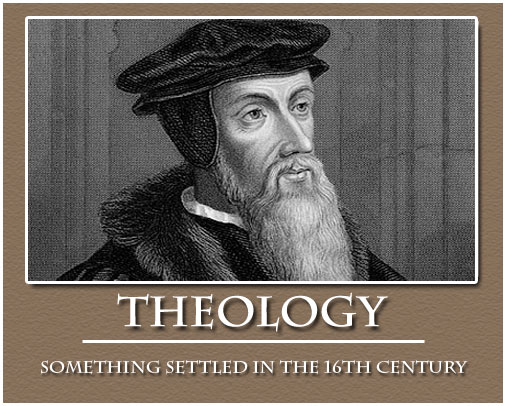
We kind of agreed that the religious context that we were familiar with made far too much of belief. We all knew exactly what we were supposed to believe. It was never really stated, but we all knew it was vital to get all your theological cards stacked right. This was what most ‘teaching’ was really aimed at after all.

Strange then that this did not seem to be Jesus’ preoccupation. He was not much interested in making sure that his disciples answered all those complex theological questions that we struggle with now. In fact, he seemed to take quite a lot of pleasure playing with people who came to him looking for absolute theological questions- sending them away with a parable or two- almost like he was saying ‘go and work it out for yourself’.

As I read the gospels, it seems to me that Jesus was much more interested with how faith (rather than belief) brought us to action- particularly how it turned us towards love. Those two commandments- love god and others as yourself.

My conviction is that the obsession with belief often gets in the way of active love. It does not encourage engagement with the world around us, but sits smugly on its own sense of rightness, pompously calling for others to join our club.

theology

At least that is what I believe.

As our discussion went forward we circled again towards death. We talked about the death of a God fearing man, whose passage from life was characterised by fear of God. How he was sure he would not be allowed into heaven as he had done too many bad things. And we began to wonder again about belief…

Our working conclusion was this- belief matters only as far as it becomes the means for us to move, to act, to live, to travel. Even if that journey is the last one.

The rest of it is children playing with marbles.

Pensioner takes on David Cameron, with poetry!

I am not sure about the poetry, but as protest it works very well!


Dear David Cameron,

Thank you for the advice on keeping down my heating bills

You said to wear a jumper to keep out the winter chills

I’m 75 years old, I’ve jumpers older than you!

But none of them do the job when it’s minus bloody two!

.

I’m actually ten years older than our beloved welfare state

I’ll outlive the thing if times keep on as they have of late

We used to have this quaint idea of solidarity

‘All for one and one for all’ got replaced by ‘me,me,me’

.

They sold off the utilities; thus privatising heat.

So now us old folks have to choose to warm our rooms or eat.

They sold off all the factories; they sold off all the mills

Now kids are lucky to find work scanning tin cans at tills

.

They sold off all our railways, and they gave away our trains

It made some folks a lot of cash, but we just felt the pains

They sold off schools and hospitals, now police stations too

Things once owned by all of us, now owned by the likes of you

.

For decades now your lot have sold what wasn’t yours to sell

Your gang of ham faced charlatans can go to bloody hell!

You tell us now we’re old and cold to ‘wrap up warm’. As ‘eck!

I’ll take my winter scarf and wrap it round your soddin’ neck!

.

You wouldn’t know a tough choice if it bit you in the arse

To be lectured by you on ‘making do’ is beyond a soddin’ farce

‘Wear extra clothes’ to save some cash? I’d love to, but alack…

You rotten thieving bastards stole the shirt right off my back.

.

Yours Shiveringly,

An Apocryphal OAP

Community has to be small, or it becomes bureaucracy…

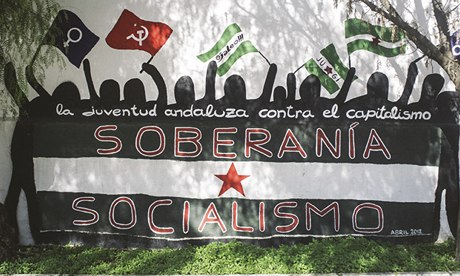
A socialist mural in Marinaleda.

I have never been a communist, not really.

However, I remember vividly the moment when the idea of communism took hold of me. I remember the discussion as a 15 year old boy around how it might be possible to live a different way- where our lives were not controlled by the profit principle, and where we shared what we have in order to live in harmony with one another, not in competition. It was electric.

Alongside all this was a whiff of something else- radicalism, danger. Our heros were no longer empire builders, but rather the challengers of injustice, the small people who stood in front of tanks or challenged corrupt authority only to be shot in their pulpits. There was a possibility of change, of things being better, simpler, more human.

It was also impossible to ignore the fact that communism seemed to fit remarkably well with the ideas of another radical, called Jesus.

Some people say that ideas like this are dangerous. Perhaps they are. For most of us however, they became the background hum of guilt inside our middle class lifestyles. Slowly our radicalism was buried by salaries, mortgages and the shopping run. It survived only in a few donations to charity, the odd sponsored third world child and the choice of newspaper we read.

I never believed in the inevitable rise of man towards utopia. I always doubted that capitalism would be defeated. Partly this was because we had little reason for optimism after Stalin’s purges and Mao’s cultural revolution. Like many I started to believe that Communism could not survive its encounter with broken humanity- that greed and corruption would always mean that the psychopaths would rise and that without the sharp edge of competition for personal gain we become blunted and lazy, leading to a slow decline. Capitalism was not perfect, but perhaps it could be managed I thought, to mitigate against some of the more damaging effects. Social welfare systems, health systems, progressive taxation to redistribute some wealth, protection under law for workers in employment, education for poor kids to give them a fair start. Democracy as the best compromise solution.

Perhaps these ideas are dangerous too however. They mean that certain hierarchies of unequal power and wealth remain fixed and unchanging. However, what real alternatives are there? Communism is bankrupt after all.

Meanwhile the world is in turmoil. Markets rise and fall, governments react paradoxically by blaming poor people for the excesses of the rich and powerful. All those things that might be seen as mitigations on the pursuit of profit are being slashed- education, health, welfare, social housing, unionisation.

In Europe, this is no where more apparent than in Spain. This from here;

Spain experienced a massive housing boom from 1996 to 2008. The price of property per square metre tripled in those 12 years: its scale is now tragically reflected in its crisis. Nationally, up to 400,000 families have been evicted since 2008. Again, it is especially acute in the south: 40 families a day in Andalusia have been turfed out of their homes by the banks. To make matters worse, under Spanish housing law, when you’re evicted by your mortgage lender, that isn’t the end of it: you have to keep paying the mortgage. In final acts of helplessness, suicides by homeowners on the brink of foreclosure have become horrifyingly common – on more than one occasion, while the bailiffs have been coming up the stairs, evictees have hurled themselves out of upstairs windows.

When people refer to la crisis in Spain they mean the eurozone crisis, an economic crisis; but the term means more than that. It is a systemic crisis, a political ecology crack’d from side to side: a crisis of seemingly endemic corruption across the country’s elites, including politicians, bankers, royals and bureaucrats, and a crisis of faith in the democratic settlement established after the death of Franco in 1975. A poll conducted by the (state-run) centre for sociological research in December 2012 found that 67.5% of Spaniards said they were unhappy with the way their democracy worked. It’s this disdain for the Spanish state in general, rather than merely the effects of the economic crisis, that brought 8 million indignados on to the streets in the spring and summer of 2011, and informed their rallying cry “Democracia Real Ya” (real democracy now).

For most of us, all this is happening on a scale that makes it impossible for us to fully grasp. We might focus on one small injustice, even raising voices of protest, but the entirety of the system is unchallengable, because it is too big. So what we have even in Spain is the call for better capitalism, better democracy, but no clear idea of what this might look like.

All of which is a long pre-amble to the reason for this post.

What exists at a human scale that might still gather real alternatives to all this naked profit-and-loss-boom-and-bust madness that we are dwarfed and diminished by?

For a long time, the idea that ‘communism does not work’ has irritated me. The smug example that is usually used to prove this dictum are Soviet Union collective farms- spectres of mass crop failure, starvation, forced labour and perhaps the worst sin of all, lack of productivity.

Today however, I read this about a small Spanish village called Marinaleda ;

When the 1,200-hectare El Humoso farm was finally won in 1991 – awarded to the village by the regional government following a decade of relentless occupations, strikes and appeals – cultivation began. The new Marinaleda co-operative selected crops that would need the greatest amount of human labour, to create as much work as possible. In addition to the ubiquitous olives and the oil-processing factory, they planted peppers of various kinds, artichokes, fava beans, green beans, broccoli: crops that could be processed, canned, and jarred, to justify the creation of a processing factory that provided a secondary industry back in the village, and thus more employment. “Our aim was not to create profit, but jobs,” Sánchez Gordillo explained to me. This philosophy runs directly counter to the late-capitalist emphasis on “efficiency” – a word that has been elevated to almost holy status in the neoliberal lexicon, but in reality has become a shameful euphemism for the sacrifice of human dignity at the altar of share prices.

Sánchez Gordillo once suggested to me that the aristocratic family of the House of Alba could invest its vast riches (from shares in banks and power companies to multimillion-euro agricultural subsidies for its vast tracts of land) to create jobs, but had never shown any interest in doing so. “We believe the land should belong to the community that works it, and not in the dead hands of the nobility.” That’s why the big landowners planted wheat, he explained – wheat could be harvested with a machine, overseen by a few labourers; in Marinaleda, crops like artichokes and tomatoes were chosen precisely because they needed lots of labour. Why, the logic runs, should “efficiency” be the most important value in society, to the detriment of human life?

The town co-operative does not distribute profits: any surplus is reinvested to create more jobs. Everyone in the co-op earns the same salary, €47 (£40) a day for six and a half hours of work: it may not sound like a lot, but it’s more than double the Spanish minimum wage. Participation in decisions about what crops to farm, and when, is encouraged, and often forms the focus of the village’s general assemblies – in this respect, being a cooperativista means being an important part of the functioning of the pueblo as a whole. Where once the day labourers of Andalusia were politically and socially marginalised by their lack of an economic stake in their pueblo, they are now – at least in Marinaleda – called upon to lead the way. Non-co-operativists are by no means excluded from involvement in the town’s political, social and cultural life – it’s more that if you are a part of the co-operative, you can’t avoid being swept up in local activities outside the confines of the working day.

Private enterprise is permitted in the village – perhaps more importantly, it is still an accepted part of life. As with the seven privately owned bars and cafés in the village (the Sindicato bar is owned by the union), if you wanted to open a pizzeria or a little family business of any kind, no one would stand in your way. But if a hypothetical head of regional development and franchising for, say, Carrefour, or Starbucks, with a vicious sense of humour and a masochistic streak, decided this small village was the perfect spot to expand operations, well – they wouldn’t get very far. “We just wouldn’t allow it,” Sánchez Gordillo told me bluntly.

This is one tiny village, even if others are starting to copy what they have done. I am sure it is no utopia. People will squabble and fall out and scratch at one another. The Mayor probably has too much power and charisma and it may well all go to his head.

What it leaves me with mostly is this- community works only in the small scale.

Love is only possible in the press of real relationships. It can not exist in abstract theory. It is not real unless tested in actual shared lives.

We all need to believe in something bigger, something better. For this village it has become a unifying factor. They see themselves as an egalitarian oasis in a mad unsustainable capitalist desert. I admit I am inclined to agree. I liked what the Mayor had to say- “I have never belonged to the communist party of the hammer and sickle, but I am a communist or communitarian,” Sánchez Gordillo said in an interview in 2011, adding that his political beliefs were drawn from those of Jesus Christ, Gandhi, Marx, Lenin and Che.

All this to me is a call back towards real community- let us forget the big scale, the macro economic choices of a distant and devalued government. Let us live an alternative- called community.

How this looks in your locality will have to be different to mine- but the central ideas will be the same, be they the ‘Christian heresy’ that is communism (according to CS Lewis) or actually those words of Jesus that we conveniently ignore.

Where did I put those olive seeds?
Fleet…

driftwood ships 1


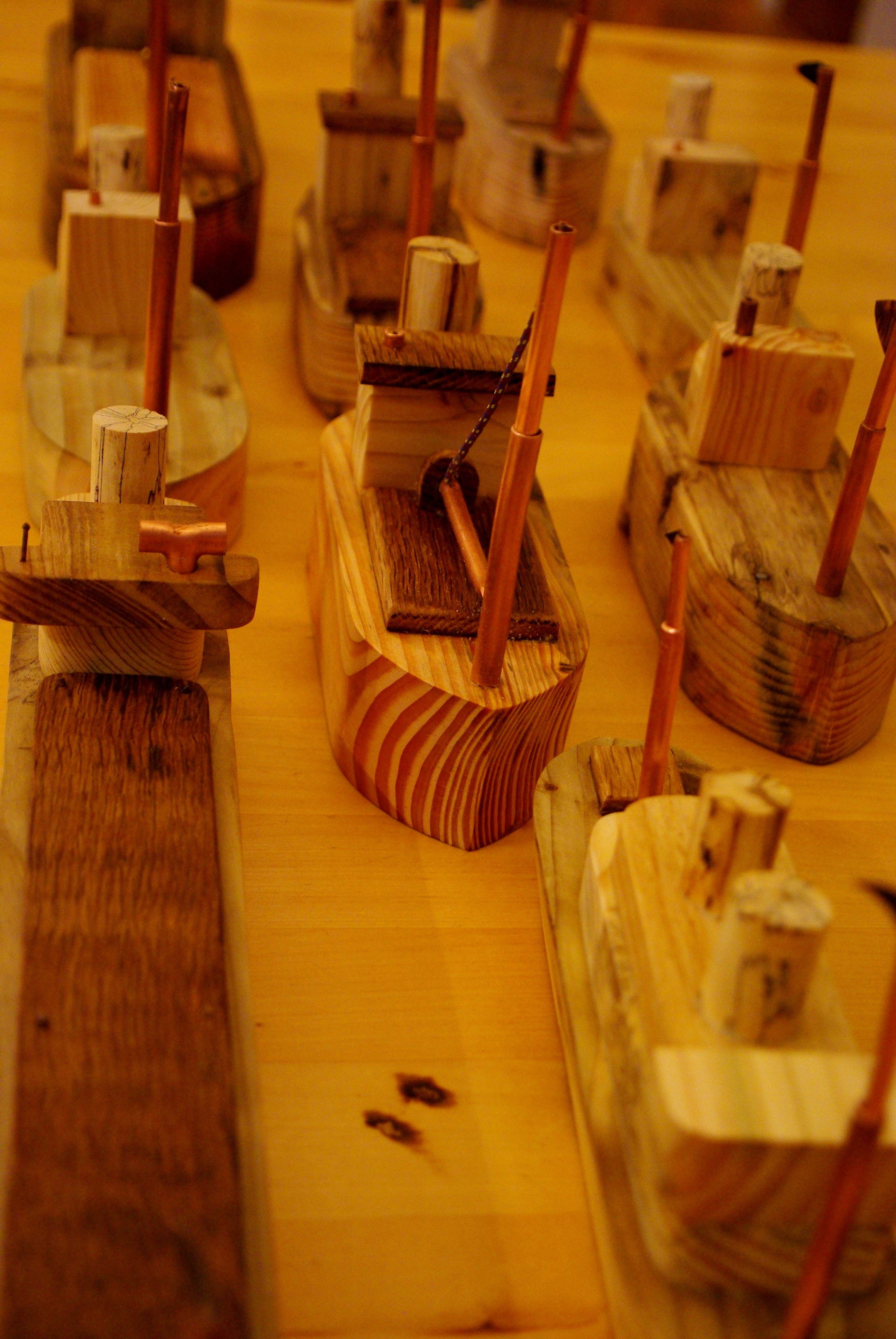
Fridays these days usually mean working in my shed. We need to build up some more stock after a particularly successful Cowal Open Studios event.

I am probably going to go back to working for the council full time over the winter months, so these Friday creating days may be numbered.

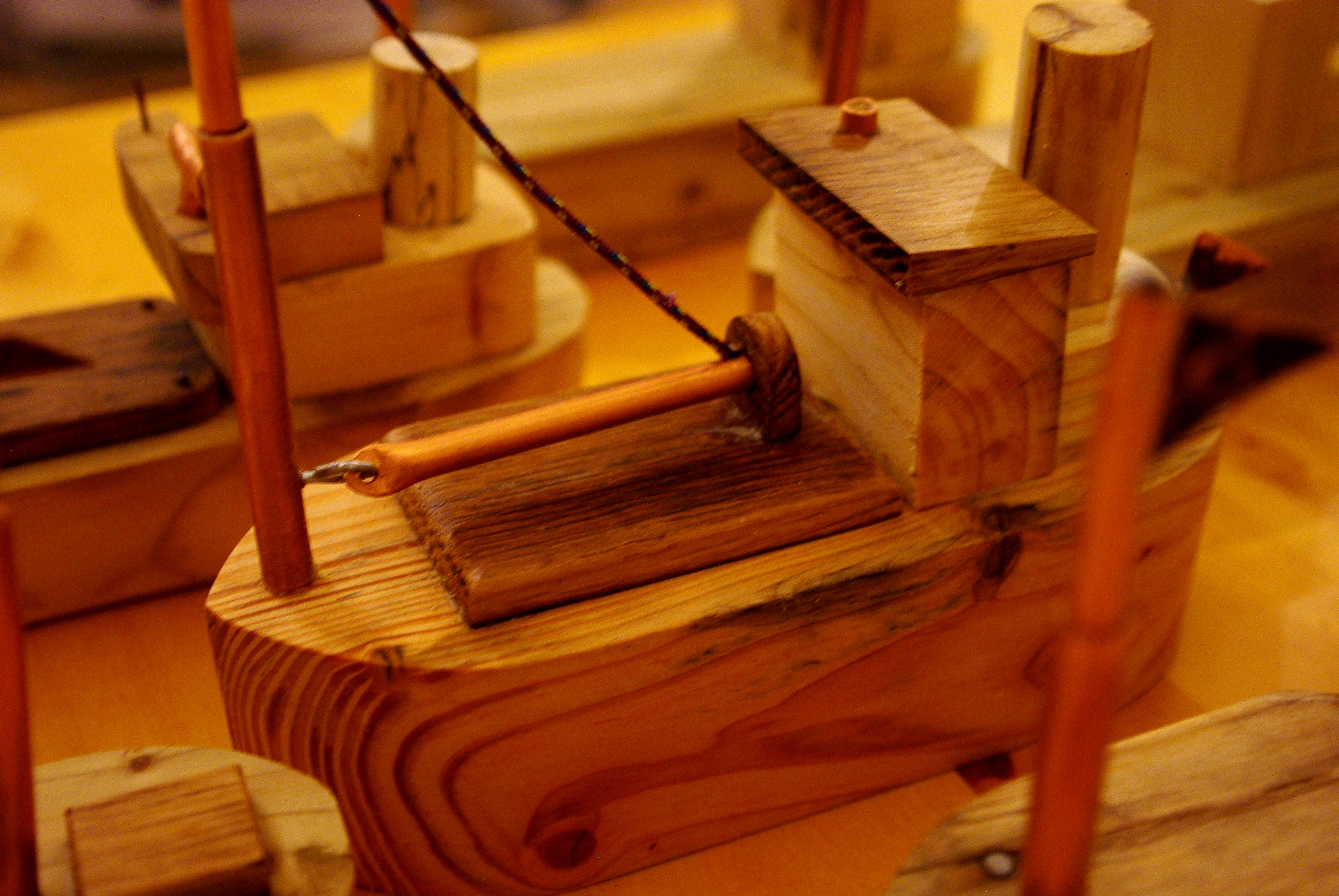
My latest obsession has been making ships out of driftwood- mostly Clyde Puffers. There is now quite a fleet of them on our dining room table…

driftwood ships 2


Meanwhile, most people live as well as they can, where they can…

A few days ago I wrote a piece about home ownership in the UK- suggesting that it has become a national obsession, and that it might be distorting our sense of community and collective identity.

Today Michaela showed me this- I loved the way people made personal spaces out of whatever they can. Life flourishes where we love.

I am beautiful…

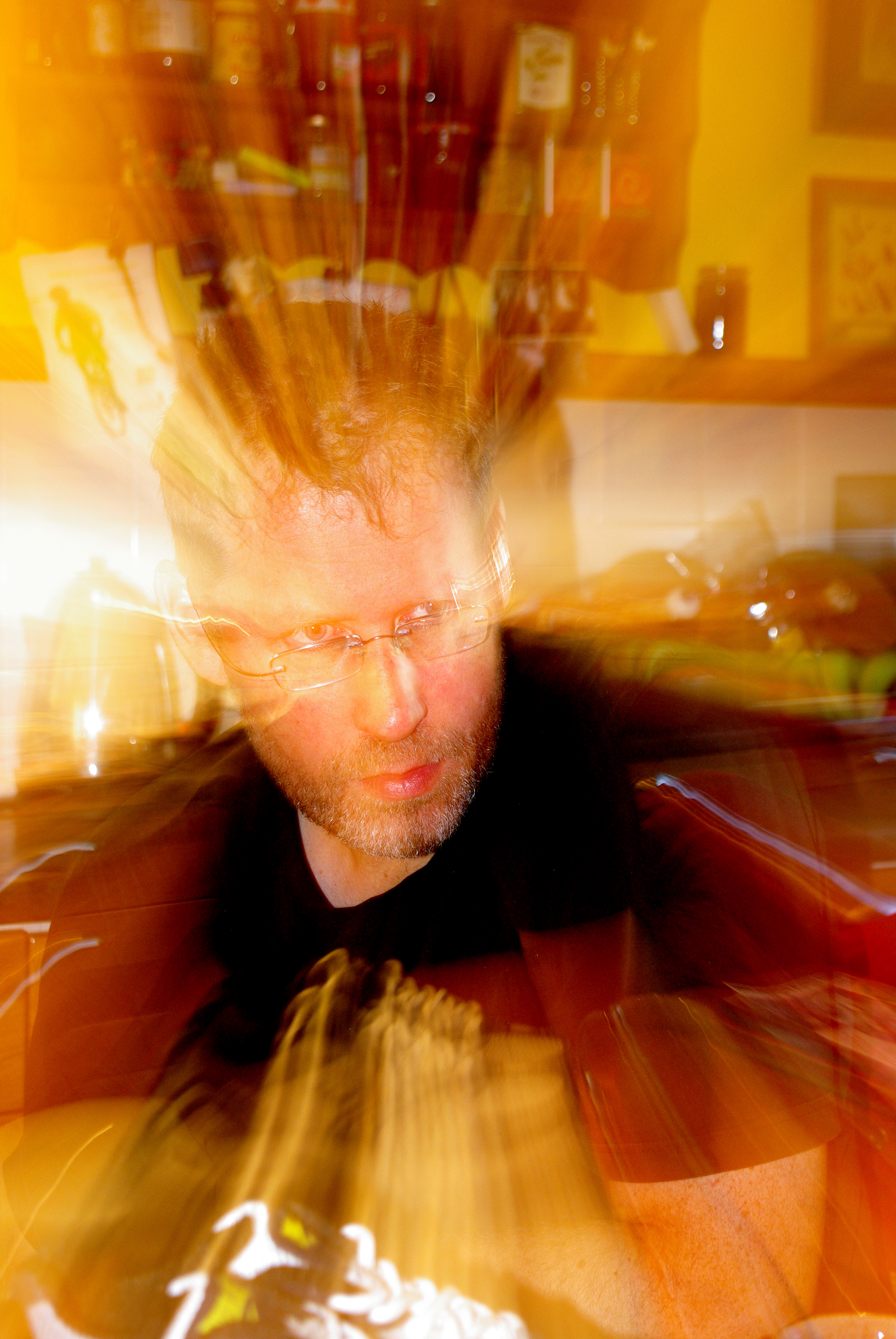
me, fractured

A title that may well expose me to questioning ridicule- stay with me though.

For most of my life I have been affected by a crippling lack of confidence. I manage to hide it some of the time, even to act as though it is not there, but it never quite goes away. Many of you know just what I am talking about; that feeling that in any given social situation things could go wrong. That the others have more brains, more good looks, more talent, more presence.

This is not just an intellectual understanding- I know that my position is not always logical. I am quite good at some things. I even surprise myself sometimes, so do not hit me with your ‘power of positive thinking’ crap. But all my success is nuanced by the shadow of doubt. If I am not careful I know that these negative thoughts become a black hole that I fall in to.

It is not just a spiritual understanding- I know that I am a child of the Living God. I am even convinced that he likes sinners like me, that he has a skew towards those at the back of the class. My experience is that whilst God may not be my divine therapist, still he has this way of turning negative to positive. So my sensitisation can become a way of being sensitive to others. It can become deeply creative. Nevertheless, sometimes depression hangs on me like darkness and I can create nothing, love nothing.

It is not just a psychological understanding- I have been down those roads; the counselling, the self help, the CBT formulation schematics. I know the root of this in my childhood, the factors in my personality that skew me towards the shadow. I understand them in the same way that a man understands how forces of gravity will mean that it will hurt when he surely falls. I am an onion, with each skin stretched from the same damaged DNA.

It is not about appearance, although I avoid mirrors and dodge the pointed lens. They tend to make an unflattering cartoon of my face.

But enough of this.

It is true and also not true.

For despite all these things, I am beautiful.

So those of you who carry your own wounds- know this- you are more. And although I know these words are trite and shallow (I wrote them after all…)

…you are beautiful too.