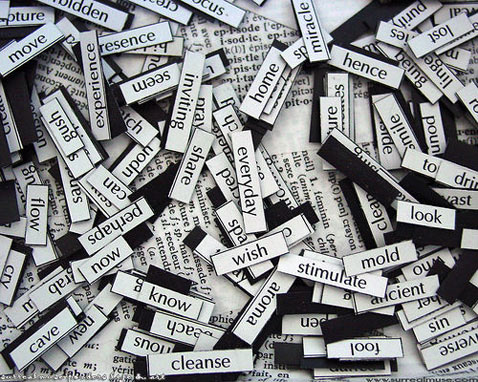
Calling all poets!

words1

I would really appreciate your help in getting the message out there about this project- if you are a blogger/facebooker/twitterer would you mind reposting?

For a while now, I have been chewing on an idea about putting together a collection of poetry.

From time to time people send me things they have written- asking for feedback. I always really struggle to give feedback- I want to be honest, open and encouraging, but poetry is really subjective. What I find however, is that there is almost always gold in the dust. Most people who write do so to get into the depth of things, and the process opens us up- in my view, it opens us up to God (however you understand this.)

Much of this writing is personal- like many of the things I write, its primary purpose is personal spiritual discipline. However, some poems have a life beyond this- and become vehicles that allow other people to travel. It is these poems that I am interested in.

We are used to being told that our poetic voices are worth nothing- either because poetry has become so elitist, or because we doubt our inner voice. Poetry also has little or no commercial value in the consumer culture that we live in. However, we believe that poetry is more important now than ever- we need our poets our prophets and our malcontents.

So, if you write poetry and you have material that you think may be helpful to the spiritual journey of other people, then you might like to consider this;

We are looking for contributions to an collection of poetry to be published by Proost.

We intend this is to be a collection of voices in and around the margins of our churches and will bring together poets whose writing is not normally heard to be a resource for worship, contemplation, prayer and even faithful prophetic criticism.

Poems should fit broadly into one of the following categories/chapter headings;

  • Faith/doubt
  • Becoming
  • Losing
  • The world is beautiful
  • The world is broken
  • Inside/outside
  • Wilderness
  • Laughing out loud
  • The far horizon
  • Learning to love

Notes on selection process;

We are looking for poems with something to say- poems that open us up rather than close us down. Poetry at its best can be challenging, disturbing, uplifting, transforming and much more. If you write poems like this we want to hear from you. We are not interested in reputation or CV- rather we want to encourage those of you with a poetic/prophetic voice to let others hear it.

We will select poems for the collection if they fit the broad (and generous) ethos of the book and if they are of a quality and spiritual depth that moves us. This means that some very good poems may not be selected. We hope that you will understand that we lack the resources to give feedback on the reasons for our editorial decisions.

We would impose no proscribed form on the poems, but broadly speaking poems should be no more than 35-40 lines.

You may send up to 8 poems– simply because we know how difficult it can be to choose. We hope that this too might be a way of gathering some more unusual voices- many of us have at least one pearl in amongst the pebbles.

Please send poems by e-mail to thisfragiletent@gmail.com

About Proost

Proost is a small publishing outlet aimed at gathering together resources from the creative edges of Church. Most of the material is made available for download- although hard copies of books can be purchased via a print-on-demand service.

As recompense for your hard work and creativity, poets published will be eligible for a free download of their choice from the Proost website- which is chock full of music, art, movies, worship resources and books.

We look forward to reading your poems!

A bit of McCaig…

stock-footage-sick-diabetic-women-in-hospital-room

Thought it was time for Norman McCaig’s poetry…

I often talk to people who tell me that they struggle with poetry. It is as if someone contorted the language it was written in and mixed it into some other dialect- more rarefied, pretentious and elitist. Thinking about it, perhaps this is exactly what was done to it at school…

Perhaps too they have read the wrong poems. Or even never really read any at all. Or (even more significantly) they have never written any.

I too struggle with reading some poetry- this may be because it is never instant. Poems are all about the gift of slow reading- immersing yourself in the opaque ink bath, knowing that some stain will remain. Poetry is about feeling more than understanding. It needs time, and most of us have little patience for time.

Back to Norman McCaig. Here are two of his poems. Think of them as two love poems, at desperately different parts of life.

In which poem was love the strongest?

TRUE WAYS OF KNOWING

Not an ounce excessive, not an inch too little,
Our easy reciprocations. You let me know
The way a boat would feel, if it could feel,
The intimate support of water.

The news you bring me has been news forever,
So that I understand what a stone would say
If only a stone could speak. Is it sad a grassblade
Can’t know how it is lovely?

Is it sad that you can’t know, except by hearsay
(My gossiping failing words) that you are the way
A water is that can clench its palm and crumple
A boat’s confiding timbers?

But that’s excessive, and too little. Knowing
The way a circle would describe its roundness,
We touch two selves and feel, complete and gentle,
The intimate support of being.

The way that flight would feel a bird flying
(If it could feel) is the way a space that’s in
A stone that’s in water would know itself
If it had our way of knowing.

Visiting Hour

The hospital smell
combs my nostrils
as they go bobbing along
green and yellow corridors.

What seems a corpse
is trundled into a lift and vanishes
heavenward.

I will not feel, I will not
feel, until
I have to.

Nurses walk lightly, swiftly,
here and up and down and there,
their slender waists miraculously
carrying their burden
of so much pain, so
many deaths, their eyes
still clear after
so many farewells.

Ward 7. She lies
in a white cave of forgetfulness.
A withered hand
trembles on its stalk. Eyes move
behind eyelids too heavy
to raise. Into an arm wasted
of colour a glass fang is fixed,
not guzzling but giving.
And between her and me
distance shrinks till there is none left
but the distance of pain that neither she nor I
can cross.

She smiles a little at this
black figure in her white cave
who clumsily rises
in the round swimming waves of a bell
and dizzily goes off, growing fainter,
not smaller, leaving behind only
books that will not be read
and fruitless fruits.

Three jars…

Wine 2

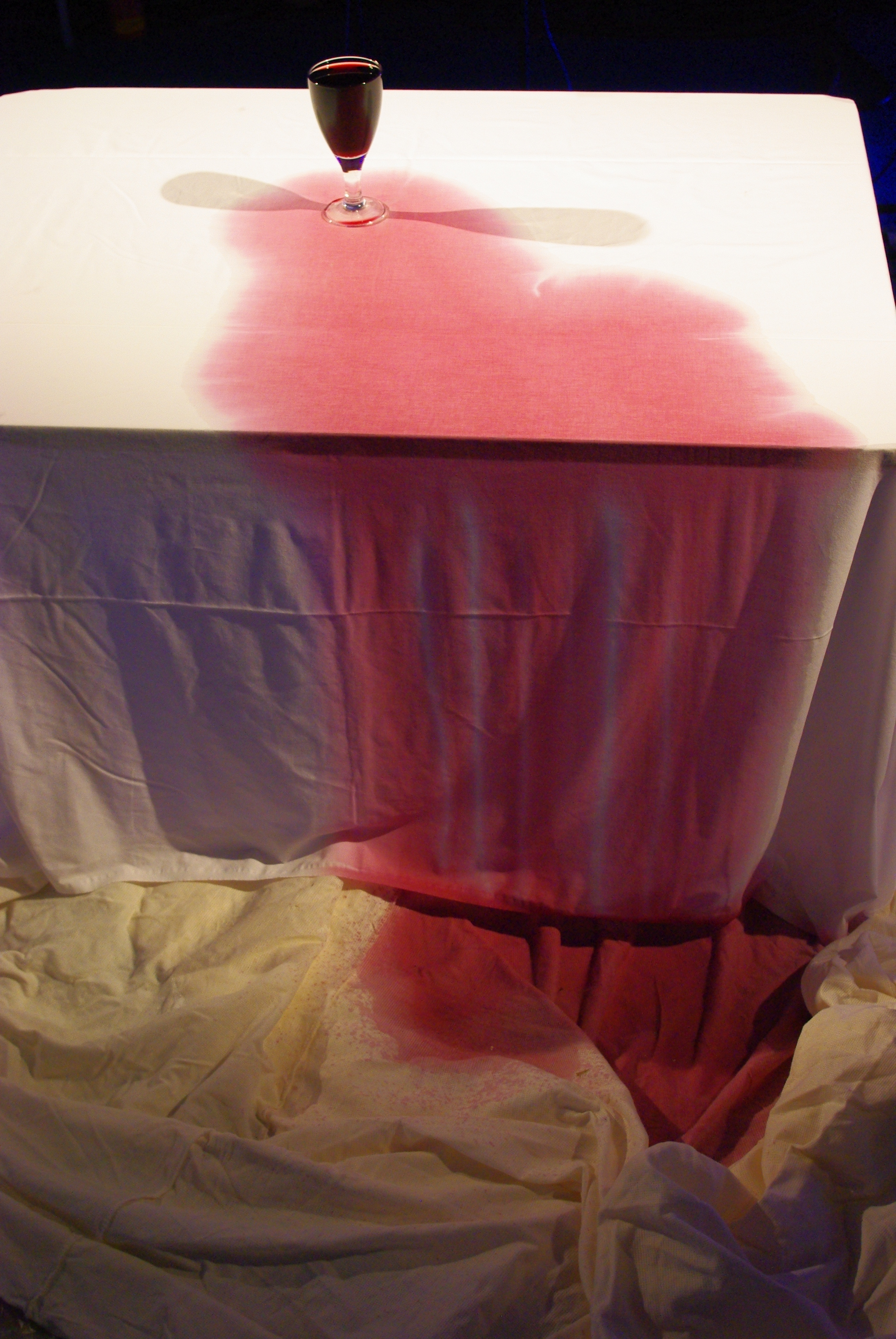
The first miracle that Jesus performed was at a wedding- recorded in John 2 1-11.

Why does John choose to tell us this strange story? What was Jesus doing at a wedding, encouraging people to drink to excess?

The use of wine as an analogy of plenty, of blessing, of the fullness of life, is found everywhere in the Bible. Amos talks of wine running down the mountains in streams, as a sign of the restoration of the land of the Israelites.

It occurred to me, not for the first time, that although we can not command blessing – we can never presume that life is going to be full of plenty, or without challenge – we can still live in ways that become shallow imitations of the life of outrageous grace we see modeled by Jesus. We cease to be people of passion, and become instead bound by cynicism and small boundaries.

So, open up a bottle, raise a jar, uncork the fizzy stuff.

Symbolically speaking of course…

Three Jars


Three jars are waiting by

One of water, one of wine

The other one lies empty


Like Jesus at a wedding feast

These jars are waiting to release

The living waiting for us


The empty jar is hollow life

Like a married man without a wife

Like a cake that’s never eaten


The water jar will fill us up

Then leave us staring in the cup

Wanting something other


But rich red wine will satisfy

Blood will flow, the days will fly

Our passion consummated


Fractals…

old-hands


Fractals;

One often cited description that Mandelbrot published to describe geometric fractals is “a rough or fragmented geometric shape that can be split into parts, each of which is (at least approximately) a reduced-size copy of the whole”;[2] this is generally helpful but limited. Authorities disagree on the exact definition of fractal, but most usually elaborate on the basic ideas of self-similarity and an unusual relationship with the space a fractal is embedded in.[2][3][4] [6][29] One point agreed on is that fractal patterns are characterized by fractal dimensions, but whereas these numbers quantify complexity (i.e., changing detail with changing scale), they neither uniquely describe nor specify details of how to construct particular fractal patterns.

Memory

Leeched like lime from this soil

The grains of me are gone

Fractalled

And falling away


Numbers swirl and tumble

Names all interchange

Heads of friends are hooded

Keys each night re-cut


In 66 we went to Spain you told me

The year before Charlene was born

Our wedding day was cloudy

Some song suggested

You


Am I portable?

Is there a jar somewhere to catch what is left?

Or do these memories become minerals

Feeding some darker place?


Hold me softly my love

For I am leaving

TFT Christmas card 2012…

IMGP3179

Sometimes darkness lies with open arms

Casting no shadows;

No zones of jagged uncertainty

The folded black is bosom-soft

An iris around the eye

Could it be that dark is not opposed by light

But is the place where light is falling?

For the night is not defeated by starlight-

It is anointed.

At the edge of this suburban half light

Beyond the reach of neon

Darkness is waiting

Like pregnancy

For light to be born

IMGP3178


May you be richly blessed this Christmas.

More than plastic…

ChristmasChoir5

So I was watching one of those films. You know the

kind: cheaply made-for-TV at Christmas time. Full of cute kids whose

families are being squashed by the weight of some

manufactured crisis. Then despite my (long nurtured) defensive

cynical screen, I am punctured by goodness;

skewered by grace that grew where even the trees

are plastic. I can offer no excuses except to say that

like fake glitter on the surface of snow the hidden

heart of this angel-beast is shaped

towards love.

Lamenting…

sad-woman

I was thinking about the world Lament the other day.

‘Laments’ are one of the oldest forms of poetry, for example the Mesopotamian city laments such as the Lament for Ur.  These bear a striking similarity with many of the psalms in our oldest hymn book (pinched from the ancient Hebrews) otherwise known as the book of Psalms. Here are few;

You have taken my companions and loved ones from me;  the darkness is my closest friend.

Psalm 87/88: 18

And even now that I am old and grey, do not forsake me, O God…

Psalm 70/71: 18

The LORD is close to the brokenhearted; he rescues those who are crushed in spirit.

Psalm 33/34: 18

My days are vanishing like smoke … my heart is withered like the grass. I forget to eat my bread…

Psalm 101/102: 3-4


Out of the depths I cry to you, O LORD; O Lord, hear my voice. Let your ears be attentive to my cry for mercy…

My soul waits for the Lord. More than watchmen wait for the morning.

Psalm 129/130: 1, 6

Around one third of the Book of Psalms is written in the form of poetic lament- a cry to God for help in times of distress- help for individuals, but particularly help for the Nation. And, it is recorded, sometimes he listened. At other times he turned his face and watched his chosen people be destroyed by internal wrongdoing and external invasion.

What can we learn from these Laments? How is it that we tend to ignore them in our readings of the Bible- in our claims on a God who gives good things to we his new Chosen People?

I think we can take the idea that it is OK to cry to God in desperation, in anger, in brokenness- that these are part of all of our human journeys.

I also think that we can not believe that God is any kind of talisman for us to wear against the winds of misfortune. It is not whether hard times come, but how we learn to live with love as we move through them.

Finally I think that our approach to the Bible as a set of heavenly testable propositions is severely challenged by the poetry of lament. If the Bible gives all the answers that we need (as long as we apply the correct theological set of goggles) then how come it is written by people who seemed so bereft of answers themselves?

Many (but not all) the poems of Lament in the book of Psalms take a deliberate turn at their end. In spite of all the evidence to the contrary; in spite of the pain, the defeat, the failure of plans and the death of dreams; in spite of all of this- I will worship. I will put myself in the place of trust.

In Emmanuel. God with us. God in us. God through us and God beyond us calling us on.

Kierkegaard on poetry…

brazen bull

Soren Kierkegaard had this way of throwing stories into the middle of his philosophising. Here is one of them;

What is a poet?

An unhappy man who in his heart harbours a deep anguish, but whose lips are so fashioned that the moans and cries which pass over them are transformed into ravishing music.

His fate is like that of the unfortunate victims whom the tyrant Phalaris imprisoned in a brazen bull, and slowly tortured over a steady fire; their cries could not reach the tyrant’s ears so as to strike terror into his heart; when they reached his ears they sounded like sweet music.

And men crowd around the poet and say to him, “Sing for us soon again”—which is as much as to say, “May new sufferings torment your soul, but may your lips be fashioned as before; for the cries would only distress us, but the music, the music, is delightful.

Kierkegaard is describing something that most familiar- art arising from introspection, sensitivity, dysfunction, hurt. Art that does not heal, but rather is a plaster over an open wound.

Poetry like this has no choice but to be written. You might as well tell a cut to stop bleeding.

Hmmm.

For those making a new beginning…

closed gate

(… like me.)

My friend Terry sent a copy of this lovely poem by John O’Donahue the other day;

In out-of-the-way places of the heart,
Where your thoughts never think to wander,
This beginning has been quietly forming,
Waiting until you were ready to emerge.

For a long time it has watched your desire,
Feeling the emptiness growing inside you,
Noticing how you willed yourself on,
Still unable to leave what you had outgrown.

It watched you play with the seduction of safety
And the gray promises that sameness whispered,
Heard the waves of turmoil rise and relent,
Wondered would you always live like this.

Then the delight, when your courage kindled,
And out you stepped onto new ground,
Your eyes young again with energy and dream,
A path of plenitude opening before you.

Though your destination is not yet clear
You can trust the promise of this opening;
Unfurl yourself into the grace of beginning
That is at one with your life’s desire.

Awaken your spirit to adventure;
Hold nothing back, learn to find ease in risk;
Soon you will be home in a new rhythm,
For your soul senses the world that awaits you.

No new thing happens without the possibility of falling flat on your face in failure.

What I am learning is that most people who fail do not regret the adventure- and that out of this failure there comes new adventure.

So much better than the ‘gray promises that safety whispered’.

For today at least…

Wind…


The wind blows where it pleases

Sometimes barely breathing

-hardly moving the tender grass

Sometimes raging

-bowing the trees like penitents

But no-one knows where it blows from

Or the place it now is heading

So it is with you, child of the Living God


So give yourself to the wild winds of the Spirit

Ride them like a Storm Petrel

Inches from a dancing sea

Held in the curl of creation

Full of the joy of it all


From John 3 7-9