Taliban poetry- the voice of Jihad…

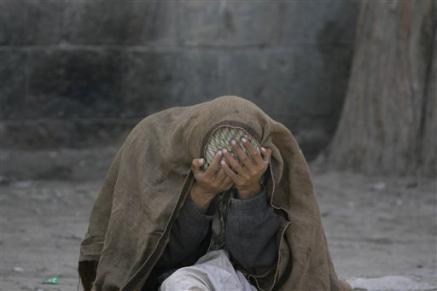
Emily described a news clip she watched the other day- a mother grieving the death of her son, a Jihadi martyr. The poor woman seemed to veer between terrible loss and the cultural sponsored celebration of his violent death.

The terrible contradictions stayed with me.

All those mothers who are told that God is pleased with the death of their sons. Two thousand American and British mothers in Afghanistan. Twelve thousand Afghanis.

The proud, rich culture of Afghanistan is of course well used to war being waged on its soil by foreign invaders; Persian, Greek, Indian, Russian, British, American. The scarred land becomes fertile ground for the raising of revolutionary warriors, but this is not the point of this piece.

Afghanistan is also rich in the tradition of poetry- Ghazal’s have been written there for millennia recording the human conditions- both the pain of loss/separation and the beauty of love in spite of all the pain associated with it. It should then be no surprise that the Taliban in modern times still tell the story of who they are in poetry.

A new book is out telling some of the story;
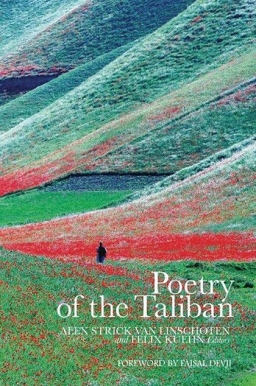
There is more about the book here and here.

There is of course, much war propaganda arising from Afghan recent history;

Moscow still owes us blood,

I write the terms of my debt on the chest of the arrogant.

They will ride the white horses in the red field,

Then we will install the white banner on the Kremlin’s chest.

The day of red blood will become red with the Red’s blood,

The knife that is stuck into the Chechen’s chest today.

My enemy, go and read the history of heroism,

There is a page written about Macnaghten’s chest.

The Pharoah of the time send arrows everywhere, These arrows will finally strike Washington’s chest.

Amid all the glorification of death and the calling for the blood of the foreigner, there appears to be some hope;

 …a great deal of this Taliban poetry will be comprehensible to western readers who are unable to understand Taliban ideology. The major themes are recognisable, even universal, and the dominant form is the ghazal, or love lyric, which links the Pashtu language to the classical civilisations of Persia and India. The poems describe a land of mountains and pines, each stone a ruby, each bush a medicine, and of laughing blossoms, dancing tomorrows, of twilight arriving with its lap full of red flowers (a poem called Sunset, reproduced here, reads more like a product of a Zen monastery than of a Deobandi madrasa).

What is interesting is that the Taliban’s official face and past practice has been so fiercely anti-Sufi, anti-historical, and seemingly anti-culture. This book provides an entirely different outlook. Indeed, in their rich memory of 19th-century British invasions, of Afghan folklore and Islamic heroism, the Taliban poets seem more awake to history than we are.

As well as raillery and satire against the foreign enemy and its local servants, there is self-criticism aplenty. “Humanity has been forgotten by us,” writes one poet. “And I don’t know when it will come back.”

(From the Guardian.)

Poetry will do that. It can not be tied for ever to narrow ideology- it has to fly. Let us celebrate the open hand over the clenched fist. The space forced open by love in a wall of hate- wherever we find it.

Back to the news story that Emily told me about. Here is my own response in poetry;

Jihad Ghazal

They tell me his death was holy and so I should rejoice

But what care I for dancing now?

He is dead

Tender flesh of my sucking flesh

Is now blown by foreign flies

He is dead

They tell me that his death had purpose

But once his life was all the purpose I ever needed

He is dead

So what care I for all those virgins whom I will never meet

And will never bear my grandchildren?

He is dead

They tell me his name will be written in the book of martyrs

And poems will be made from his bravery

He is dead

But what care I for war stories

The songs I sing will smoke the air with sorrow

My precious son is dead

Where the streams come from- poetry/soundscape release…

.
As part of our Greenbelt installation, we put together some soundtracks of poetry and field recordings/sound scapes around wilderness themes- Sea, Woodland, River. The intention was to project them onto sculptural representations of the three locations using ultrasonic speakers, but the technology let us down somewhat, not to mention the appalling weather conditions.
.
Anyway, rather than letting it go to waste, the poetry soundscapes are being released by Proost as an audio download. Each one is around 10-11 mins long.
.
You can download it here for the bargain price of £1.99.
.
This is the Proost blurb;
.

Poetry and meditations by Chris Goan and read by members of Aoradh.

All streams flow into the sea yet the sea is never full.
To the place the streams come from, there they will return.
(Ecclesiastes 1:7)
This collection of poems and meditation was first created for an installation used at Greenbelt Festival, but could be used for both personal and collective meditation. It combines soundscapes recorded in wilderness locations with poetry by Chris Goan and read by members of Aoradh, a community based in Dunoon, Argyll. The voices used in these recordings range from people aged 8 to 78 and with many different accents;
Netta Shannon, Simon Richardson, Helen Richardson, Emily Goan, Michaela Goan, Chris Goan, Sharon Barnard, Audrey Forest, Nick Smith, Paul Beautyman, Skye Beautyman.
Aoradh (meaning ‘adoration’) is shaped in many ways by our location and the wild places that surround us. It seeps into the words we write, and becomes the place where we seek to make worship and pilgrimage; from beach Pentecost bonfires to wilderness retreats on tiny islands.
The three meditation are as follows;
1. Sea.  Soundscapes recorded on a beach on the northern shore of Iona, and supplemented by further recordings made on the shoreline near Dunoon.
2. Woodland. Soundscapes recorded in woodland behind Chris’s house in Dunoon and on an early spring morning along Loch Striven, Cowal Peninsula.
3. River. Soundscapes recorded near streams flowing down into Loch Eck, Cowal Peninsular and Pucks Glen, near Dunoon.
Price: £1.99

Our anniversary…

Today is our 22nd wedding anniversary.

And I can honestly say that despite the ups and downs of the long walk together (and to be honest, with Michaela there have been very few downs) I love her more now than ever. I am a man blessed.

I know I am biased, but Michaela is a special person. She has the gift (and sometimes the burden) of being a networker, a host, a listener and a safe place for other people. Just recently we have been so very busy and she rarely stops – either working or meeting people or reaching out in some way. Sometimes people seem to want or expect too much of her and I wish I could protect her from some of this but it is simply who she is.

Today though we are going into Glasgow together. Just the two of us. Even though we have stuff to do, it is going to be OUR time.

Autumn is almost upon us;

Bare branches showing
Cold winds come blowing
Stealing this year away
Curlews are calling
The light now is falling
Dark nights are drawing in

There’s a crack in the church bell
There’s ice in the stairwell
Take care my love
Take care.
Close tight the windows
The day is only shadows
Come sit by the fire
With me

The far distant hillside
Is laced up in moonshine
No thoughts of the valley
Below
And maybe tomorrow
We can beg steal or borrow
Some time for just me
And just you

This house is now sleeping
Old floorboards creaking
The warmth’s all but gone
From the fire
So lets climb these stairs love
Dreams waiting a-bove
Let me lie in your arms
Again

Bare branches showing
Cold winds come blowing
Stealing this year away

September 2007


Cricket poetry…

Forgive me dear readers when this blog veers towards the noble game of cricket. I know that my love of the game is somewhat marginal in its broader interest, but something of its idiosyncratic pleasure chimes with my soul.

I think this is partly the combination of physicality and deep thinking; the pace of the game which is so often mocked by the unaware means that a lot of the skill of playing the game is in the head. All the small confrontations involved in the event of every ball bowled, and the open ended hope for victory almost to the last.

Today we played a reduced over match against a Royal Botanical Gardens side- just a friendly, cut down to 20 overs because of an approaching weather front. They rattled up 110 (a wicket apiece for both Will and I) and then I opened the batting, perishing swiping across the line at a full one for 11. Grrrrr. 20 over cricket it not my bag really- I much prefer longer forms of the game in which you can build an innings. Will was last out attempting a slog off one of their quick bowlers in the last over, skying a catch to mid on.

The very words of cricket are poetry- all the terms evolved over hundreds of years- Googly, Silly Point, Yorker, Chin music and Square leg.

And cricket seems to have inspired lots of poetic writing over the years too- a happy combination of two of my passions. Here are a couple;

Firstly one of the more miserable, thanks to A E Houseman (from ‘Shropshire Lad‘ written in 1896.)

Twice a week the winter thorough
Here stood I to keep the goal:
Football then was fighting sorrow
For the young man’s soul.
Now in Maytime to the wicket
Out I march with bat and pad:
See the son of grief at cricket
Trying to be glad.
Try I will; no harm in trying:
Wonder ’tis how little mirth
Keeps the bones of man from lying
On the bed of earth.

Next an old Poem from Punch Magazine, written at the expense of a poor cricketer called William Scotton, renowed as a boring batsman. He probably would not have liked 20 over cricket either.Against the Australian team of 1886 Scotton played two remarkable innings in company with WG Grace, the two batsmen scoring 170 together for the first wicket for England at the Oval. Scotton’s score at the Oval was only 34 in 225.

Block, block, block
At the foot of thy wicket, O Scotton!
And I would that my tongue would utter
My boredom. You won’t put the pot on!
Oh, nice for the bowler, my boy,
That each ball like a barndoor you play!
Oh, nice for yourself, I suppose,
That you stick at the wicket all day!
And the clock’s slow hands go on,
And you still keep up your sticks;
But oh! for the lift of a smiting hand,
And the sound of a swipe for six!
Block, block, block,
At the foot of thy wicket, ah do!
But one hour of Grace or Walter Read
Were worth a week of you!

Poems of love…

(I am writing this sitting in one of the great British wayside institutions- a Little Chef- somewhere near Skipton.)

We have been away on holiday for a week- more on this later- but today we attend our friends Stacey and Bob’s wedding at Beeston Manor, near Preston. Emily and I will be playing some fiddle/guitar music, and they kindly asked me to write a poem for the ceremony.

It is a humanist ceremony, and so I spent some time trying to come up with some way of saying something new about love. Not an easy thing to do without stumbling into a morass of sticky clichés. Also, my main poetic voice tends towards melancholic introspection, not quite the right tone for a wedding!

So, with every best wish to the happy couple- here is my poem of love;

The shared unknown


What more can be said of love that has not been said before?

I could sing to you of roses

I could scratch our names on trunks of trees

Or shower you with diamonds

We could walk through moonlight holding hands

Throw coins in Italian fountains


Or I could tell you of how, as a child

Someone sprinkled perfume on my pillow

And it smelled of you

Of how the sound of your voice is a flute

Blown by a desert wind

From some distant spice-filled oasis


But love is not captured in words

It also does the dishes

It takes the cold side of the bed

And knows all our guilty secrets

Love grows fat and grey and old

It gets sick and needs protection


So walk with me into this shared unknown

Love is a far horizon

Wherever you go is fine with me

These miles we’ll make together

For love is home when you are there

And will be so for ever

Singing of songs…

I have been playing with a melody that popped into my head- a burst of folk music that I walked home with the other day and hummed into a recorder so I would not forget it.

It somehow connected with Song of Songs;

Listen! My beloved!
Look! Here he comes,
leaping across the mountains,
bounding over the hills.
My beloved is like a gazelle or a young stag.
Look! There he stands behind our wall,
gazing through the windows,
peering through the lattice.
10 My beloved spoke and said to me,
“Arise, my darling,
my beautiful one, come with me.
11 See! The winter is past;
the rains are over and gone.
12 Flowers appear on the earth;
the season of singing has come,
the cooing of doves
is heard in our land.
13 The fig tree forms its early fruit;
the blossoming vines spread their fragrance.
Arise, come, my darling;
my beautiful one, come with me.”

This is one of those passages that when we read it (and ignore all those lurid sexual images that Song of Songs is full of) we have been accustomed to sanctify and imbue with foresight, as clearly the writer must have been alluding to the coming of Jesus. It is in the Bible after all.

And this may well be true, or perhaps we can read it in a much more earthy way- the man and his lover, fully alive, turned on like a spring morning. Humanity at the centre of a Creation re created through sexual electro chemistry.

I wrote a tamer Scottish version, to my own love-

The winter rains are almost done

The birds now sweetly singing

The woods alive in every limb

Each leaf new life is bringing

The ancient hills are green again

The valleys now are bleating

The forest floor slumbers no more

Bluebells will soon be ringing

Arise my love, and come away, come away

Arise my love and come away


The days are long those shadows gone

Light here around is falling

The humming hive is now alive

Lark into sky is soaring

So rise up hope and dance anew

On this your bright new morning

Come fly away my love with me

Our summer days are calling

Arise my love, and come away, come away

Arise my love and come away

The trees of the field shall clap their hands…

Part of some poetry I am working on for Greenbelt festival

The air is harrowed by the song of birds

Each note a spore

Lighting upon the curl of some fertile ear

And the trees of the field clap their hands


The earth exhales

No longer held in the clamp of winter

Breath misting the day into rainbows of light

And the trees of the field clap their hands


Last year’s leaves fell not in vain

Digested as they are by a subterranean stomach

Burping out it’s appreciation

And the trees of the field clap their hands

Raw…


I am sometimes so sick of the me

I wish I would just go away

I wish that the skin that I’m in would fall off

And the bones would go somewhere and stay


I should stay far from the you

It really is better that way

The sight of me stripped of my skin and my bones

Is a gruesome revolting display