The bottle in the roots…

The other day I walked past some of the many trees  blown over at the weekend, including this one-

As the tree fell, it pulled up some of it’s roots as if in a last clawing attempt to stay upright, and in doing so, it kicked up some soil.

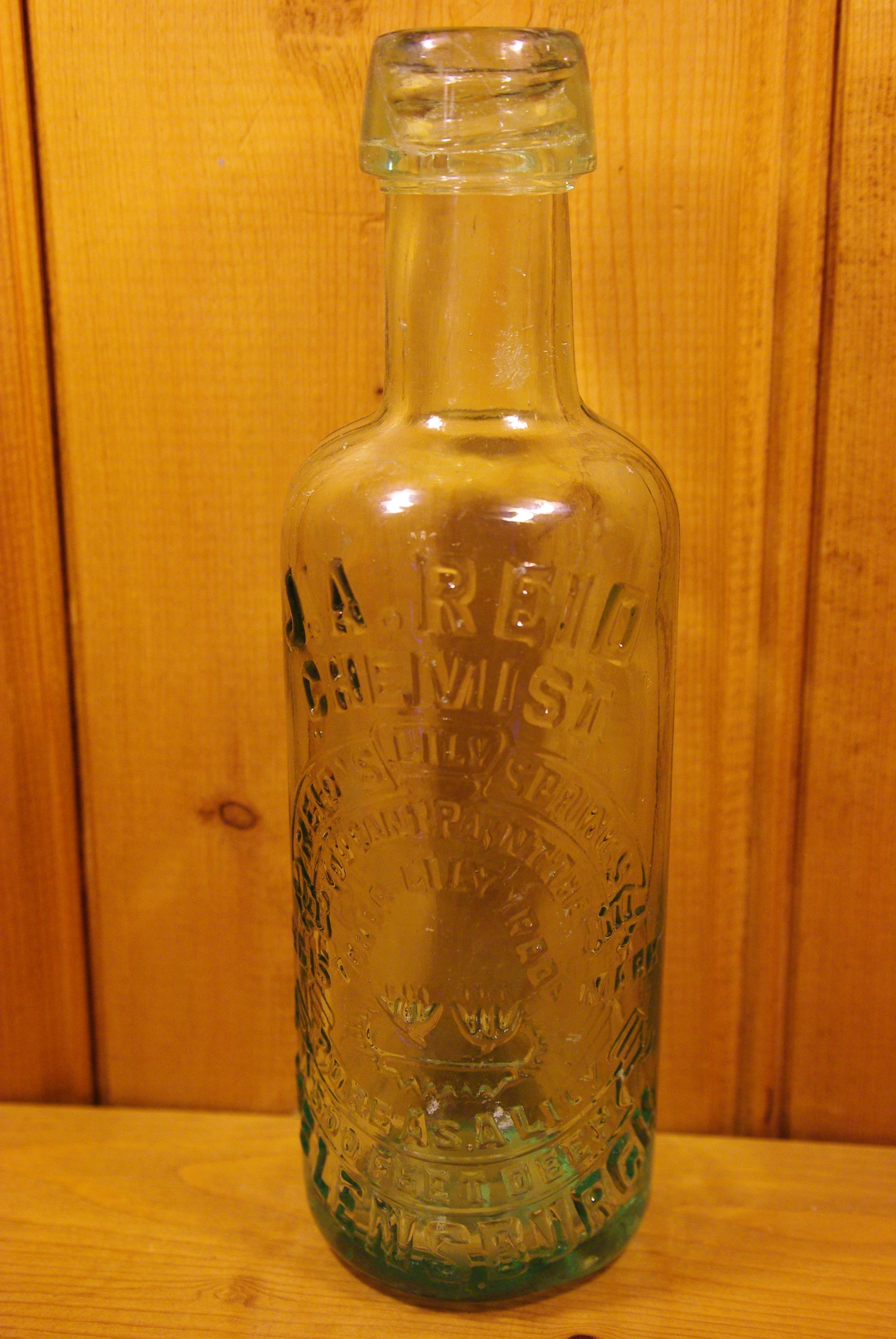
As I walked by, I saw a glint in the soil, and so I stooped and pulled out this bottle-

This little bottle is a window into lots of different stories.

First of all, we know that the fallen tree has to have been planted after 1917 (as the bottle has that date on the bottom.)

Next, the logos on the bottle are a glimpse into the refreshments of another generation. “J A Reid, Chemist, Reid’s Lily Springs, Pure as a Lily, 500 feet deep, Helensburgh.”

Around 1883 J.R.Reid set up as a chemist and aerated water manufacturer with a shop and factory at different addresses on Clyde Street, and several years later he moved manufacture to the Lily Springs in James Street. This was later owned by the well known Garvie lemonade firm, closing in 1957 because of alleged contamination of the water and moving to Milngavie until they closed that factory around 1985.

(From here.)

This is what our parents parents parents were drinking on their picnics. Carbonated, sweetened spring water of questionable purity.

This is what caught me- at some point, around 100 years ago, someone opened up this rather posh looking bottle during a wee holiday trip ‘doon the watter’. They were more adventurous than most, as they were not drawn in by the fleshpots of Dunoon– which during this period was a bit like Blackpool- cinemas, theatres,  ice cream parlours and all sorts of amusements. They chose a trip along the coast of the Holy Loch.

Perhaps they were cyclists slaking their thirst.

Or perhaps part of a family group settling down on the grassy shore line whilst the kids played in the water.

We will never know.

Storm damage…

We were hit with a massive storm in the early hours of the morning – strange as there was no real prediction of the severity of this one. But we woke early to the howl of it. The window was slightly open in the bathroom and this was enough to blow the plants from the shelf. It also blew our front door open, as I had not put the bolt across.

We had quite a bit of damage outside-

William’s shed was physically moved by the force of it, and the roofing felt is in Kansas.

My workshop had roofing ripped away too.

One of our trees now lies in the neighbours garden.

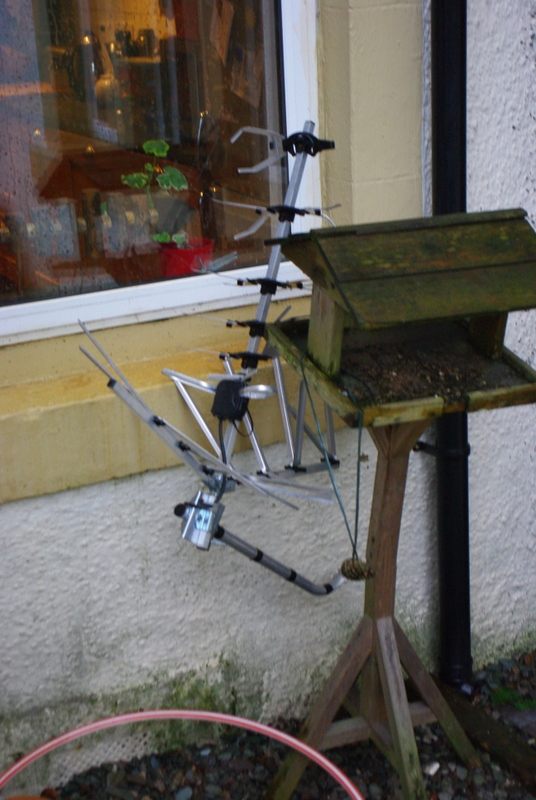
We have lost a TV aerial and the satellite dish.

And, most strangely a surf board/body board appeared in our garden.

No sign of the surfer yet.

Autumn/Winter breaks at Sgath an Tighe…

Thought it might be worth mentioning our holiday let again- If you are considering a wee break then you might like to think about a trip to Dunoon…

The Annexe has a double bedroom and twin bunks, an open fire and a DVD player for lots of late night films with a hot toddy. At £250 a week (or £45 a night) you are unlikely to find anything of better value.

It has been really lovely to have Graham and Victoria (along with Matthew and Ben) over the last week. Graham is a minister in North Yorkshire, and blogs here. After exchanging the occasional comment we met up for a pint when we were on holiday a couple of years ago- only to discover that Victoria and I used to work together in Bolton. It’s a small world.

If you want to know more (about the Annexe, rather than Graham and Victoria) then feel free to get in touch…


Poverty in small towns…

A few years ago I found myself in the middle of one of those internet ‘spats’- you know the sort- a discussion forum kind of thing that becomes increasingly acrimonious and strangely hurtful.

It was a surprise for several reasons- firstly the discussion ranged across several different Christian sites, and a FB group which I had set up in an attempt to make connections around ‘emerging church’ types of issues. You would have thought that Christians would know better than argue about doctrine and practice wouldn’t you?

Secondly I was surprised how difficult I found the discussion. Insulated by cyber-space and in discussion with people I did not really know, I was still vulnerable. I think this was because I was so hungry for connection at the time, and the end result was the opposite of this. It felt like such an opportunity lost.

And finally because I felt something that I carried as a strength (my commitment to social justice) came under direct attack.

The issue raised was the ‘Emerging Church is middle class’ one. The evidence for this was that it tended to attract white, male, professional Christian malcontents, who lived in the suburbs.

Mixed in with this was a bit of a issue of funding- it was suggested at the time that the resources released to and by these groups tended to go no-where near the disenfranchised and marginalised parts of our society.

One of the protagonists was part of a church planting movement, whom I will not name, but clearly was fired with a passion for urban outreach, which for him meant moving out of the suburbs to live and witness in the city amongst the people in the greatest poverty and the greatest need. I admired and was challenged by his zeal, but pointed out that this was not the only way that the emerging church communities might engage with their context. I listed some of the ways that my own community tried to do this-

1. Many of us worked within caring professions- social work, community work, youth work.

2. Several of us where unable to work for health reasons, but still volunteered in LINK clubs, charity shops, community action.

3. Our group itself was made up of a fairly broad spectrum of people- several with acute MH problems, others in later years, and our activities were certainly not heavy on resources- everything we did was on a shoestring.

4. And we looked for partnerships with other community groups all the time- locating what we did in the middle of our town, not out in the comfortable outskirts (if indeed there are any!)

I also talked about the nature of living and working in rural/small town Scotland- the hidden poverty and stigmatising that can be part of such places- and how suggesting that poverty only existed in cities was rather silly.

None of this cut any ice. From his point of view, I think that social work was part of the problem, certainly not the solution, and all the rest was justification for not doing what Jesus wants us to do- which was to move to the city and work with the poor.

I think in some ways, I kind of agree with him. The comfortable life we live in Dunoon is a far cry from inner city streets. The question of how this integrates with a trying to live as followers of Jesus has exercised my thoughts constantly.

And no-one is a harsher critic of Social Work than I am- even though to blame my profession for poverty makes as much sense as blaming the police for crime, or ambulance drivers for car accidents.
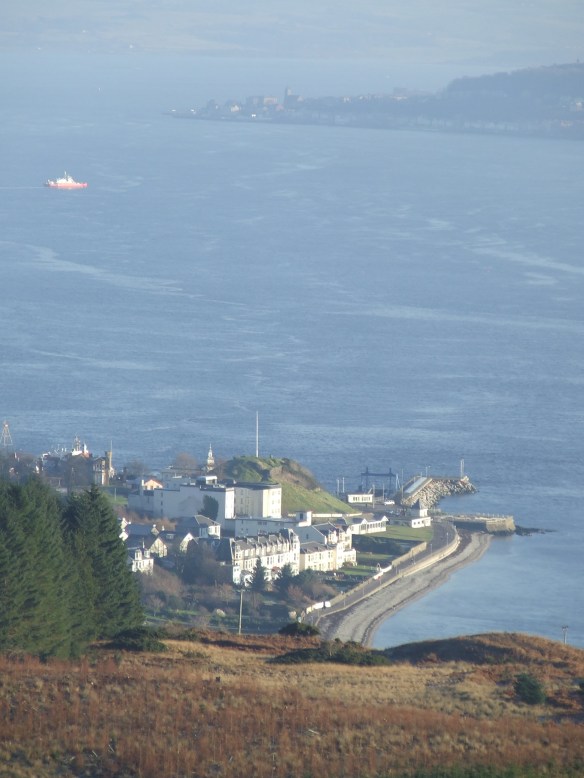
But the fact is, I am here. My kids are here. My friends and my community are here. The measure of the life we live is how we might seek to live out lives full of Grace wherever we find ourselves.

And we should be careful about imposing our own passions and our calling on others. I wonder how things have gone for my friend. I genuinely hope that they have gone well, and that  good has been done in situations of real need. But my experience has been that wisdom comes with miles travelled- and a few failures/successes along the way.

The discussion is ancient history now but the reason I am raking it up again is because of a newspaper report I read today about my little town. Mortality and poverty rates are the third worst for any area across the whole of the Scottish Highland area. Only the Merkinch area of Inverness and Alness, south Wick have poorer measures. I sort of knew this instinctively, but it is still a surprise to see it confirmed by wider measures.

The picture of the whole county is similarly challenging- 18000 of the 60,000 people of Argyll and Bute live in poverty, and our take home pay is 9% less than the national average.

In the mix are high levels of alcohol abuse. Reports from the courts in our local paper are almost all alcohol related.

All this means that inequalities in health have worsened- those in poverty are likely to suffer poorer health than 10 years ago- and these people are also more vulnerable in the current economic climate, as public services are squeezed, and low paid jobs become more competitive.

How do you do anything about this? What combination of micro and macro interventions might begin to change it all? Whole reports have been written about all this (remember the Black report?)

It is never easy- but for sure, one important component is the heart and strength of the communities we are part of. The wellbeing we experience through connection and shared purpose and meaning. The learning of tolerance and respect despite all the usually opponents to these things.

We do not have all the answers- I am no Messiah, but this sounds to me like a calling. A Jesus kind of calling…

History of here…

Our house, circa 2003

We have just had a lovely couple of days with my brother Steve, his wife Kate and little Jamie. Lots of sillyness and laughter, too much food and not a lot of sleep. I only wish my sister could have been there too- but life has thrown us all into a complication of geography and distance.

This morning we intended to take a walk through Dunoon, but it was lashing down with rain, so we went to Castle House museum. I have only been once before- years ago- and we were wondering whether they would have any information about our house- who lived here previously, what it was used for etc.

Because here is where we are, and being fully here seems to me to involve an appreciation of connection- with family and friends now, but also with who has been here before us.

I discovered today that behind where we live there was an Episcopalian church- made of corrugated iron, which eventually burnt down. And a little further back into the woods is a mound that was thought to be a Roman Fort.

What we discovered about our house turned out to be a little more than we expected. Maps of the plot of land before the house was built, old land records listing the details of the person who built it, a Robert Donaldson, who seems to have been an instrument maker from Glasgow. We need to go back to dig a little deeper into the copper plate records, but another thing we discovered is that our house used to be a ‘nursing home’- not in the sense of elderly care, but rather a place where people went to give birth to babies, or to recover from illness. It was called ‘St Margaret’s nursing home’ and there are people alive today in Dunoon (and elsewhere) who were born here.

Scratch the surface, scrape back the paint and peeling paper, and there are whole lives laid out before us. The hopes, aspirations, triumphs, disappointments and tragedies of those who used to be here, but now are elsewhere.

It is humbling, but also makes me grateful.

(Not least as this week, Michaela and I have been married 21 years!)

Cowal- listed as one of the worlds best under rated holiday destinations!

…according to travel writer Nikki Bayley writing for yahoo travel.

Cowal is placed alongside The Azores, Newfoundland, the Falkland Islands and the West Coast of Australia. If this seems like a piece of Hyperbole- then you need to come and check us out.

And if you do- perhaps you might like to make use of our cosy annexe!

If you are looking for a great value summer holiday we still have some spaces- or if you are looking to organise something for later in the year- check out the calendar on the website here.

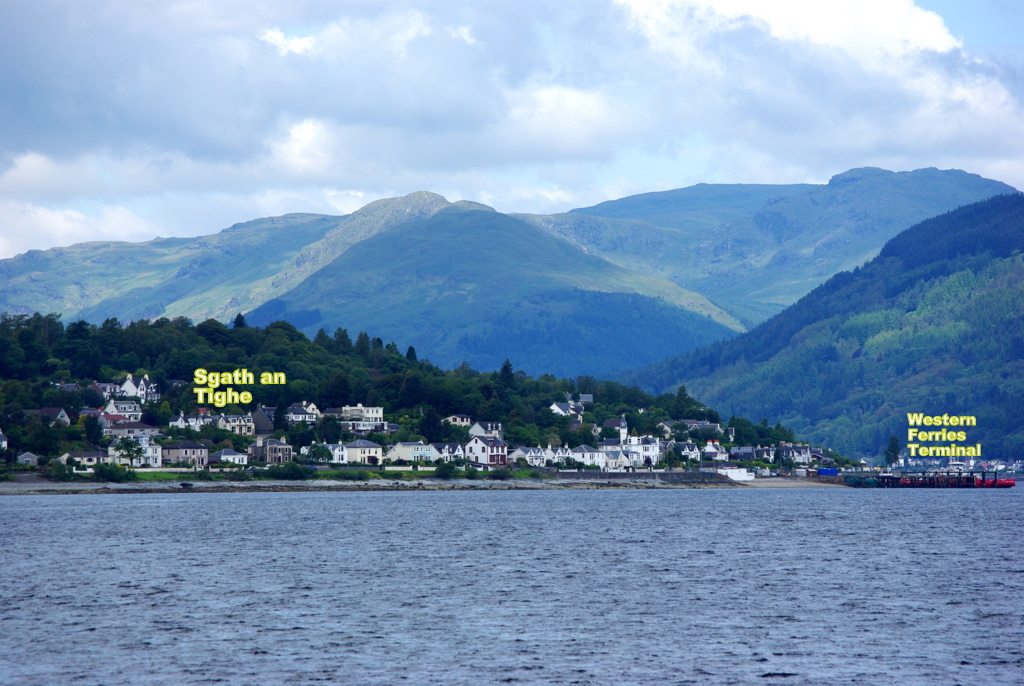
Here is a photo we took looking over towards Sgath an Tighe from the middle of the Clyde…

New website for Sgath an Tighe…

I have spent much of this weekend working on our new website for all things Sgath an Tighe. I hinted at a possible change of direction for the family recently- well here it is made real in cyber space!

Eventually this will be a portal for a number of different things happening in or around out house-

  • Self catering accommodation (already available)
  • B and B accommodation (still a work in progress)
  • Craft workshops (Blue Sky programme is on the website)
  • Crafts- woodworking, pottery, all sorts of other things
  • Retreats- both in the house and wilderness retreats
  • Photography
  • Writing
  • Information about our lovely area
The website is still under development, but there is a lot there already. I have used a wordpress platform, which has not been without the odd frustration, but is mostly OK, even to a relative novice like me.
Call by and let me know what you think!

The one that got me…

I live in a beautiful place. Check out the lovely Visit Cowal site here if you do not believe me.

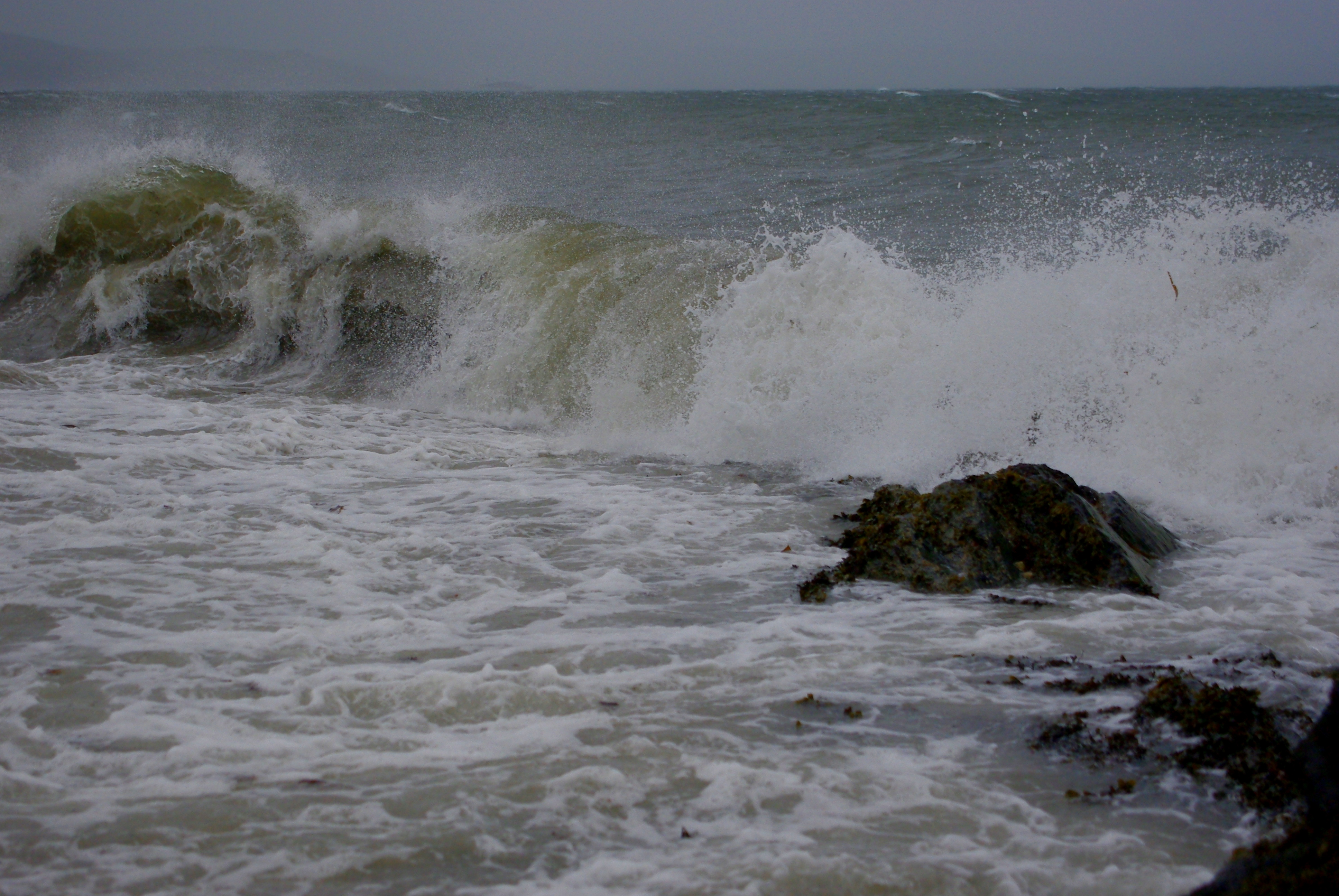
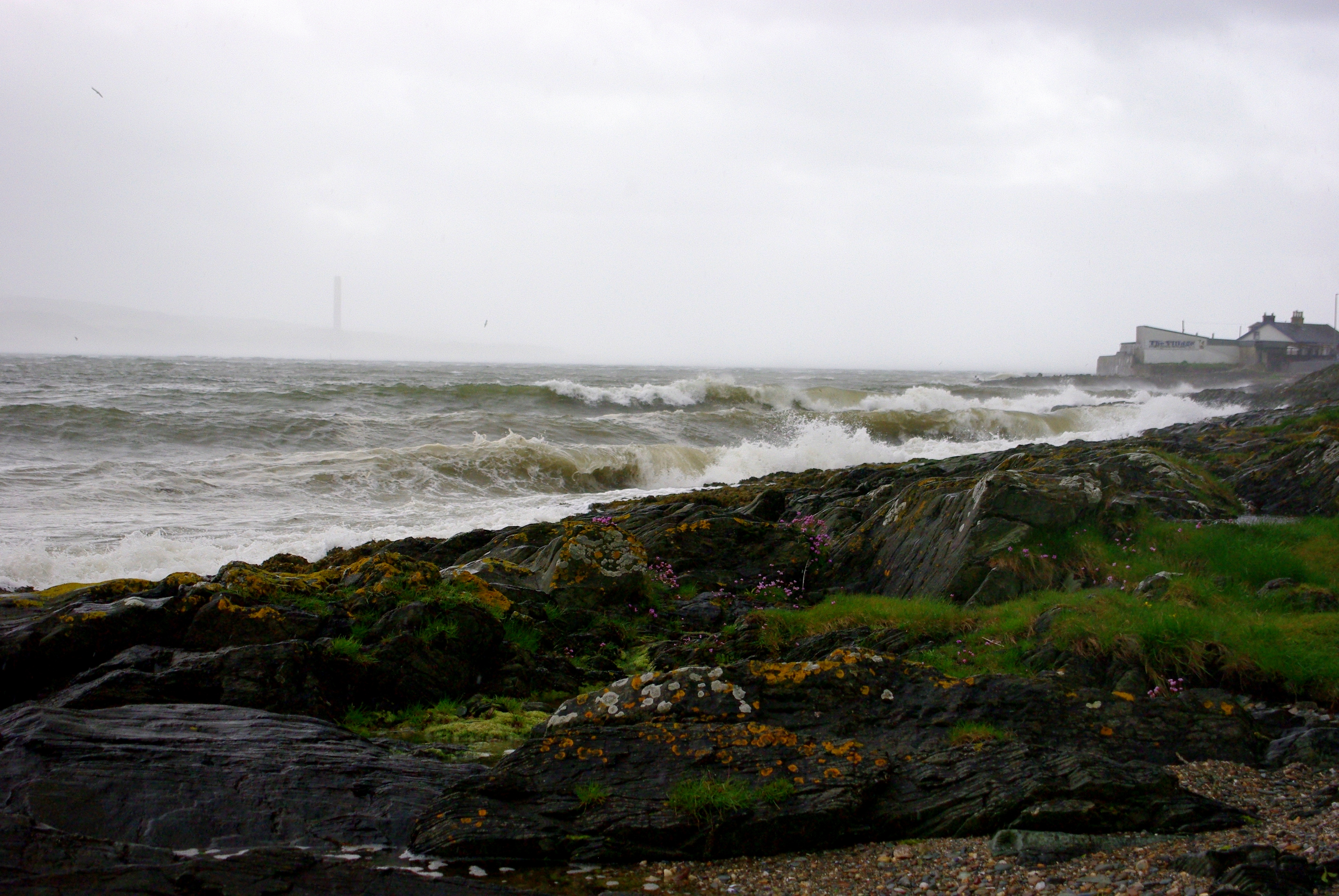
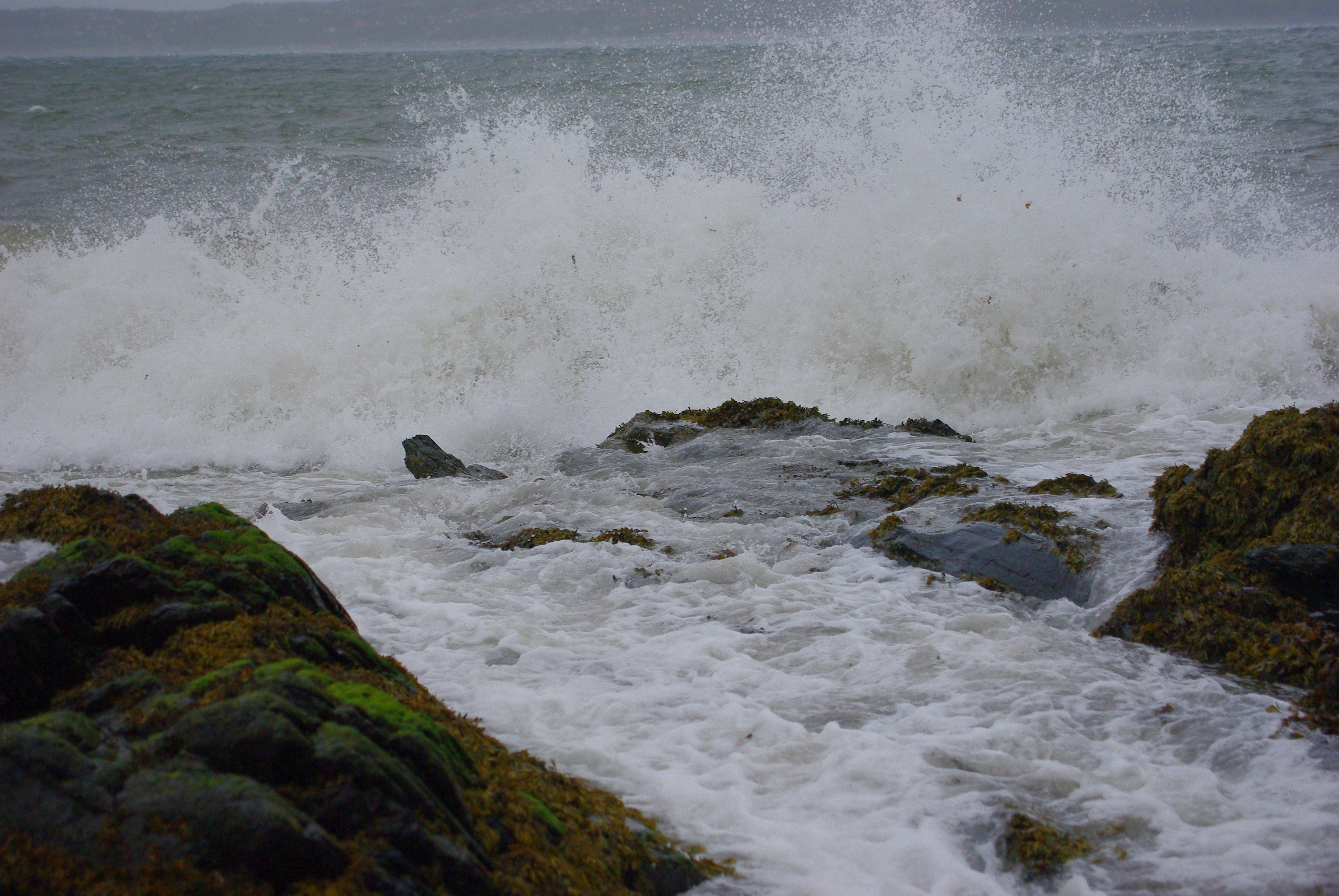
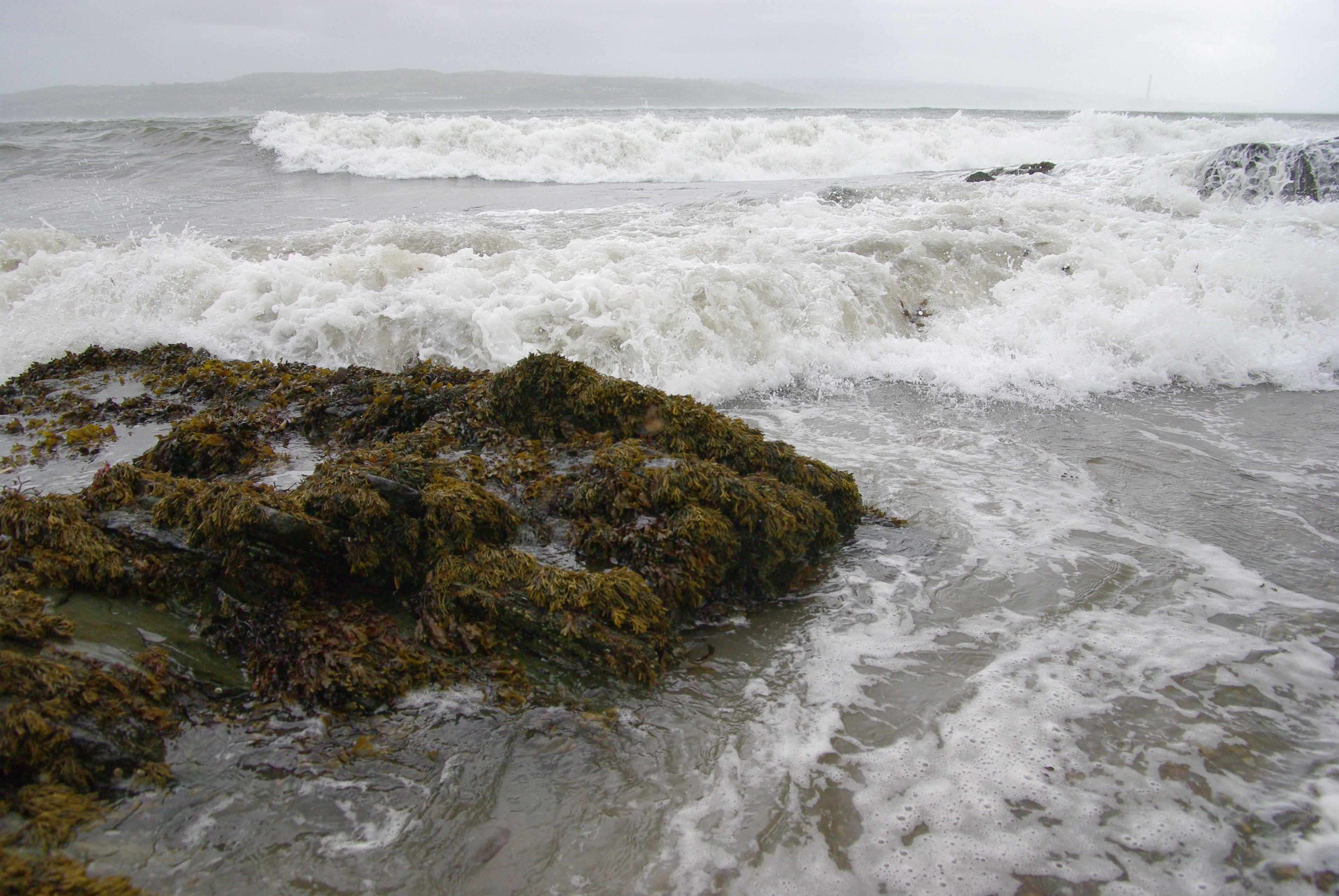
It is something I often take for granted (for which I ask forgiveness) but at other times, it hits me between the eyes. Today there is a storm raging in from the Atlantic, and the sea is being whipped into froth and spray- despite our relatively sheltered location.

The exuberant power of it is exhilarating, but also a little frightening.

Of course, the camera comes out at times like this.

Except this time, I wandered a little close to the surf, and suddenly found myself wet above the knees.

Oh deary me, I said.

This was the one that got me-

A little parochial politics…

I added a link to an excellent local news website to my blogroll recently. I found myself visiting ForArgyll frequently, as they seem to be committed to a muscular, opinionated kind of investigative journalism that often makes for interesting reading. Whether or not you agree with their comment, they seem to be committed to holding our local government to account in an intelligent and committed way.

And although many of you probably care little about the politics of Argyll- the county in which I live and work-I thought it worth reflecting on how the economic crisis is working itself out locally.

I work for the local council, and whilst it would not be appropriate for me to discuss detail of the financial situation the social work department is facing, it is no secret to say that it is frightening.

Argyll and Bute council is one of those few local governing bodies that has been governed by coalitions of mostly ‘independent’ councillors for years. Political parties tend to be minorities in any administration. Whether this is a good thing or not is a point of debate, but it is very hard to know what individual representatives stand for. It also means that the representatives often lack a wider context of support, political affiliation and even scrutiny by national political organisations. And things can become very parochial indeed.

Overall, Argyll is home to around 60,000 people dispersed across remote islands and large rural areas. Our largest town, Helensburgh, has less than 20,000 people- and often feels like part of a Glasgow rather than the Highlands. We are an ageing population-  not just in terms of more older people, but more OLDER older people. Our school rolls are shrinking and all services tend to be marginal in their cost effectiveness because of the dispersed nature of the population they serve.

Into this context will come savage cuts.

But at present, no one seems to have a clue what is going to be cut, and how the council will balance it’s budget. It has already been a total dog’s breakfast- with all sorts of allegations flying around.

The council took the decision to close a number of local schools, in order to save money, but then effective campaigning pointed out that the calculations of savings on which the closures where based on were totally wrong- this because of the grant allocations from central government and a whole host of other things. Oh- and the council is supposed to consult on these closures, and they had failed to do so. Chaos ensued. The Scottish National Party councillors who were then part of the ruling coalition (one of whom was the education spokesperson) withdrew from government, and since then we have had much politicking to form a new ruling group.

Meanwhile, the executive and the administration are coming under increasing fire- not least from ForArgyll, whose probing questions have centred around-

  1. The role of the council leadership in negotiating a way of calculating allocations of central government money to local  authorities in Scotland. Our council leader appears to have participated in this debate, not understood it, and the end result is that Argyll were hit with an extra £5 million of cuts.
  2. Resignations of leaders, and their future electability.
  3. Poor administration- for example unmanageable agenda’s at council meetings, resulting in absolutely no meaningful discussion or debate of key issues, or as ‘For Argyll’ put it- We lost the will to live shortly before the end of the interminable and rambling Executive Committee and escaped to fresh air and a world that slowly righted itself. It is hard to describe to anyone who has not been there, just how deadly and cock-eyed these occasions are. Logic, reason and genuine discussion simply do not penetrate the fog, the artifice and the blindly defensive fortifications.

I have worked for the council since 2002, and these are chaotic times.

Meanwhile, over in the health service…

This is the front page picture from our local paper. It features a friend of mine, and local Episcopal minister, Andrew Swift, taking part in a campaign to save the local hospice.

This has caused unprecedented local ill feeling- the hospice was formed as a result of considerable local fundraising, and in partnership with the local Health Authority, who have now decided to close it. This is related to their own financial crisis, but has been spun out over a long period of time, with lots of allegations and counter allegations.

First many local GP’s issued a joint letter of protest.

Followed by a joint statement from local ministers- represented ably by Andrew as above.

Local passions are running high.

In the middle of all this, I find myself asking whether some good will come from all this?

Optimism is not really my natural condition, and there is much to fear as we face an uncertain future, locally and nationally.

But local engagement in politics, and a shakedown of old hierarchies and hegemonies- these things are good I think. They are a gift that comes with crisis- and the promise of real change.

Elections are coming…

Finally- local political quote of the week-

The leader of the Council is one of Dunoon’s councillors, Dick Walsh. When questioned about the closure of the hospice (and possibly relieved that he was not in the firing line for a change) he had this to say-

“The hospice will close over my dead body.”


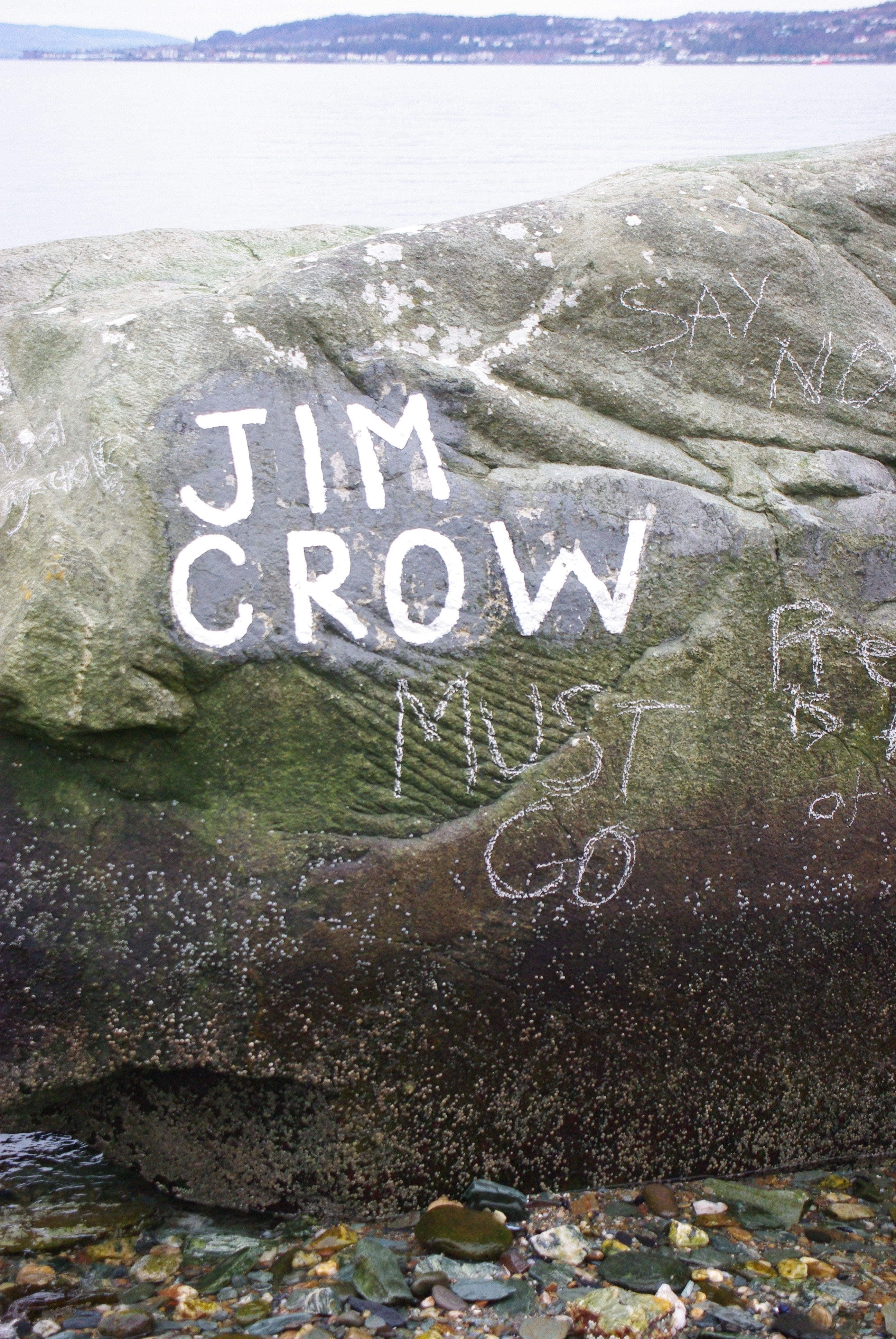
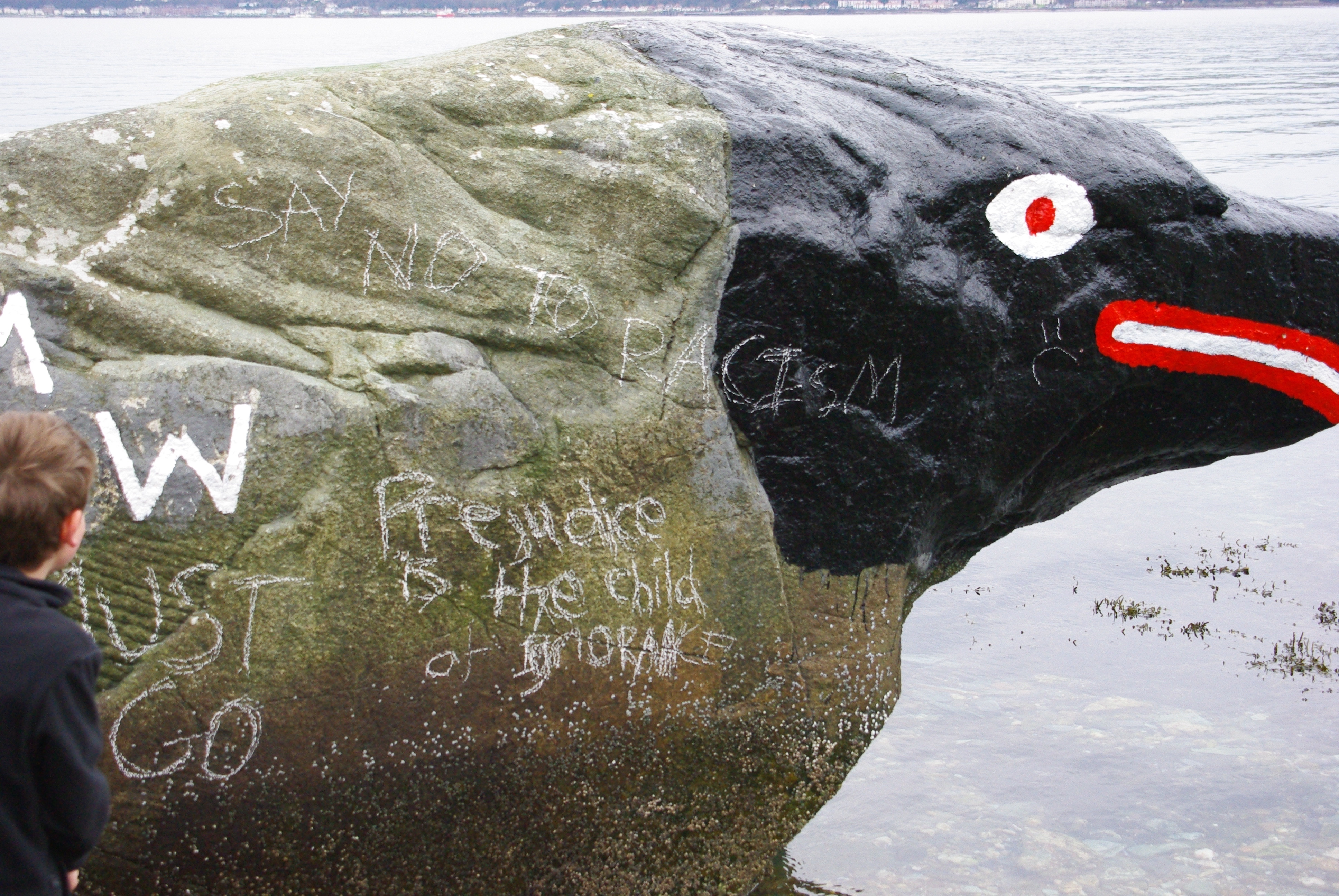
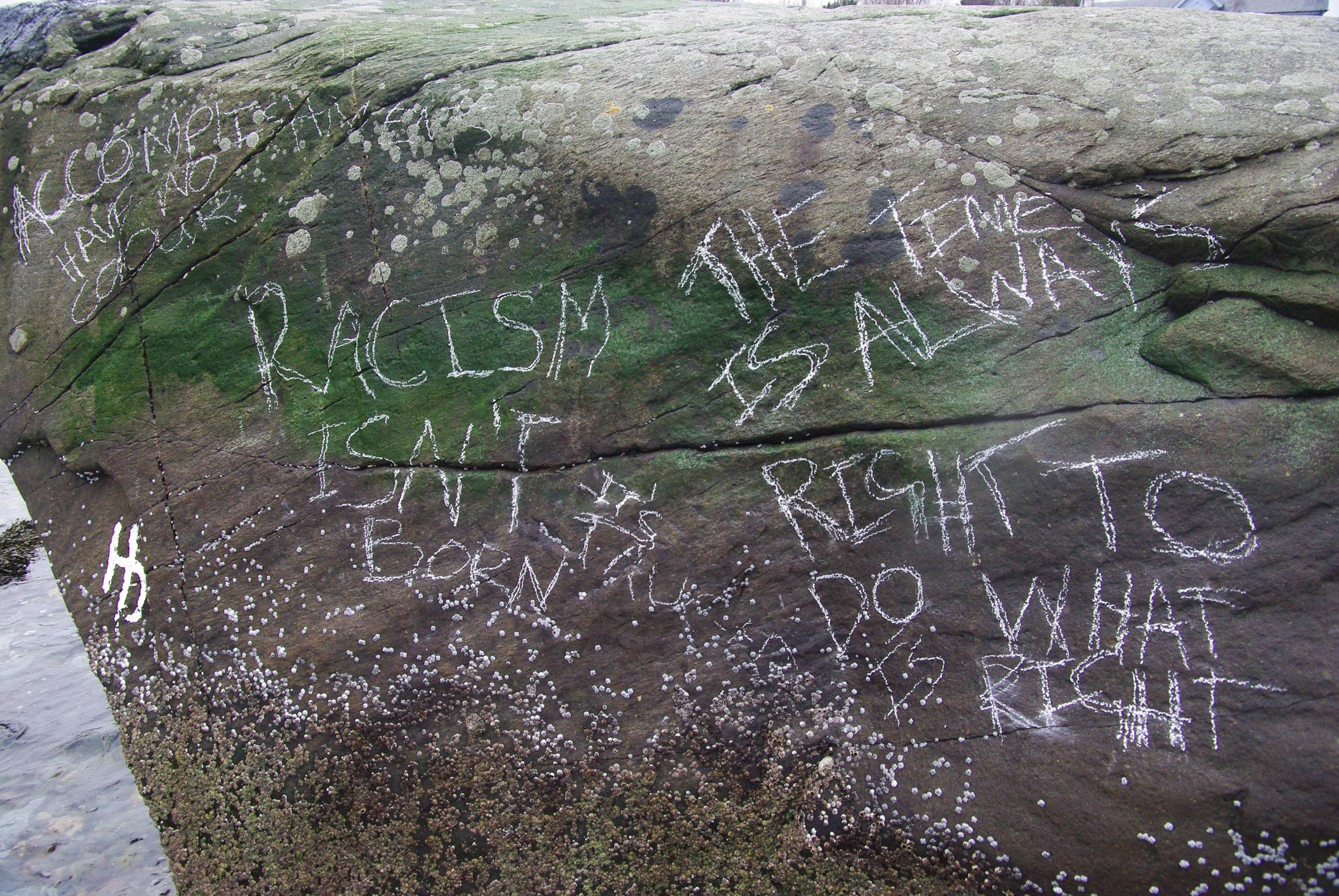
A bit more on Jim Crow Rock…

There has been a little more local agitation in relation to our rather infamous local land mark-

There has been an upsurge in traffic on my previous post- here.

I did a quick google search, and came across this disturbing post on the blog of the Jim Crow Museum at Ferris University– Michigan. They pull no punches. Here is the post in full-

It’s not Loch Ness, but it’s still a monstrosity.

Jim Crow RockThe Jim Crow Museum is familiar and disturbed by this painted rock that dates back to the early 20th century. It rests off the shores just north of the small Scottish seaside town of Dunoon. The local population is somewhat divided over the idea that it is a monument to racism. From the looks of this thing, it is obvious to us that this object isconsistent with the blackface caricaturesthat populate our museum.

The Jim Crow Rock is painted black, with the words “Jim Crow” in boldface white, and a red mouth. It’s blackface in an obsidian form. For us at the Jim Crow Museum, the question remains — why does this rock hold a special place among the local population? Or, are we as educators over-sensitive to the symbolism that Jim Crow artifacts represent?

The Jim Crow Rock has existed for over 100 years. At times it has been painted over and “vandalized,” only to be regenerated by “well-meaning” preservationists. Pro-rock defenders cite the historical footnote that the U.S. Navy had a base in Dunoon for many years without any complaints (on record) from black sailors. Local historians also claim the rock refers to a local builders’ yard once owned by a fellow named Jim Crow. However, the Jim Crow Museum has learned that controversy has enveloped this object for decades and that newspaper accounts debating the fate of the rock have routinely stirred passions among the local population.

The Jim Crow Museum has received reports via email of ongoing racial tensions in Dunoon. Originally, the painted rock may have served as a warning to minorities that they were not welcome and to“stay in their place.” Recently, individuals who find the rock’s symbolism offensive have been publicly discredited and ridiculed. In a newspaper poll taken earlier this year, voters in Dunoon favored keeping the rock intact instead of painting it over by a 5-to-1 margin. Today, we’re left with the popular notion that the only people who have issues with the rock are “incomers” with no connection to Dunoon and that it’s a harmless landmark of local tradition.

Jim Crow Rock

The Jim Crow Museum believes that in order to promote racial tolerance, people must understand the historical and contemporary expressions of intolerance. In Scotland, all myths aside, there are indeed monsters in the water and lessons to be learned.December 2010 response by Ted Halm, Webmaster, Jim Crow Museum of Racist Memorabilia

POSTED BY SANDY GHOLSTON AT 12/02/2010 09:28:00 AM

In a recent reply to a comment on my own previous blog piece, I suggested that if we are to keep this rock, then perhaps the best thing to do is to make it into something that we can be proud of again- a monument that reminds us of the past of this area, and the role of slavery in its prosperity.

What about an interpretive board, with an account of this history, and the role of the minstrel shows?

Perhaps someone from the Jim Crow Museum might be willing to work with us to make this happen.

Over to you local politicians. See if you dare to step into the firing line.