Rohr on the relationship between silence and compassion…

It is raining today (here at least) and so you can’t be in the garden. The cricket and tennis are rained off and there is no point watching replays. So instead, take some time to listen to Richard Rohr speaking about how silence equips us to find the ways of justice.

I went on an 8 day silent retreat at the beginning of the year. I am still working out its impact in my life, but silence remains a hard thing to find in this age of information overload.

Rohr- silence/compassion

Rohr on outsiders…

Richard Rohr

My friend Maggy sent me a quote today by the man speaking above- Richard Rohr.

It hit the spot for several reasons. Firstly, Rohr usually has something interesting to say, and his take on the role of the outsider as a source of renewal to the church feels like something important.

Important too as another friend had recieved one of those chain e-mails, and sent it on to me to ask what I thought. This is what it said;

Last month I attended my annual training session for maintaining my security clearance in the prison service.

>

> There was a presentation by three speakers from the Roman Catholic, Protestant and Muslim faiths, who explained their beliefs.

>

> I was particularly interested in what the Islamic Imam had to say about the basics of Islam, complete with video.

>

> After the presentations, question time. I directed my question to the Imam and asked: ‘Correct me if I’m wrong, but I understand that most Imams and clerics of Islam have declared a Holy War against the infidels of the world and, that by killing an infidel, (which is a command to all Muslims) they are assured of a place in heaven. If that’s the case, can you give me the definition of an infidel?’

>

> There was no disagreement with my statement and, without hesitation he replied, ‘Non-believers!’

>

> I responded, ‘So let me make sure I have this straight. All followers of Allah have been commanded to kill everyone who is not a follower of Allah, so they can have a place in heaven. Is that correct?’

>

> The expression on his face changed from one of authority to that of a little boy who had just been caught with his hand in the biscuit tin.’

>

> He sheepishly replied, ‘Yes.’

>

> I then stated, ‘Well, I have a real problem trying to imagine Pope Benedict commanding all Catholics to kill Muslims, or the Archbishop of Canterbury ordering all Protestants to do the same in order to guarantee them a place in heaven!’

>

> The Imam was speechless!

>

> I continued, ‘I also have a problem with being your ‘friend’ when you and your brother clerics are telling your followers to kill me! Let me ask you a question. Would you rather have your Allah, who tells you to kill me in order for you to go to heaven, or my Jesus who tells me to love you because He will take me to heaven and He wants you to be there with me?’

>

> You could have heard a pin drop as the Imam remained speechless.

>

> Needless to say, the organizers of the Diversification seminar were not happy with this way of exposing the truth about the Muslims’ beliefs.

>

> Within twenty years, i.e. 2031, there will be enough Muslim voters in the UK to elect a government of their choice, complete with Sharia law.

>

> Everyone in the WORLD should be required to read this, but with the current political paralysis, tolerant justice system, liberal media and P.C. madness, there is no way this will be widely publicised.

>

> Please pass this on to all your e-mail contacts.

>

I replied to my friend,  but rather than share with you my own ramblings, here is what Richard Rohr had to say;

The Sin of Exclusion  

Those at the edge of any system and those excluded from any system ironically and invariably hold the secret for the conversion and wholeness of that very group. They always hold the feared, rejected, and denied parts of the group’s soul. You see, therefore, why the church was meant to be that group that constantly went to the edges, to the “least of the brothers and sisters,” and even to the enemy.

Jesus was not just a theological genius, but he was also a psychological and sociological genius. When any church defines itself by exclusion of anybody, it is always wrong. It is avoiding its only vocation, which is to be the Christ. The only groups that Jesus seriously critiques are those who include themselves and exclude others from the always-given grace of God.

Only as the People of God receive the stranger, the sinner, and the immigrant, those who don’t play our game our way, do we discover not only the hidden, feared, and hated parts of our own souls, but the fullness of Jesus himself. We need them for our own conversion.The Church is always converted when the outcasts are re-invited back into the temple. You see this in Jesus’ commonly sending marginalized people that he has healed back into the village, back to their family, or back to the temple to “show themselves to the priests.” It is not just for their re-inclusion and acceptance, but actually for the group itself to be renewed.

Adapted from Radical Grace: Daily Meditations,

Poverty UK, revisited…

About-2-million-pensioner-001


image from The Guardian

There have been a series of stories in the press over the past few months, setting an agenda that goes something like this;

Austerity is necessary, we all need to pull in our belts for the sake of the nation

Poverty is avoidable if you work hard. Only those who are lazy live in poverty

We can not afford to continue to pay benefits to scroungers

It is the working ‘squeezed middle’ we need to feel sorry for- those people whose taxes are being used to buy easy lifestyles to people on benefits

This blame the poor attitude is pervasive and seems to play remarkably well- giving us someone to blame, easy scapegoats for the economic woes that assail the nation. Never mind the facts.

We already know that the rich are getting richer.

And that a third of the workforce have held on to their jobs through accepting pay cuts, in a manner unprecedented.

Today, we hear that an extra one million people are now regarded as living in poverty in the UK, including 300,000 children- this from the governments own stats.

One strange stat however is that most of these new children who live in poverty come from working households. All those benefits cuts to council tax benefit, housing benefit, etc, squeezed wages. This from the Guardian says it all;

Oxfam’s Katherine Trebeck said: “It is unacceptable that in the seventh richest country on the planet, we’ve seen the number of people living in poverty increase by nearly a million. With cuts to public services and social security in the pipeline, the number of people living on absolute low incomes will only increase over the years.”

Alison Garnham, chief executive of Child Poverty Action Group, said: “Despite all the talk about ‘scroungers’ and generations of families never working, today’s poverty figures expose comprehensively the myth that the main cause of poverty is people choosing not to work. The truth is that for a growing number of families, work isn’t working. The promise that work would be a route out of poverty has not been kept as wages stagnate and spending cuts have hurt low-income working families.”

Barnardo’s chief executive Anne Marie Carrie said: “This year many of these households will be pushed into financial chaos when the cap on benefits increases take effect, compromising the health and life chances of children as they are forced to grow up in poverty.”

Matthew Reed, chief executive of the Children’s Society, said: “It is shameful that, as one of the richest countries in the world, child poverty is being allowed to increase.”

All these charities are working at the cutting edge of poverty in the UK. The so called ‘squeezed middle’- those of us who might  be forced to alter one or two consumer decisions as a result of cut backs- we rarely come into contact with this kind of poverty.

Angry? We should be.

Decisions taken by our present government are not victimless.


The big city…

Today both Michaela and I were in Glasgow for different reasons. I had some work meetings to go to, she was speaking at a conference, so stayed over the night before in a posh hotel.

I really enjoy walking around cities these days- looking at buildings and watching people. I spent some time around Trongate- a place full of small shops, galleries and old buildings still looking for a purpose beyond being a blanks space for a million fly posters.

I took some photos on my mobile phone. Somehow it seems like the right gadget to record urban shots with…

2013-06-013

Fundamentalism…

annex-gish-lillian-scarlet-letter-the_03

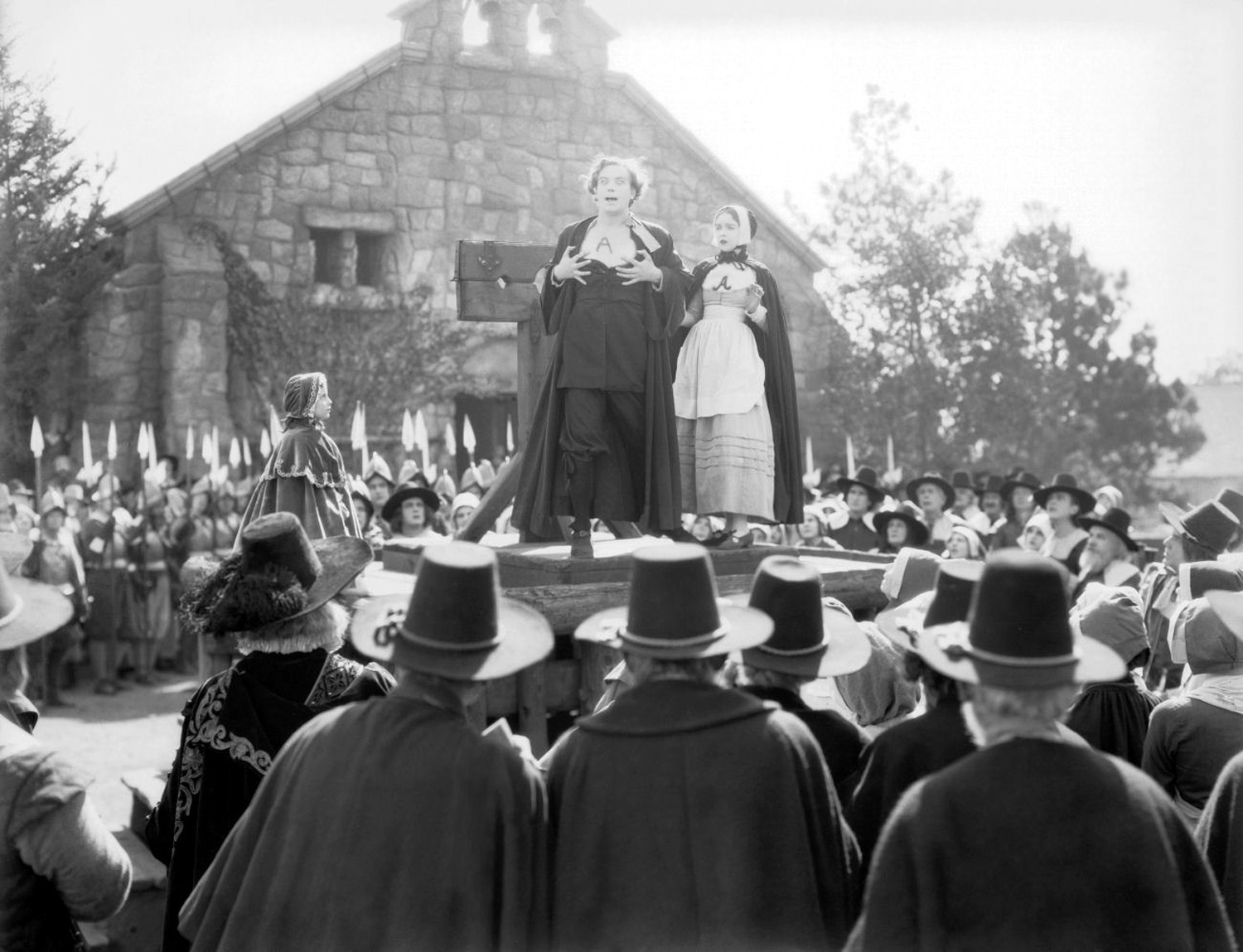
…acceptance of pluralism relativises truth. Once it is allowed that there are different paths to truth, a person’s religious allegiance becomes a matter of choice, and choice is the enemy of absolutism. Fundamentalism is one response to the crisis of faith brought about by awareness of differences…

This from here. (Emphasis mine.)

I read this recently and have been chewing on it for a couple of days. The logical outcome of a faith that lays claim to absolute truth is the fact that everyone else is wrong. If truth is important, life saving even, then we have to try to convince them of their error, at any cost. Even if it costs us (or them) our lives.

This is the story of fundamentalism in all the different traditions- be they Islamic, Jewish, Christian or Hindu.

In my tradition we are emerging from a mess of what happens when the religion named after a man of the poor becomes the religion of empire- first via Constantine, more recently the British Empire, now America, despite its attempt to separate church from state, is making the same mistakes.  We talk as if the power  and privilege we have is a result of the blessing of God on our embracing of moral and theological truth.

Other forms of fundamentalism grows as a direct result of the mess we have made- it is stoked by a sense of deep injustice, by loss, poverty, by an identity forged outside and in the dark shadow of empire. The truth of this kind of fundamentalism is the truth of a people in exile.

For most of us, fundamentalism is mediated, softened by other things- secularism, separation from people who are different, a gap between our cant and our mission, or… a change in our theology. Some despise the latter as weakness, corruption.

But others see it as the kind of truth that sets us free.

The way, the truth and the life by which we come to the Father.

This is not easy journey, but I think it is one that many of us are on.

The next generation of garden grazers…

…and try as I might, I can not resent them for the plants that I know they will destroy.

I looked out of the front door a few minutes ago and there were two tiny fauns on the driveway, still covered in their lines of camouflage spots and speckles to hide them from the wolves and lions that no longer frequent these parts.

They are young Roe deer, around 2 or 3 weeks old.

One was shy and skipped through the hedge almost immediately. The other one lingered, perhaps curious about whose garden this was that provided such good eating.

Even when she wandered through the gap in the hedge she did not go far- watching me as I watched her. Here she is;

This slideshow requires JavaScript.

Cynicism…

dorothyparker3

What is it that makes cynicism seem like common sense?

How come cynicism is the attitude that seems most socially proscribed and enforced?

Why is it socially safer to sneer rather than enthuse?

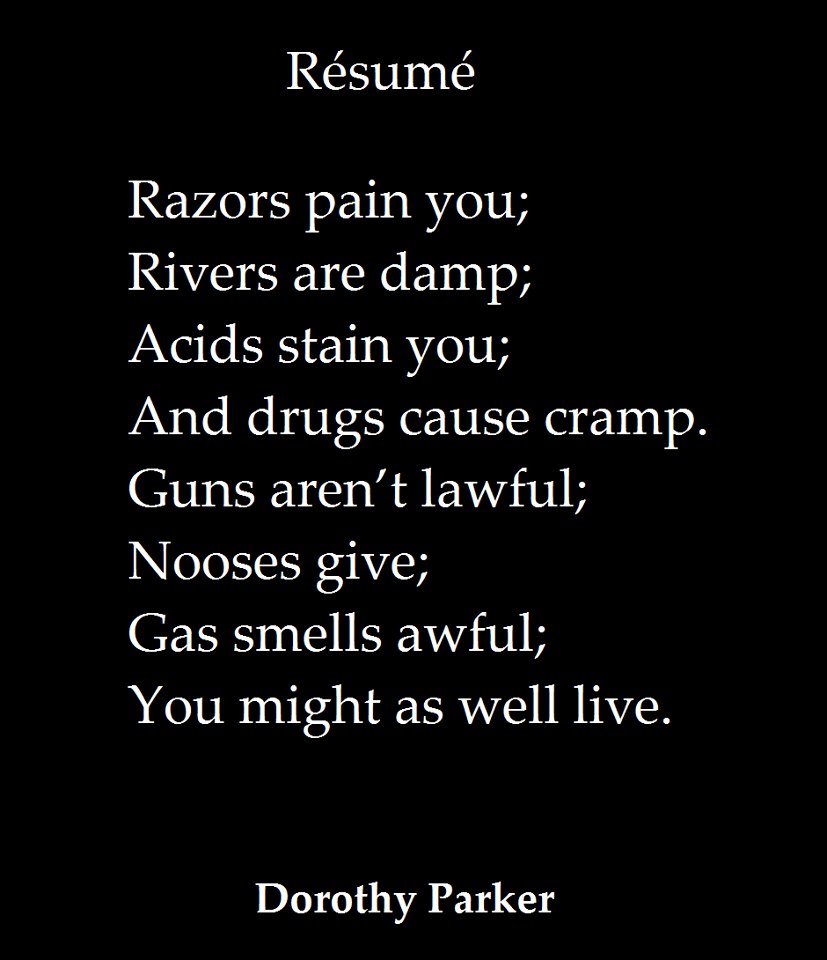
Think about it- that place of cynical distance we hide behind- or is it just me?  Despite myself, with a random assortment of passions and creativities, life teaches me still that the best defence against failure, against exposure, against being beached on some shoal of stupidity, is cynicism.

But nothing ever was made or created or celebrated by cynicism. Cynicism can only destroy, undermine, denude.

To achieve something new, to change the world for the better- this always requires hope. Even those of us who struggle to reach the high watermark of optimism (lets us not get carried away after all.)

Hope carries risk. Cynicism condemns us to slow decline into the mundanity of the just-enough, or even worse, the passivity of mass inertia.

So why is it that as I re-read this I still feel…. cynical?

Piano…

stairs, unitarian chapel, belper, derbyshire.

Piano


She walked through the shafts of dusty light

And lifted the lid on the old black piano

Severe of face, each hair disciplined

I groaned

Thinking of those teachers, though competent

Who purge passion from their music

Like a nun might deal with lust


The chapel breathed as she began to play

At first the notes came gently

Like tiny drops of rain

Chords rose and fell

Melody more implied than present, but no less beautiful

The yellow of the place with its peeling paint

Became sepia with the sound of it


Then, almost against my will

I started to sing


A flashback to our colonial legacy…

mau mau

We Brits still think of ourselves less as militaristic colonisers, more as civilisers- as if the mission of our Victorian forebear to the rest of the world was to instill stiff upper lips, courts of justice and the gentility of cricket.

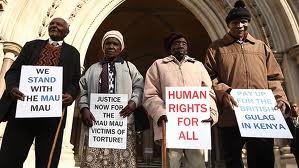
Stories this week have revealed some of the bloody ragged edge of Empire however, as the British Government have finally admitted some of the brutality done by ‘our boys’ in our name upon the people of Kenya in the 1950s.

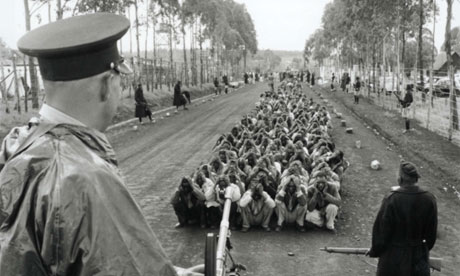
Most of these stories take some believing. Rape, including rape with bottles. Torture. Slaughter of men women and children. All done by British soldiers- not in the context of global struggle, but in a long line of brutality aimed at people regarded as ‘less than’, as savages.

Dig a little further back into the history of British intervention in Kenya and it all makes sense. This from Wikipedia;

Britain’s presence in Kenya was marked by dispossession and violence. In 1894, British MP Charles Dilke had observed in the House of Commons: “The only person who has up to the present time benefited from our enterprise in the heart of Africa has been Mr. Hiram Maxim“,[23]though such a state of affairs was in accordance with insistence of Arthur Hardinge, the first commissioner of British East Africa,[24] that “[t]hese people must learn submission by bullets—it is the only school . . . In Africa to have peace you must first teach obedience and the only person who teaches the lesson properly is the sword.”[25] During the period in which Kenya’s interior was being forcibly opened up for British settlement, Francis Hall, an officer in the Imperial British East Africa Company and after whom Fort Hall was named, asserted: “There is only one way to improve the Wakikuyu [and] that is wipe them out; I should be only too delighted to do so, but we have to depend on them for food supplies”,[26] and colonial officers such as Richard Meinertzhagenwrote of how, on occasion, they massacred Kikuyu by the hundred.[27]

For the next 60 years or so, the Kenyan people were slaughtered, oppressed, lost land, lifestock, economic power, and found themselves less than serfs, working on the farms and plantations of the British. After the second world war, attempts were made to set up a government, but there was never a chance that this would be fair and just;

In May 1951, the British Colonial SecretaryJames Griffiths, visited Kenya, where the Kenyan African Union presented him with a list of demands ranging from the removal of alleged discriminatory legislation to the inclusion of 12 elected black representatives on the Legislative Council that governed the colony’s affairs.[Griffith proposed a Legislative Council in which the 30,000 white settlers received 14 representatives, the 100,000 Asians (mostly from South Asia got six, the 24,000 Arabs one, and the 5,000,000 Africans five representatives to be nominated by the government.

In this struggle- whose side would you be on? Where is justice? Not with we Brits that is for sure. No surprise then that when violence erupted it was necessary to dehumanise;

The official British explanation of the revolt did not include the insights of agrarian and agricultural experts, of economists and historians, or even of Europeans who had spent a long period living amongst the Kikuyu such as Louis Leakey. Not for the first time,[81] the British instead relied on the purported insights of the ethnopsychiatrist; with Mau Mau, it would fall to Dr. John Colin Carothers to perform the desired analysis. This ethnopsychiatric explanation would infect everything, from British psychological warfare, which painted Mau Mau as “an irrational force of evil, dominated by bestial impulses and influenced by world communism”, to the later official study of the uprising, the Corfield Report.[82]

The psychological war became of critical importance to military and civilian leaders, who waged it in the time-honoured colonial fashion of divide and rule, always trying to “emphasise that there was in effect a civil war, and that the struggle was not black versus white”, attempting to isolate Mau Mau from the Kikuyu, and the Kikuyu from the rest of the colony’s population and the world outside. In driving a wedge between Mau Mau and the Kikuyu generally, these propaganda efforts essentially played no role, though they could apparently claim an important contribution to the isolation of Mau Mau from the non-Kikuyu sections of the population.[83]

…The savagery of the British response was inflated by two factors. First, the settler regime in Kenya was, even before the insurgency, probably the most openly racist one in the British empire, with the settlers’ violent prejudice attended by an uncompromising determination to retain their grip on power[112] and half-submerged fears that, as a tiny minority, they could be overwhelmed by the indigenous population.[113] A common view among the settler community was that “[a] good sound system of compulsory labour would do more to raise the nigger in five years than all the millions that have been sunk in missionary efforts for the last fifty”,[114] and its representatives were so keen on aggressive action that George Erskine referred to them as “the White Mau Mau”.[113]Second, the brutality of Mau Mau attacks on civilians made it easy for the movement’s opponents—even for African and loyalist security forces—to adopt a totally dehumanised view of Mau Mau adherents.[112

This savagery is now a fact of historical record rather than debate- check out the rest of the Wikipedia article.

mau-mau-captives-007

Why is this relevant now?

Unless we learn from history- and confront what made us what we are – we simply repeat it.

There is no doubt in my mind that Christian missionary activity in Kenya was part of an oppressive colonial regime. It had little to do with the Kingdom if Heaven and everything to do with empire. May God forgive us.

Britain has set itself in allegiance with the USA, the current dominant colonial power in the world- although these days colonialism is more easily understood as globalised capital. We believe ourselves to have moral authority, even after the mess of Iraq and Afghanistan- so that we should police the troubled parts of the world.

Kenya tells us much about the way that other parts of the world see us- and I reckon that this is the tip of the colonial ice berg. Once you start looking through the eyes of the oppressed, empire looks very different.

 

A mouth full of marbles…

Rainbow, kyles of bute

The blog has been rather slow recently- there is a rhythm to blogging that seems to work that way- sometimes it feels like you have nothing to say.

One response to this is to write a blog post about the fact that you have nothing to say. But I would never do that of course.

The fact is, I blog primarily to reflect on who what and where I am. Sometime who I am I do not like.

I am small and shallow,

I am big like a beached whale.

My mouth is  stuffed with marbles

No wonder you look at me and sneer

I have nothing worth saying

For I am nothing

But there- enough. I write this not to wallow in my own mud – but more to honour the policy I made for myself in writing this blog, which was to be as honest as I can be. Even if this is not very.

Yesterday was dark, despite the sunshine. Today the shadows under the trees are laced with purple from the late spring bluebells. I am mercurial- sometimes I think I am better than I was, but then again perhaps not.

Life is full of ups and downs. Sometimes we fly, at other times it is all we can do to just walk.