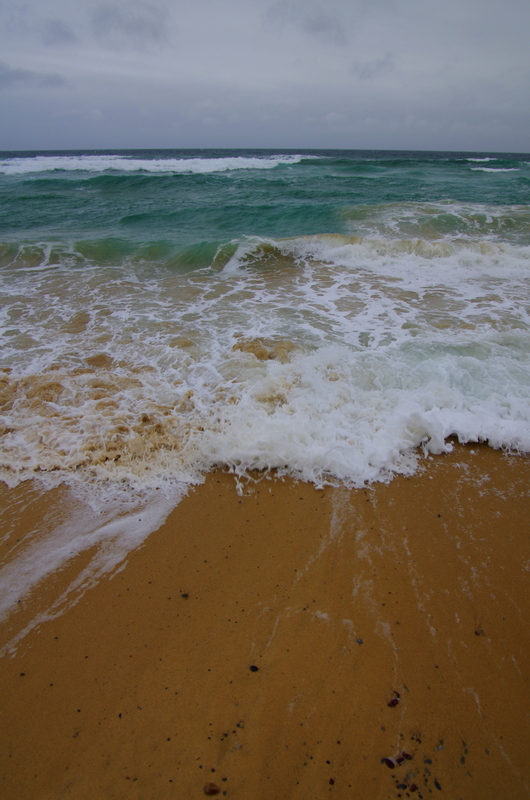
All change.
Yesterday was amber
Today jade, draped in damask
The wind carries parcels of sea and salt
For whom can contain the waves?
All change.
Yesterday was amber
Today jade, draped in damask
The wind carries parcels of sea and salt
For whom can contain the waves?
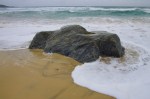


It is all go for us these few weeks. Over the weekend we have been down in England visiting family- I loved spending time with my sister and her managerie of dogs and no-longer-kids. It was Ben’s birthday and Lily is off to work in a hospital in darkest rural Uganda…
I also took my mum out for the day to Woolaton Park– it is so long since I lived in my place of birth that these excursions to what where once local land marks increasingly feel like anchorage point on the high seas.
Talking of high seas, our next excursion is with a group of friends out to the Hebridean island of Coll. It is Michaela’s birthday on Wednesday and 15 of us have taken over the recently built community owned bunkhouse. Our ages range from 13 to 75.
See you the other side of the sea…
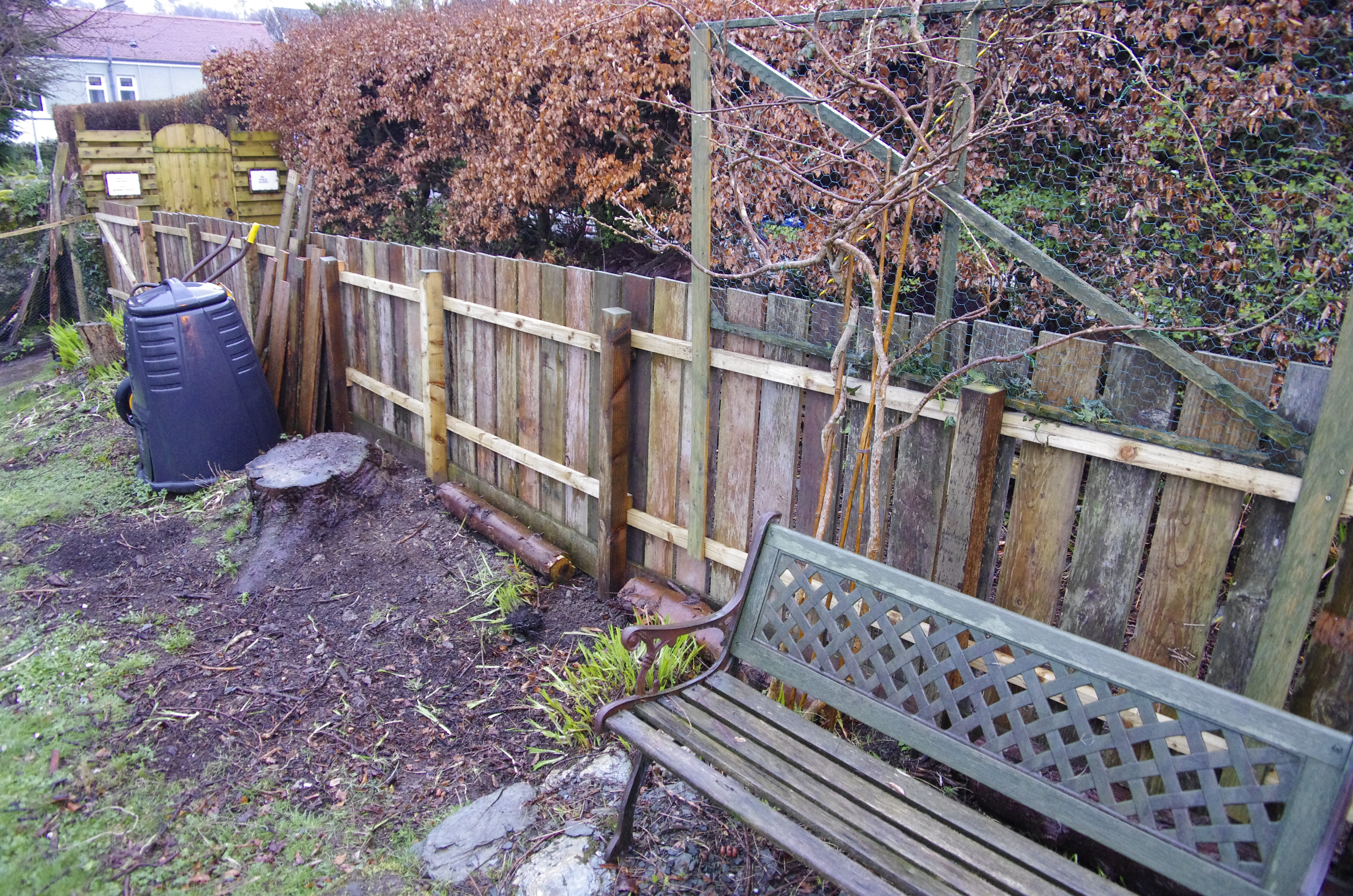
I spent four days building a new fence. The big winter winds did for the last one and now it is replaced by a smaller more solid version. My arms and knees are knackered from the labours.
I normally like doing things like this; I am in my own head, working with my hands, but still with a whole interior world to explore. I love too the sense that what was not is slowly becoming.
This time, it felt slightly different. The house is surrounded by other kind of fences- over which neighbours are at war with neighbours. I am building this fence just as my house is going on the market. I am building it to define the lines of defence for the next occupants.
Fences.
OK for keeping chickens in, but useless as a method of building communities.
I am not done with community, but it is time to move on…
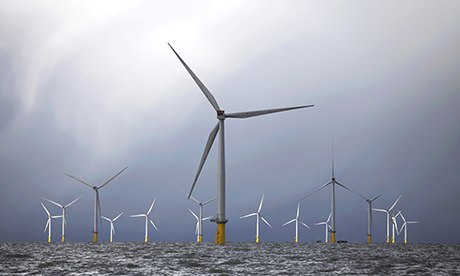
Our prime minister, David Cameron, has revealed that he intends to cap the number of wind turbines in our oceans and on our hillsides. It seems a long way from his ‘Vote blue, go green’ days. “get rid of all the green crap”, he said recently.
It is hot news in our parts– the rights and wrongs of wind farms.
I have always found myself slightly divided in my opinions about the giant turbines springing up on our hillsides. On the one hand, I love the wilderness of Argyll, and I do not want anything to steal from this. On the other hand, far too much of the land is covered already with contour planted conifers, and these offend my eyes every time I drive north. The fact is, despite how wonderful Argyll is, very little of it is true wilderness. Every hill has been shaped and changed by man, or by the animals we put there.
But a whole hillside full of white windmills? You can’t ignore them can you?
I still remember the first time I saw a wind turbine. I was about 19 or 20, and visited the Alternative Technology Centre in Macynlleth, Mid Wales with my friend Mark. It was a magical place full of hippies eating bean burgers and experiments with compost and conserved fart gas. Up on the hill they had two of these new fangled turbines, turning in the Welsh wind, regal and wonderful. I could not take my eyes of them. They had a grace and a wonder- they promised to my naive eye the possibility of a real alternative to the consumption of fossil energy that was surely of the devil.
They seem to have gone all posh these days- not a tie died pair of underpants on show anywhere;
But just because I went all tellytubby back in the 80’s, this does not really make an argument for or against industrialised wind farming now does it?
Well, perhaps it does. I suspect that our opinions about these turbines has little to do with the hard ecological/economical facts. These are obscured by entrenched battlements, from behind which hand-grenade statistics are lobbed out by each side.
One side opens with stats that suggest that wind farms are not an economic reliable source of power- wind is not constant, it can not be matched to peak demand, it can only manage a few 40 watt bulbs. The other side counters with the fact that wind IS constant enough in the right sites, of which the UK is almost uniquely blessed, and technology to store energy (such as using pumped hydro electric schemes) is getting better all the time. They would also suggest that the unit price of wind power is less than that using generation through heat from fossil fuels. (If you are interested in some of the more balanced use of facts around all this, check out the wikipedia entry.)
The other side comes back with the impact on wild life- bird strikes in particular. We are siting these giant scimitars in the paths of migrating birds, and in places where some of our most iconic raptor species cling to the fringes in small numbers. This is countered with the fact that any bird deaths caused by wind turbines are localised, and tiny by the numbers killed by the polluting effect of more traditional generation technology, which kill birds a thousand miles from their smokestacks.
Perhaps the real issue is that we feel out of control of all these carbunkles festooning our hillsides. They are schemes cooked up by big business and planning departments- contrast this with the German situation, where most windfarms are owned and administered by local communities.
Back to David Cameron and the Tories. Given the global and national pressure to reduce greenhouse gas emissions, their willingness to stop new wind farm development seems rather bizarre.
Perhaps Cameron is pandering to the far right of his party, who would see The Centre for Alternative Technology as some kind of hell. They shoot Grice in these places old boy…
Perhaps the other driver is the fact that even though wind farms are big business, they are not the right kind of big business- too European, too beanfeast. The City of London prefers Nuclear. Even French Nuclear.
But I think the main reason is that they never stood before a turbine as an impressionable teenager, slightly bloated from undercooked pulses, awed by the grace of the things- and the possibility that technology could be good, not just expensive.
I, on the other hand, would happily strap one to my house…
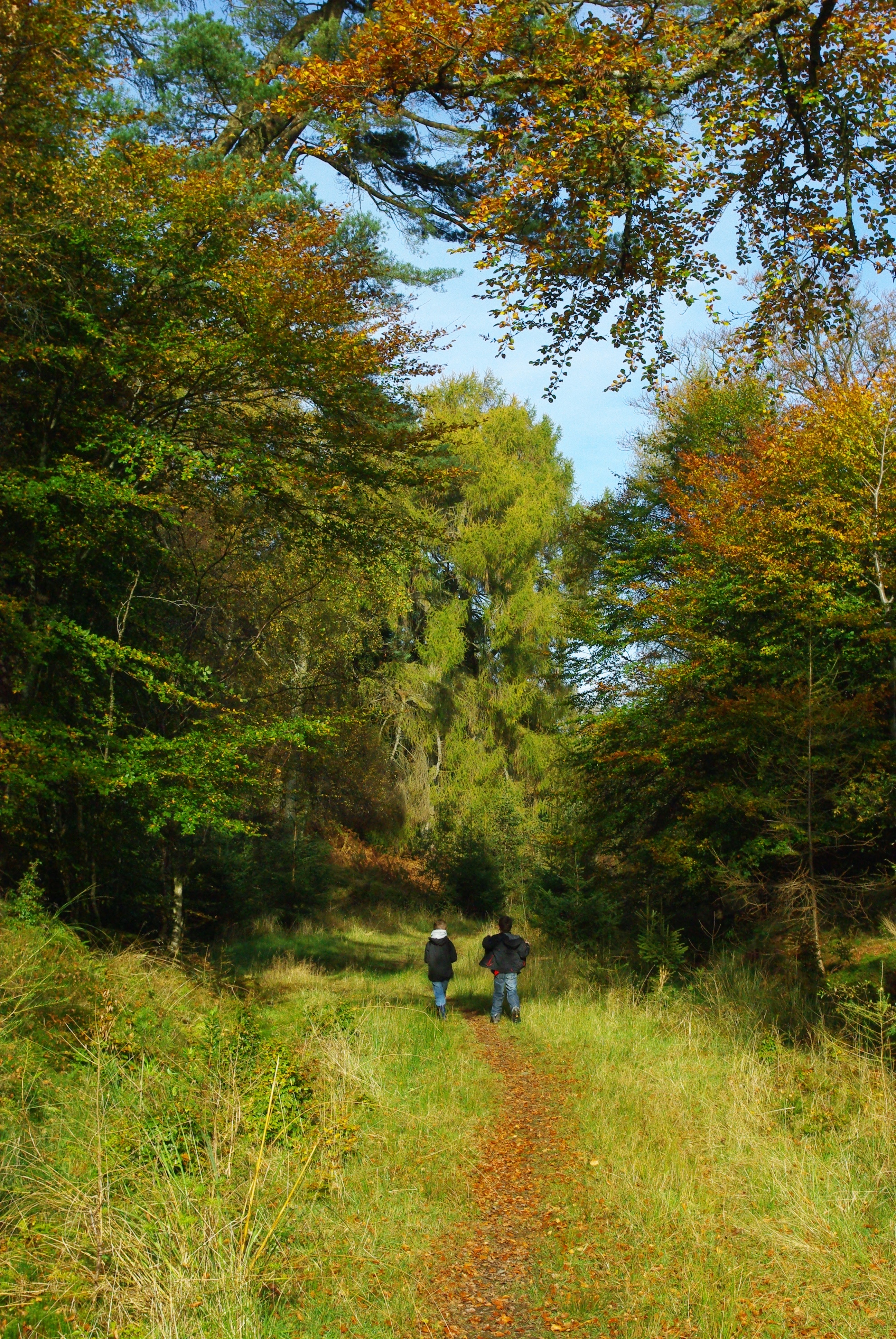 Over the decades working as a social worker, I have worked mainly with adults, often who were suffering the consequences of a childhood in which they have been damaged almost beyond repair.
Of course there is rarely, if ever, a smoking gun. We can surmise that some of the experiences are causal, not just associations, but proving this – separating it from so-called genetic disposition, or from weakness of personality, or the consequences of all the maladaptive coping strategies that we use to get by, and then become the slave of – this is another matter entirely.
It will not surprise you then to hear that I have been more than a little interested in the recent news that the government are to introduce a new criminal offence in relation to the emotional neglect of children. Robert Buckland, the Conservative MP for Swindon South was quoted in the Guardian as follows;
Buckland said: “Current law focuses only on the physical effects of abuse, stating for example that it is an offence to ill-treat a child resulting in the ‘loss of sight, or hearing, or limb, or organ of the body’. Emotional neglect, by contrast, which modern science now shows can be equally as destructive to a child’s wellbeing as physical abuse, is excluded from the law.” Action for Children said that out of 41 legal systems examined around the world, only two, including England, did not criminalise emotional abuse.
It is worth remembering the rather shocking research results about the link between emotional abuse and the later development of psychotic illnesses- Oliver James in the Guardian said this;
A definitive analysis of the 41 best studies into the impact of childhood adversity on the risk of psychosis (mostly schizophrenia and bipolar disorder) was published in 2012. It broke down the role of different kinds of maltreatment. Emotional abuse meant exposure to behaviour such as harshness and name-calling from parents. Emotional neglect meant lack of love and responsiveness. Overall, in order of impact, emotional abuse increased the risk of psychosis the most (by 3.4 times, physical abuse and emotional neglect did so by 2.9, sexual abuse and bullying by peers by 2.4).
That emotional abuse is more damaging than sexual and physical abuse may seem surprising, although they tend to go together. One study found that the emotionally abused were 12 times more likely to be schizophrenic than the general population (compared with six times for the physically abused and twice as likely for the sexually abused).
Another study followed adolescents for 15 years and found that over a third became schizophrenic if both parents were hostile, critical and intrusive, compared with none where only one parent was or neither were.
In his definitive book, Models of Madness, John Read, a clinical psychologist at Liverpool University, shows that in the 10 studies testing the matter, the more extreme the childhood adversity, the greater the risk of adult psychosis. The results are similar for the number of adversities.
In one large study, those subjected to five or more adversities were 193 times more likely to suffer psychosis than those with none. Similar findings come from studies of less extreme emotional distress. In the definitive one, which followed 180 children from infancy to the age of 18, 90% of those who suffered early maltreatment qualified for a mental illness. Emotional neglect under the age of two was a critical predictor.
It is in light of this evidence that the government’s plans must be understood: the crucial role of early nurture seems to be accepted in a cross-party consensus.
Why then do I still find myself with an uneasy sense of foreboding about all this?
I think it is because child protection in this country has been characterised by such simplistic banner waving. We are desperate to find someone to blame; the reason children are abused is because of all those horrible people (who are not like us) who need to be sorted out. If only the bloody woolly liberal social workers would get out of their bloody CND meetings and do their bloody jobs.
I also know just how incredibly difficult it can be to firstly identify the damaging patterns of parenting that might be categorised as emotional neglect, or even emotional abuse. Add this to the growing awareness within child protection services of the association between parental mental illness and emotional neglect. The fear is that the perfect storm of political pressure and the desperate need to protect children might end up demonising and criminalising parents who are themselves needing help and support.
This recent Ofsted report kind of makes the same point- back in 2013, they called for a mandatory reporting system for mental health services to collect data on children whose parents or carers have mental health difficulties and report on such data nationally. What might we use such data for? My hope is that it would be to assist families. To get alongside young people and find ways of making them feel special, loved, accepted. For injecting a sense of delight and wonder into their childhoods. But this is no easy task either.
These are complex issues, requiring careful thoughtful engagement. The law is part of this, but it is a blunt instrument- applied when it is actually too late. Suggesting that such a law will operate as any kind of deterrent on people who are often affected by their own complex difficulties is fanciful in the extreme.
When will politicians stand up and trumpet a the unsexy quiet work of the family link workers, paid just above minimum wage, who hold the hands of children who most of us would never give a second glance?

In a recent post, I (rather pompously) said this; we imbue product with meaning, in the absence of greater meaning.
It is the elephant in the room that is taking up ever more space.
How did we get this way? Perhaps psychologists might help us understand this a little better…
We know that it all starts early. In 2008 Batya Licht filmed 22 month old children in nursery and found that a quarter of all conflict was over objects- either defensive or aquisitory. Perhaps little changes as we get older.
Then there are those special attachment objects that our kids often have- the filthy blanket, or the bear or floppy toy. Strangely, we parents often seem to become just as attached to these things- we give them special power over our emotional lives. Perhaps this kind of magical thinking survives into adulthood too- think about the reverence we give to works of art or objects touched by celebrity. It is perhaps significant that children seem to make less use of such objects when parents practice ‘attachment parenting’; sleeping in the same bed, feeding in cue etc. (Green et al 2004) The closer the connection to the real thing, the less we want a replacement.
As for teenagers- they seem to use possessions as a crutch for their ‘selfness’. In 2007 Chaplin et.al. asked young people aged 8 to 18 ‘What makes me happy’. There was a peak around the age of middle adolescence where most seemed to define this in terms of what they owned. Conversely, those who were given flattering and supportive feedback from peers, thereby boosting their self esteem, showed a marked decrease in their pull towards materialism. Those who felt loved and accepted by the people that they shared life with had less need for stuff.
Into adulthood (even though as already hinted at, we all carry our inner children) our association with stuff is ever more complex. The first car, the clothes and perhaps above all things- the house. It is never just a house, it is an ‘extension of my physical body and my sense of self, that reflects who I was, am and hope to be.’ (Karen Lollar 2010.)
It will be no surprise to hear that how much we see our things as an extension of ourselves depends on how confident we feel in who we are. Reflecting on our accumulation of things appears to restore, to bolster, our fragile ego. When we are more secure in our selves we have less need for such things.
Our possessions are also the means by which we send signals to others about the things we want them to value in us. We wear brands like Apple like a cool badge of belonging. We carry books we want others to know we read with the cover facing outwards. This trend towards ‘brand loyalty’ led psychologists Philip Cushman and Robert Pollard to say this;
…as people find less satisfaction and community in traditional sources like family, country and religion, they turn instead to alternative sources in the marketplace.
Quoted in The Psychologist, August 2013
So, is materialism always bad?
Tim Kassler’s research has shown a clear association between holding materialist values and being more depressed, having poorer relationships with others and being more selfish.
However, other research (van Boven, Gilovich et al 2002) suggests that there might be a difference between the purchase of things and the purchase of experiences. Those who do the latter seem to be happier, and more liked by others.
LJ Shrum (2012) suggested that the degree to which buying stuff damages us might also depend on what meaning we ascribe to the purchase. He theorised that it was not what we want, but why we want it that matters.
Time to revisit my earlier premise; that we imbue product with meaning, in the absence of greater meaning.
When we belong, when we love, when we connect, when we feel loved in return- we are less inclined towards gathering stuff.
Conversely, when we feel disconnected, vulnerable, shallow and disenfranchised, we turn to the credit card. And like a bottle of cheap whisky, we only feel the anesthetic for a short time before we wake with a blinding headache.

(The first of a couple of posts about materialism…)
Jesus told his disciples to travel light. In an age before antiperspirant deodorant he even told them that they only needed one shirt. I am sure a think tank commissioned to give the gospel market penetration would have a quiet word with Jesus about this.
How much stuff do we really need though?
I heard a bloke interviewed on the radio the other day about this film;
This is the blurb (from here.)
Petri Luukkainen is a product of the marketing industry, an ideal consumer whose Helsinki flat is filled with all kinds of stuff. One day his girlfriend dumps him. Petri realizes he is burdened by a huge mortgage, scarred by a maxed out credit card, and haunted by the stuff that failed to bring him happiness. He is in the middle of an existential crisis. He starts rebuilding his everyday existence by asking himself: What do I really need? Encouraged by his grandmother, he decides to conduct a bold experiment. The rule is simple: Put all of your stuff (including your clothes) into storage, and bring back only one item per day. The director documents his experiment in a fascinating way. He examines modern culture and the incessant need of people to fill their lives with consumables.
Interestingly enough, even this did not seem to break the addiction to product- in the interview I heard, he claimed that if anything the experience had made him MORE materialistic – he was now even more attached to some of his things.
When he was asked how many things he thought a person needed, rather than wanted, he came up with a figure of 200. I thought this seemed too large a number at first, as surely most of the things we have are not owned out of need, but out of lust for product. But as I thought about it, and looked around my house, I realised that 200 was not a large number at all.
200 came and went quickly.
I have this theory about all of this; we imbue product with meaning, in the absence of greater meaning.
Kicking this habit takes more than a short visit to the rehab clinic.
 … and it is perhaps just in time.
I know it has been a warm winter by most standards, but the darkness, the bare tree,; the sodden hillsides, the succession of storms – they do wear you down.
Spring is the time of yearI love more than any other. More than the driest day of hot Summer, give me a Spring shower. Particularly one falling on the West Coast of Scotland. It is a time when my boots start to twitch to the promise of adventure. A time when things seem characterised by potential.
So my friends, may your windows be opened wide.
May your air be sweet with the song.
May you come to realise that after the heavy bloat of pregnancy, after the rending of birth, new life leaps into the fields, fresh of fur, eyes wide with wonder.
May you be drawn outside, where the world is.
The sofa will wait.

We don’t get many pirates in these parts. However, a few days ago there was an incident on the Holy Loch involving the boat above.
The Glen Masson is a posh small cruise boat of the rather grandiosely named Majestic Line. It was featured in last years Visit Scotland TV ad. Here she is last spring, beached for a bit of maintainance.
Recently whilst the Glen Masson was moored up, Captain Pugwash, along with Master Mate and his swarthy (is that a racist word?) band of cutthroats climbed aboard in the dead of night and helped themselves to all manner of treasures. Triumphantly they bundled their booty and made escape towards the high seas.
Except pride comes before a fall. In their excitement at a piratical job done well, they turned left rather than right.
This meant that rather than heading towards the mouth of the Clyde (and freedom) they sailed straight up the Loch, where they ran firmly aground.
Ooops.
Police and coastguards did the rest. Booty has been returned, the brave pirates are clinging to bobbing flotsam…
The report from the local paper is here.
You may have heard about this film that is about to hit our screens;
It is a great story of course; an ancient almost-apocalypse in which an Angry God wipes out most of the planet in some kind of Creation-reboot.
When films like this make it onto the mass market however, it is often a good time to take stock and ask what this rehash of Genesis is speaking in to our culture.
One thing that seems to be central to a lot of mass media output post 911 is FEAR. Fear of the outsider, fear of the enemy within, fear of a great cataclysm that scatters body parts in all directions. Fear like this, at a time of greater (Western) peace and security than at almost any other time of our history, seems totally absurd at first glance. But this kind of fear is contagious. It might also be deliberately induced (take a look at Naomi Klein’s book The Shock Doctrine if you want to dig into this a little more.)
Movies have to make money. They have certainly parachuted some impressive acting talent into this one, be it a dog or be it screen nirvana. Movies have to plug in to a market demographic, and it seems likely that this epic will sell well in Conservative Christian middle America. The sort of places where many people regard Darwinism as the work of Satan, that the Great Flood explains away the fossil record and the words of the Bible are all we need to understand Science.
Remember the Creation Museum?
There is another way to approach the story of the Great Flood however. Some of you will be well aware that there are many other ancient cultures who have a flood myth as part of their received history.
There is the Gligamesh one– from at least 1200 BCE, probably a lot earlier.
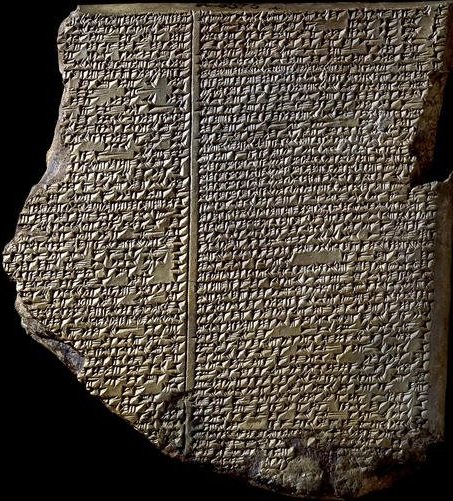
Utanapishtim replied: “I will tell you a secret of the gods, Gilgamesh, I will reveal to you a mystery. Shortly after the Flood had been decreed for mankind by the great gods, Enki — without breaking oath — advised me to tear down my house and build a boat, to abandon possessions and save life. Into the vessel was to go the seed of all living creatures.”*
(*A similar story is found in ancient India, where Vishnu tells Vaivasvata Manu: “Seven rain clouds will bring destruction. The turbulent oceans will merge together into a single sea. They will turn the entire triple world into one vast sheet of water. Then you must take the seeds of life from everywhere and load them into the boat of the Vedas.” (Matsya Purana 2.8-10).)
Enki gave Utanapishtim instruction on the boat’s dimensions and construction. It was to measure 10 rods (120 cubits) on a side, six decks dividing it into seven levels, all measured to a height of 10 rods, with nine compartments inside. On the sixth(?) day it was completed. The boat was launched with difficulty, until two-thirds was submerged. Then after everything had been loaded in, including all the craftsmen, the deluge came. Raging storms reached to the heavens, turning all that was light into darkness. As in a battle no man could see his fellow. Even the gods, terror-stricken by the tempest, fled to the heaven of Anu, cowering like dogs. Ishtar cried out like a woman in travail; Belet-ili (Aruru) lamented that the olden time had turned to clay, because she had spoken evil in the assembly of the gods.
Six days and seven nights the winds blew. At sunrise on the seventh day they subsided and the storm ceased. Utanapishtim opened a vent and light fell on his face. Water was everywhere. All was silence. All mankind had turned to clay. On the submerged peak of Mt. Nimush the ship ran aground. After another seven days, he sent a dove forth, but it found no perch. He sent out a swallow; it returned too. Then a raven, and this one saw the waters receding. Utanapishtim went forth from the boat; he offered a sacrifice to the four directions; he strewed incense on the peak (ziggurat) and poured a libation — seven goblets and seven — to attract the gods. But Enlil was furious: all mankind was to have been destroyed. Who had revealed the secret? Enki reproved Enlil for causing the Flood, then explained how in a vision given to Utanapishtim the secret had been discovered. His fate must be decided by Enlil, who then declared that Utanapishtim and his wife shall become like gods. The gods took them to the faraway land, to dwell at the Mouth of Rivers — sacred rivers symbolic of the continuous stream of divine wisdom flowing into human life.
A while ago I read a review of The Ark Before Noah: Decoding the Story of the Flood by Irving Finkel. It tells something of how the ancient Hebrews might have encountered these stories and adopted (and adapted) them as their own during their time in Babylonian captivity;
Over the years, cuneiform flood tablets have continued to turn up. Three distinct Mesopotamian incarnations of the myth have now been identified, one recorded in Sumerian and two in Akkadian. It has become clear that the tale of a universal flood was widespread in Mesopotamia for an entire millennium and a half before the hapless Judaeans, defeated in the early 6th century BC by Nebuchadnezzar, were dragged away from their smoking cities into exile, there to weep beside the rivers of Babylon. Now, courtesy of Irving Finkel, the British Museum’s eminence grise of cuneiform studies, there comes a further clinching piece of evidence: a tablet that actually describes animals entering an ark “two by two”. Not only that, but it offers startlingly precise specifications on how best to construct one. An ark, so the tablet instructs us, should properly be circular in shape, have an area of 3,600 metres, and be fashioned out of plant fibre. All those living in the Somerset Levels may wish to take note.
There is also this fascinating passage;
By plundering the heritage of Babylon, they were at once paying homage to its cultural prestige, and annexing it to their own ends. Just as Christians and Muslims would subsequently transform the biblical figure of Noah into a prefiguring of their own respective theodicies, so the Judaeans transformed the myths of their Babylonian overlords into something that would end up as Jewish. In Mesopotamia, where it was the custom to erect buildings over the remains of levelled ruins, the ancient past literally provided the foundations of new temples. In a similar manner, its legends were made to serve the self-mythologisation of the Jews. Some details of the flood tablet discovered by Finkel – the animals going in two by two, for instance – were cannibalised; others – the specifications of the ark’s measurements, and the detail that the great ship had been round – were not. This, for me, is the real fascination of his find: the light it sheds on how a despised and defeated people won a victory over their conquerors so remarkable that it now gets to be commemorated by Russell Crowe.
We make of these stories what we need them to make. The ‘truth’ of them requires us to look a little deeper, a little further into ourselves.
Perhaps as far back as the melting of the last ice age, and the rising sea levels that swallowed whole villages, whole hunting grounds in a relatively short time scale- certainly within the span of people’s lifetimes, and within generational historical memory.
Or perhaps even further into ourselves- into our darkest fears…

